Understanding the Australian Share Exemption List: A Vital Resource for New Zealand Investors
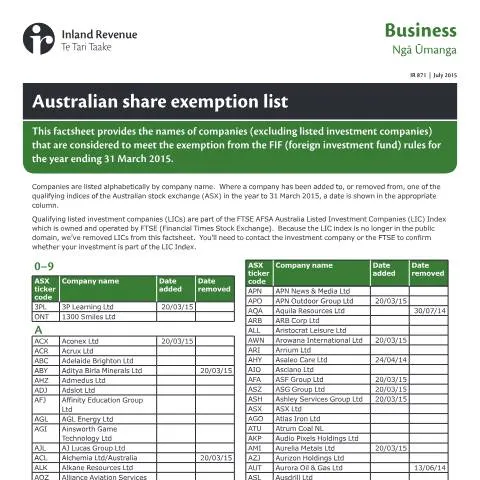
In the complex world of international investments, particularly for New Zealanders venturing into the Australian market, navigating tax implications is crucial. The Australian Share Exemption List (IR871), administered by the Inland Revenue Department (IRD), plays a pivotal role in this process. This document helps investors identify which Australian companies qualify for exemption from the Foreign Investment Fund (FIF) rules, significantly impacting tax liabilities.
The Legal Framework Behind Form IR871
The establishment of the IR871 document is rooted in New Zealand’s commitment to ensuring compliance with international investment regulations. Under the Income Tax Act 2007, the Foreign Investment Fund rules govern how foreign investments are taxed. These rules are designed to prevent tax avoidance by ensuring New Zealand residents pay taxes on their foreign income. The IR871, therefore, serves as a filter, listing companies that meet specific criteria for exemption from these rules.
Historical Context
The Australian Share Exemption List was introduced as a response to the increasing number of New Zealanders investing across the Tasman Sea. Prior to its introduction, investors faced complicated tax implications, often resulting in unexpected liabilities. This form streamlines the process, allowing investors to make informed decisions based on a clear list of compliant companies.
Navigating Form IR871: Who Should Submit?
This form is particularly relevant for New Zealand residents who hold shares in Australian companies. If you have invested in any companies listed in the Australian Stock Exchange (ASX), understanding the specifics of the IR871 is essential.
Individuals and entities that may need to complete this form include:
- New Zealand residents holding shares in Australian corporations.
- Tax advisors assisting clients with investments in Australia.
- Corporate entities with cross-border investments.
- Individuals with complex investment portfolios involving foreign companies.
The Importance of Accurate Completion of IR871
When filling out the IR871, accuracy is paramount. Errors can lead to significant financial consequences, including incorrect tax assessments. The form consists of a comprehensive list of ASX companies, their ticker codes, and the dates they were added or removed from the exemption list.
Each entry is crucial because:
- Company Name: Identifies the company you are investing in.
- ASX Ticker Code: Provides a unique identifier for easy reference.
- Date Added/Removed: Indicates when the company was listed as exempt and ensures investors are aware of any changes that could affect their tax status.
Filing the IR871: Channels and Processes
New Zealand investors have multiple options for filing the IR871, each with its pros and cons:
| Method | Description | Pros | Cons |
|---|---|---|---|
| Online Submission | Via the IRD’s online portal | Faster processing, immediate confirmation | Requires RealMe authentication |
| Paper Submission | Mailing the completed form | Accessible without internet | Longer processing times, risk of lost mail |
| In-Person Submission | Visiting an IRD office | Direct assistance from IRD staff | Travel required, limited office hours |
What If Things Go Wrong? Addressing Common Issues
Even with careful completion, complications may arise. Understanding how to address these issues is crucial for maintaining compliance and ensuring financial clarity.
Refusals and Rejections
If your IR871 submission is rejected, the first step is to review the reasons provided by the IRD. Common reasons include:
- Inaccurate company information.
- Non-compliance with updated tax laws.
- Incomplete documentation.
Upon identifying the issue, you can resubmit your form with the necessary corrections. Alternatively, contacting the IRD for clarification may help resolve any misunderstandings.
Missing Information
In cases where supporting documentation is missing, promptly gather the required documents to avoid delays. Be proactive in communicating with the IRD to explain the situation and request guidance on how to proceed.
Special Considerations: Unique Profiles and Situations
The IR871 is not a one-size-fits-all document. Various investor profiles may require tailored approaches:
Foreign Investors
For non-New Zealand residents investing in Australian companies, the implications of the IR871 may differ. It is crucial to seek advice regarding tax obligations in both New Zealand and your country of residence.
Minors and Dependent Investors
Investments made on behalf of minors or dependents may require additional considerations, such as guardianship documentation or tax implications for the minor. Ensure all relevant parties are informed of their obligations and rights.
Complex Situations
Investors with complex portfolios involving multiple assets, joint ownership, or international investments should consult with a tax advisor to navigate potential pitfalls in the IR871 submission process.
Staying Updated: The Role of the IR871 in a Changing Landscape
The financial landscape is ever-evolving, and staying informed about changes to the IR871 is essential. The IRD regularly updates the list of exempt companies, reflecting shifts in the ASX and regulatory environment. Investors must regularly check for the latest updates to ensure compliance and optimize their tax positions.
Subscribing to the IRD’s newsletters or following their updates on the official website can provide timely information about changes that may affect your investments.
The Future of Investment Compliance: Emerging Trends
As the investment world becomes increasingly digital, staying compliant will also involve embracing technology. The IRD’s emphasis on digital services reflects a broader trend toward online tax management. This shift not only streamlines the process but also enhances accessibility for investors.
Looking ahead, potential changes to tax regulations may arise from international agreements or shifts in economic priorities. Investors must remain vigilant and adaptable, ready to adjust their strategies in response to new compliance requirements.
In navigating the complexities of international investments, particularly regarding the Australian Share Exemption List (IR871), knowledge is power. By understanding the nuances of this document, ensuring accurate completion, and staying proactive in the face of challenges, New Zealand investors can effectively manage their tax obligations and optimize their investment outcomes.
Understanding the Australian Share Exemption List
The Australian Share Exemption List is a vital aspect for New Zealand investors engaged in the trans-Tasman financial markets. This exemption permits New Zealand residents to avoid double taxation on certain Australian shares, enhancing the appeal of investing across the Tasman Sea. Under current arrangements, New Zealand residents can benefit from exemptions when shares are held in companies that meet specific criteria, primarily those that are publicly listed on the Australian Stock Exchange (ASX).
To fully understand the implications of this exemption and how it may affect your investment strategy, it’s essential to recognize the types of income generated from these shares. Dividends paid by qualifying Australian companies can be exempt from New Zealand income tax, provided specific conditions are met. As such, understanding the requirements laid out by the Inland Revenue Department (IRD) is crucial for making informed investment decisions.
Moreover, investors should also be aware of the reporting obligations that accompany this exemption. While the income may not be taxable under New Zealand law, it still needs to be disclosed on annual tax returns to ensure compliance with both New Zealand and Australian tax regulations. Failure to report could potentially lead to issues with the IRD and financial penalties.
Navigating Tax Treaties: The Trans-Tasman Perspective
New Zealand and Australia share a comprehensive tax treaty designed to prevent double taxation and encourage cross-border investment. This treaty underpins the Australian Share Exemption List, aligning the tax policies of both nations to facilitate smoother financial transactions and investments. For New Zealand investors, this treaty means that while certain income from Australian shares may be exempt, understanding the nuances of the treaty is essential for optimizing tax obligations.
Under the treaty, New Zealand residents may benefit from reduced withholding tax rates on dividends paid by Australian companies. This is particularly beneficial for those receiving income that falls under the exemption list. However, it's essential to note that these benefits can vary based on individual circumstances, including residency status and the specific nature of the investments. Investors must also ensure that they provide the necessary documentation to the Australian tax authorities to claim these benefits efficiently.
Additionally, the tax treaty can have implications for capital gains tax, which generally does not apply to shares held by New Zealand residents in Australian companies. However, potential changes or amendments to the treaty could impact these provisions, making it vital for investors to stay informed about any developments in tax policy from both governments.
Practical Steps for Leveraging the Australian Share Exemption List
Utilizing the Australian Share Exemption List effectively requires a strategic approach. For investors looking to capitalize on this opportunity, here are some practical steps to consider:
- Research Eligible Shares: Not all Australian shares qualify for the exemption. Investors should conduct diligent research to identify which companies meet the criteria. Publicly listed companies on the ASX are typically eligible, but it’s prudent to verify their status regularly.
- Engage Professional Advice: Given the complexities of tax legislation, consulting a tax advisor familiar with trans-Tasman investments can provide significant advantages. They can help navigate the intricacies of reporting obligations and ensure compliance with both New Zealand and Australian regulations.
- Maintain Accurate Records: Keeping precise records of all transactions related to Australian shares is essential. This includes documentation of purchase dates, sale dates, dividend payments, and any correspondence with tax authorities. Accurate records can simplify the reporting process and provide evidence in the event of any inquiries from the IRD.
- Stay Informed about Regulatory Changes: Tax laws and treaties can evolve, impacting the eligibility and reporting requirements for the Australian Share Exemption List. Regularly reviewing updates from the IRD and the Australian Taxation Office (ATO) can help investors remain compliant and potentially optimize their investment strategies.
By following these steps, New Zealand residents can effectively leverage the Australian Share Exemption List, maximizing their investment potential while ensuring adherence to legal and tax obligations.