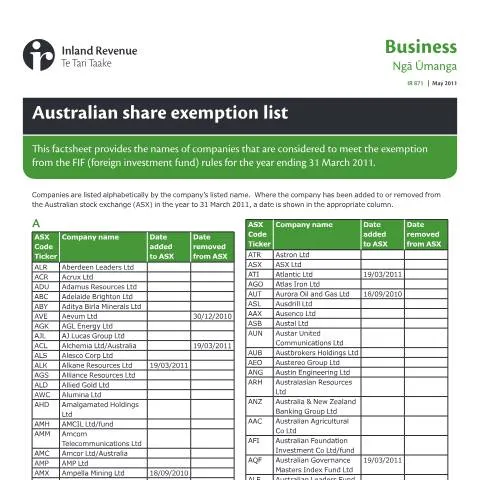
Navigating the IR871: A Guide to the Australian Share Exemption List
In the complex landscape of international tax obligations, the IR871 Australian Share Exemption List emerges as a pivotal document for New Zealand residents holding shares in Australian companies. This list, curated by the Inland Revenue Department (IRD), outlines which companies meet the Foreign Investment Fund (FIF) exemption criteria. Understanding this document is essential for individuals and entities who wish to optimize their tax liabilities while remaining compliant with New Zealand laws. This guide explores the intent, processes, and implications of the IR871 in detail.
Understanding the Role of the IR871 in Tax Compliance
The IR871 serves as a resource that identifies Australian companies eligible for exemption from the FIF rules. This exemption is crucial since it influences how income from these shares is taxed in New Zealand.
- Foreign Investment Fund (FIF) Rules: These rules govern how New Zealand tax residents are taxed on foreign investments, including shares in foreign companies.
- Importance of the Exemption: If a company is listed on the IR871, it means that its income can be treated differently, allowing for potential tax benefits for shareholders.
For example, if a New Zealand investor holds shares in a company listed on the IR871, they might not have to declare income from those shares for tax purposes, provided they meet the exemption requirements.
Who Should Submit the IR871?
The IR871 is typically submitted by individuals or entities who are tax residents of New Zealand and hold shares in Australian companies listed on the Australian Securities Exchange (ASX). This includes:
- Individual Investors: Kiwis who invest directly in listed Australian companies.
- Businesses: Companies that have substantial holdings in Australian firms.
- Investment Funds: Managed funds that invest in Australian stocks on behalf of their clients.
Understanding whether your investments qualify for the exemption is crucial, particularly in light of the evolving tax landscape and regulatory environment.
Step-by-Step: Preparing to Complete the IR871
Completing the IR871 involves several important steps, ensuring that all required information is accurately presented. Here’s a structured approach to preparing your submission:
- Gather Necessary Information: Collect all relevant details regarding your shareholdings, including the ASX codes, company names, and the dates of acquisition.
- Consult the Latest IR871 List: Ensure you are using the most recent version of the IR871. This can typically be accessed through the IRD website.
- Fill Out the Form: Enter the required information into the IR871, ensuring that all company names correspond with those on the exemption list.
- Double-check for Accuracy: Verify all entries to avoid any potential errors that could lead to processing delays or issues with your tax obligations.
Accuracy is vital as errors can result in investigation or denial of the exemption. This thorough preparation phase can save you time and stress later in the process.
Understanding the Calendar: Key Dates and Deadlines
When dealing with the IR871, it’s important to keep track of important deadlines. The fiscal year in New Zealand runs from 1 July to 30 June. With this in mind, here are some key dates to note:
| Event | Date |
|---|---|
| Start of Fiscal Year | 1 July |
| End of Fiscal Year | 30 June |
| Deadline for Submitting IR871 | Typically at the end of the fiscal year, refer to IRD for specific dates. |
Being aware of these dates ensures that you remain compliant and avoid unnecessary penalties.
Channels for Submission: Digital vs. Paper Options
Today’s world increasingly leans towards digital processes, and the IR871 can be submitted through various channels. Understanding the differences can help you choose the best method for your circumstances.
- Online Submission: This method is often the quickest and most efficient. The IRD provides an online platform where you can fill out and submit your IR871 directly. Ensure you have a RealMe digital ID to access this service.
- Paper Submission: While less common now, paper forms can still be submitted via post. This method may take longer to process, so consider this option carefully.
- In-Person Submission: A visit to your local IRD office can also be an option if you prefer face-to-face interaction. However, it’s advisable to check if you need an appointment and what documentation to bring.
The online method is generally recommended due to its speed and efficiency, but it’s essential to choose the channel that best suits your needs and preferences.
What Happens After Submission? The Follow-Up Process
Once the IR871 has been submitted, it’s crucial to understand the follow-up steps that may be required:
- Confirmation of Receipt: If you submit electronically, you should receive an immediate confirmation. For paper submissions, allow additional time for processing.
- Review Process: The IRD may review your submission, which could involve additional correspondence or requests for information. Be prepared to respond promptly to any inquiries.
- Notification of Status: After review, you will receive notification regarding the approval or denial of your exemption status. This can impact your tax liabilities significantly.
Staying proactive during this stage is essential. Ensure that you monitor your correspondence with the IRD and respond to any requests for clarity or additional information promptly.
Addressing Issues: What to Do in Case of Rejections or Missing Information
It’s not uncommon to encounter issues during the process of submitting the IR871. If your application is denied or if you find that you have missing information, here’s how to proceed:
- Understand the Reason for Rejection: The IRD will typically provide a reason for any denial. Familiarize yourself with these reasons to ascertain how to proceed.
- Gather Additional Information: If your submission was incomplete, collect the necessary documents or data required to complete the application.
- Resubmit if Necessary: Once you’ve addressed the issues raised by the IRD, you may need to resubmit the IR871 or provide supplementary information.
- Seek Professional Advice: If you’re unsure how to navigate the process after a rejection, consider consulting a tax professional who specializes in international tax matters.
Proactive measures can minimize delays and ensure that your shareholdings are properly accounted for in terms of tax obligations.
Comparing IR871 with Other Relevant Documents: A Contextual Understanding
When navigating the complexities of international tax obligations, it’s essential to distinguish the IR871 from similar documents. Two other key documents are the IR886 (Foreign Tax Credit) and the IR885 (FIF Calculation Method). Here’s a comparative overview of these forms:
| Document | Purpose | Who Needs It? |
|---|---|---|
| IR871 | Identifies Australian companies exempt from FIF rules | New Zealand residents with shares in listed Australian companies |
| IR886 | Claims foreign tax credits for taxes paid overseas | Tax residents with foreign income tax obligations |
| IR885 | Calculates FIF income from foreign investment | Individuals or entities with foreign investments |
Understanding the distinct roles of these documents can facilitate better tax planning and compliance for New Zealand residents engaging in international investments.
Understanding the Australian Share Exemption List
The Australian Share Exemption List is an essential consideration for New Zealand residents who are investing in Australian shares. This exemption list dictates which shares qualify for tax exemptions under specific conditions, primarily concerning capital gains tax (CGT). Notably, this exemption is applicable to individuals, companies, and trusts. However, understanding the nuances of this list is crucial for investors to optimize their tax obligations and investment strategies.
New Zealand residents must be mindful of the double taxation agreements in place between New Zealand and Australia. These agreements allow for the avoidance of being taxed on the same income in both jurisdictions. The Australian Taxation Office (ATO) provides a comprehensive list of shares that are exempt from CGT when held by New Zealand tax residents. For instance, shares in certain companies listed on the Australian Stock Exchange (ASX) may qualify, provided they meet specific ownership criteria and holding periods.
To benefit from the exemptions, New Zealand investors should keep detailed records of their investments and periods of holding. This documentation is vital during tax assessments to prove eligibility for exemptions. Moreover, it's advisable to consult a tax professional familiar with both jurisdictions' taxation systems before making significant investments in Australian shares.
Navigating the Tax Implications of Trans-Tasman Investments
Investing across the Tasman Sea brings unique tax implications that New Zealand residents must navigate to remain compliant with both New Zealand and Australian tax laws. The primary consideration for investors is understanding the taxation of dividends, interest, and capital gains from these investments. In Australia, dividends are usually subject to withholding tax, which can significantly affect the overall returns on investment.
New Zealand residents are required to report their foreign income, including income from Australian investments, to the Inland Revenue Department (IRD). It's crucial for investors to categorize their income correctly to ensure compliance and avoid penalties. Furthermore, the IRD allows certain tax credits for foreign taxes paid, which can mitigate the effects of double taxation. Investors must fill out the appropriate forms, such as IRD’s foreign income disclosure forms, to claim these credits effectively.
For those considering a long-term investment in Australian shares, it's essential to understand the concept of the 'trans-Tasman tax offset'. This offset can assist in reducing tax liabilities on income sourced from Australia. However, eligibility criteria must be thoroughly reviewed to ensure compliance with both tax jurisdictions.
Practical Steps for Filing Taxes on Australian Investments
Filing taxes on income generated from Australian investments requires specific steps to ensure compliance with New Zealand regulations. Here are practical steps for New Zealand residents:
- Maintain Accurate Records: Keep detailed records of all transactions, including purchase dates, selling dates, amounts, and any associated costs. This will not only help in filing your taxes but can also substantiate your claims for exemptions or credits.
- Understand Your Residency Status: Your tax obligations can significantly differ based on your residency status in New Zealand. Ensure you understand whether you are a tax resident or a non-resident, as this will dictate how your foreign income, including dividends and capital gains from Australian shares, is taxed.
- Complete the Relevant Tax Forms: When filing your taxes, utilize the appropriate forms provided by the IRD, such as the IR3 form for individual taxpayers, to report your foreign income. Be diligent in detailing your Australian investments, including any tax paid in Australia.
- Seek Professional Advice: Given the complexities of cross-border taxation, it may be beneficial to consult a tax advisor. They can provide tailored advice based on your unique financial situation and help you navigate the tax implications efficiently.
- Utilize Online Resources: Both the IRD and ATO provide online resources and tools to assist taxpayers in understanding their obligations. These resources can guide you through the filing process and answer commonly asked questions about trans-Tasman investments.
By following these steps, New Zealand residents can ensure they comply with tax obligations while maximizing the benefits of investing in Australian shares.