Navigating the IR871: A Vital Component in Tax Compliance for Australian Investments
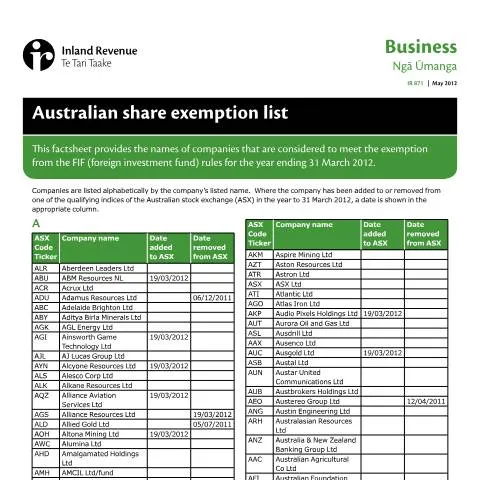
The IR871 form, known as the Australian share exemption list, is a crucial document for New Zealand taxpayers dealing with investments in Australian shares. As an investor, whether you're an individual or a company, understanding this exemption list can significantly impact your tax obligations and overall financial strategy. The IR871 serves to inform taxpayers about companies that qualify for exemption from the Foreign Investment Fund (FIF) rules, thus facilitating a smoother tax compliance process.
Who Needs to Submit the IR871? Understanding Your Profile
Not every investor will need to complete the IR871 form. However, understanding the specific profiles that are required to submit this document can help you gauge if it applies to you. The following categories of investors should consider the IR871:
- Individuals with Investments: If you are a New Zealand resident who has invested in Australian shares, you are likely required to provide information on these investments through the IR871.
- Companies and Trusts: Corporate entities and trusts that hold Australian shares also need to complete this form to ensure compliance with the FIF rules.
- Investment Funds: If you manage an investment fund that includes Australian shares, submitting the IR871 is essential to report your holdings accurately.
Exceptions to the Rule
While many individuals and entities are required to complete the IR871, there are notable exceptions. For example:
- Foreign Investors: Non-New Zealand residents who hold Australian shares as part of their investment portfolio may not be required to submit the IR871.
- Small-scale Investors: Investors whose total holdings in Australian companies fall below a certain threshold (to be confirmed with the IRD) may be exempt from filing this form.
The Timeline: Key Dates for Filing
Understanding the filing timeline associated with the IR871 can help you stay compliant and minimize potential penalties. Here are the key dates you need to be aware of:
- Filing Period: The IR871 is typically required for the fiscal year ending on 31 March. Investors need to gather relevant information leading up to this date.
- Submission Deadline: While specific deadlines may vary, documents related to the IR871 should generally be submitted to the Inland Revenue Department (IRD) shortly after the end of the fiscal year.
- Post-Filing Requirements: After submission, keep an eye on communications from the IRD. They may request additional documentation or clarification within a specified timeframe.
The Legal Framework: Importance of the IR871 in Tax Compliance
The IR871 form operates under the Official Information Act 1982 and the Plain Language Act 2022. These regulations dictate the requirements for transparency and clarity in government documentation. The IR871 specifically provides guidance on which companies are exempt from FIF rules, easing the tax burden for investors and ensuring compliance with New Zealand tax laws.
Understanding the FIF Rules
The Foreign Investment Fund rules are designed to prevent tax avoidance through offshore investment schemes. The IR871 allows taxpayers to identify which Australian corporations fall outside these rules, thus simplifying the overall compliance process. Failure to comply with the FIF regulations can lead to significant penalties, so understanding the exemptions listed in the IR871 is critical.
Practical Implications of Filing the IR871
Filing the IR871 does more than just satisfy regulatory obligations; it opens the door to several potential benefits for taxpayers:
- Tax Exemptions: By identifying shares that qualify for exemption from the FIF rules, taxpayers can avoid unnecessary tax liabilities and optimize their investment strategies.
- Streamlined Compliance: Properly completing the IR871 can facilitate a smoother tax return process, reducing the risk of audits or queries from the IRD.
Consequences of Non-Compliance
Failing to file the IR871 or inaccurately reporting information can lead to severe repercussions:
- Financial Penalties: The IRD imposes fines for late or incomplete submissions, which can add up quickly.
- Increased Scrutiny: Non-compliance raises red flags, increasing the likelihood of audits and further investigations by tax authorities.
Channels for Submission: Digital vs. Paper
Understanding the various channels for submitting the IR871 can aid in a timely and efficient filing process. The IRD provides multiple avenues for submission:
- Online Submission: The simplest and most efficient way to submit the IR871 is through the IRD's online portal. This option is available for those with a RealMe digital ID and allows for real-time tracking of your submission.
- Paper Submission: While less efficient, you can still submit the IR871 using a paper form. This method may take longer to process and can lead to delays.
- In-Person Submission: For those who prefer face-to-face interactions, visiting an IRD office can provide assistance with the submission process.
Preparing Your Documentation: A Checklist
Before submitting the IR871, it's essential to ensure that all necessary documents are prepared. Here’s a checklist to guide you through this process:
| Document | Description |
|---|---|
| Investment Records | Detailed records of your shares in Australian companies, including purchase dates and quantities. |
| Company Information | Ensure you have the correct ASX codes and company names as listed on the IR871. |
| Tax Identification | Your New Zealand IRD number to facilitate processing. |
| Previous Filings | Any past filings related to your Australian investments for reference. |
The Role of the IR871 in Your Financial Strategy
The IR871 isn't just a bureaucratic form; it plays a pivotal role in shaping your financial strategy when it comes to investing in Australian shares. By correctly identifying which companies fall under exemption from the FIF rules, you can:
- Avoid Tax Liabilities: Keep your tax obligations minimal and compliant with New Zealand laws.
- Maximize Returns: Make informed decisions about your investments to maximize potential returns.
Moreover, staying informed about the companies listed on the IR871 can also provide insight into market trends and opportunities for investment.
Final Thoughts: The Importance of Staying Informed
It's essential to stay updated with any changes to the IR871 and the underlying regulations, as these can significantly impact your investment portfolio. Regularly checking the IRD's official website is advisable to ensure you have the most current information regarding filing requirements and company exemptions.
As New Zealand's financial landscape continues to evolve, maintaining compliance with the IR871 and related documentation will ensure that you are well-positioned for long-term financial success while minimizing risks associated with tax obligations.
Understanding the Australian Share Exemption List: Key Implications for New Zealand Residents
The Australian Share Exemption List can have significant implications for New Zealand residents investing in Australian stocks. For those looking to manage their tax obligations efficiently while participating in the trans-Tasman investment landscape, it's essential to understand how the exemption works and the specific criteria that determine eligibility.
Under the Australia-New Zealand Double Tax Agreement, residents of New Zealand may be eligible to claim exemptions on certain income derived from Australian shares. This is primarily beneficial for mitigating the risk of double taxation on dividends and capital gains. To maximize the benefits of this exemption, New Zealand investors should familiarize themselves with the reporting requirements set out by the Inland Revenue Department (IRD).
One key aspect of the exemption is that it applies to dividends paid on shares that are part of the Australian Share Exemption List. To qualify, the shares must meet specific conditions, including being part of the listed companies on the Australian Stock Exchange (ASX) and being held for a certain duration. New Zealand investors should ensure they have accurate records of their shareholdings and any dividends received to facilitate proper reporting when filing their income tax returns.
Furthermore, it is critical for New Zealand investors to stay updated on any changes to the exemption list and the conditions attached to it. The Australian Taxation Office (ATO) regularly updates its guidelines, which can impact the investment strategies of New Zealand residents. Utilizing digital tools such as RealMe can help streamline the management of tax obligations and ensure compliance with both New Zealand and Australian tax laws.
Practical Steps for Claiming the Exemption on Australian Shares
Claiming the exemption on Australian shares as a New Zealand resident involves several practical steps that investors should follow meticulously. First, it is essential to determine whether the shares you own are listed on the Australian Share Exemption List. This information can usually be found on the ATO website or through financial service providers that specialize in trans-Tasman investments.
Once you've identified the eligible shares, the next step is to gather necessary documentation. This includes purchase confirmations, dividend statements, and broker statements that clearly outline your share transactions. Maintaining a comprehensive record of these documents will ease the process when you file your tax returns.
When completing your tax return, ensure that you include the relevant information regarding your Australian shareholdings in your IRD declaration. You may need to use the specific forms designated for cross-border income reporting. Moreover, leverage online resources such as the IRD's website, which offers guides and tools to assist in correctly filing your return.
If you are unsure about how to report your Australian income correctly, consider consulting a tax professional who specializes in international taxation. They can provide tailored advice based on your investment profile and ensure you take full advantage of the available exemptions while remaining compliant with New Zealand law.
Common Pitfalls and How to Avoid Them
Investing in Australian shares as a New Zealand resident can be rewarding, but it is also fraught with potential pitfalls that can lead to tax complications or missed opportunities for exemptions. Recognizing and avoiding these pitfalls is crucial for successful investment management.
One common issue arises from a lack of understanding of the tax implications associated with foreign investments. Many investors assume that the exemption applies to all Australian shares without realizing the necessity to qualify under the specific conditions outlined by the ATO. This misunderstanding can lead to underpayment of taxes or, conversely, overpayment due to missed exemptions.
Another pitfall is inadequate record-keeping. Investors often neglect to maintain thorough documentation of their share transactions and dividends received. This oversight can complicate the reporting process and may result in inaccurate tax filings. To avoid this, establish a systematic approach to organizing documents related to your investments—consider using digital tools that simplify this process.
Additionally, fluctuating exchange rates can impact the reported income. When converting Australian dollar (AUD) amounts to New Zealand dollar (NZD) for your tax return, ensure you are using the correct exchange rates as stipulated by the IRD. Keeping abreast of financial news and market changes will help you navigate these nuances smoothly.
Lastly, be wary of deadlines related to tax filings and exemption claims. Failing to comply with these timelines can lead to penalties or loss of eligibility for certain exemptions. Setting reminders and being proactive about your tax obligations will help mitigate these risks.