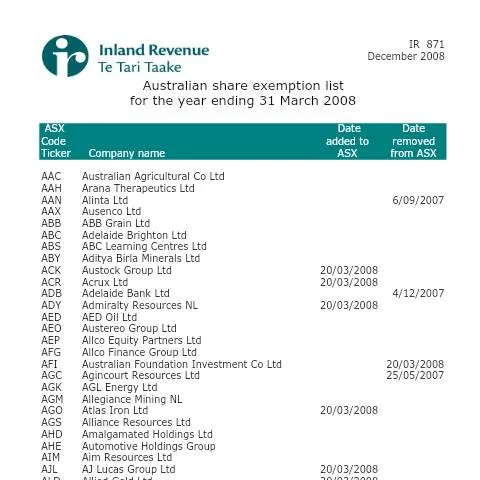
Understanding the Australian Share Exemption List: Form IR871
The Australian Share Exemption List, embodied in Form IR871, is essential for New Zealand residents who hold shares in Australian companies. This document plays a pivotal role in ensuring that individuals comply with New Zealand's income tax regulations while benefiting from the appropriate exemptions available for Australian shares. The form is particularly crucial for taxpayers seeking to avoid double taxation on income derived from their Australian investments.
The Importance of Compliance: A Step-by-Step Procedure
For New Zealand residents, the journey typically begins when they acquire shares listed on the Australian Securities Exchange (ASX). To ensure they do not incur unnecessary tax burdens when reporting their income, the completion and submission of Form IR871 is necessary. Here’s a detailed breakdown of the procedure:
- Acquisition of Australian Shares: Once you purchase shares from an ASX-listed company, it's critical to keep track of the acquisition date, associated costs, and any dividends received.
- Review of Eligibility: Determine if the shares qualify for exemption under the Australian-New Zealand Double Tax Agreement. The IR871 form outlines specific criteria, including share type and company listings.
- Completion of Form IR871: Fill out the form accurately, ensuring that all necessary information, such as personal identification and share details, is correctly entered.
- Submission: Submit the completed form to the Inland Revenue Department (IRD) either online through their secure services or via post, depending on your preference.
- Post-Submission Tracking: After submission, keep a copy of the form for your records and monitor any correspondence from the IRD regarding your application.
Key Information Required on Form IR871
The IR871 form requires specific information to qualify for exemptions. Understanding what information you'll need can streamline the process significantly:
- Personal Details: Include your full name, IRD number, and contact details.
- Share Information: Detail the ASX codes, the corresponding company names, and acquisition dates of shares.
- Financial Records: Maintain records of how much you invested in those shares, along with any dividends received. This documentation supports your claim for exemption.
Distinguishing Form IR871 from Similar Documentation
It’s essential to differentiate Form IR871 from other tax-related forms that might seem similar but serve distinct purposes:
| Form Name | Purpose | Key Differences |
|---|---|---|
| IR871 | Claim exemption for Australian shares | Specific to ASX-listed securities |
| IR3 | Annual income tax return | Comprehensive report of all income sources |
| IR67 | Application for withholding tax exemption | Focuses on different taxation scenarios |
Choosing the Right Submission Method: Online vs. Paper
When it comes to submitting Form IR871, taxpayers have two primary options: digital submission and traditional paper forms. Each method has its pros and cons, and understanding these can aid in choosing the best approach for your needs.
Online Submission
- Advantages:
- Immediate processing and confirmation of receipt.
- Environmentally friendly and paperless.
- Easy access to previous submissions for reference.
- Disadvantages:
- Requires reliable internet access.
- Some users may face challenges navigating online platforms.
Paper Submission
- Advantages:
- Familiarity for those who prefer traditional methods.
- Can provide tangible evidence of submission when posted.
- Disadvantages:
- Longer processing times due to postal delays.
- Risk of documentation being lost in transit.
What Happens After Submission? Monitoring Your Application
After Form IR871 is submitted, the IRD will review your application for exemption. Here’s what to expect in the subsequent process:
- Initial Review: The IRD will assess the information provided to ensure all criteria are met.
- Additional Information Requests: If the IRD requires more information, they will contact you directly. It's crucial to respond promptly to avoid delays.
- Decision Notification: Once processed, you’ll receive a notification regarding your exemption status. This could be in the form of a letter or through your online IRD account.
Considerations for Tax Year End Reporting
The tax year in New Zealand runs from July 1 to June 30. As such, understanding how Form IR871 fits into this timeline is vital for effective tax planning:
- Record-Keeping: Throughout the year, maintain all records related to your Australian shares, including dividends, to simplify the completion of your annual tax return.
- Filing Your Tax Return: The information from the IR871 will assist in accurately reporting your income, ensuring you take full advantage of any exemptions granted.
- Future Investments: Keep abreast of any changes to the Australian Share Exemption List, as it can affect tax obligations for future share acquisitions.
Additional Resources and Support
Tax matters can often be complex, particularly when dealing with international investments. For assistance with Form IR871 or other tax-related inquiries, consider the following resources:
- Inland Revenue Department: The IRD provides online resources and guides specifically for taxpayers dealing with overseas investments.
- Tax Agents: Consulting a registered tax agent can provide personalized assistance tailored to your unique situation.
- Online Forums: Engaging with community forums or platforms dedicated to tax discussions can offer insights from fellow taxpayers with similar experiences.