The Importance of Reporting Suspicious Activities
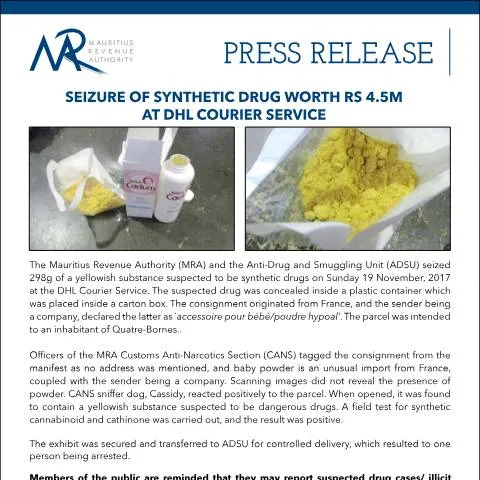
In the realm of drug enforcement, every detail matters. The recent seizure of synthetic drugs worth Rs 4.5 million at DHL Courier Service underlines the crucial role played by vigilant citizens and authorities. This incident serves as a reminder that the fight against drug trafficking relies not only on law enforcement agencies like the Mauritius Revenue Authority (MRA) and the Anti-Drug and Smuggling Unit (ADSU), but also on proactive reporting from the public.
Individuals witnessing suspicious packages or activities can report their concerns through the MRA Stop Drug Platform or the dedicated hotline. This collaborative approach strengthens the overall capability of authorities to combat illicit drug activities and ultimately safeguard the community.
Understanding the Framework of the Seizure
The seizure mentioned in the document, officially released on November 20, 2017, reflects the ongoing battle against drug trafficking in Mauritius. The context of this operation is grounded in both legal and procedural frameworks that govern drug law enforcement. The MRA operates under the provisions of the Customs Act, which grants it authority to inspect and seize goods suspected of being illicit.
In this case, the consignment was scrutinized due to several red flags: the absence of a delivery address, the unusual nature of the declared goods (baby powder from a corporate sender), and the results of initial scans. Legal provisions allow for such inspections, reinforcing the importance of adherence to customs regulations which aim to protect public health and safety.
Key Players and Their Roles
The operation to seize the synthetic drug involved multiple stakeholders:
- Mauritius Revenue Authority (MRA): Responsible for the customs operations and initial inspections. Their Anti-Narcotics Section plays a vital role in identifying suspicious shipments.
- Anti-Drug and Smuggling Unit (ADSU): Collaborates with the MRA to manage drug-related investigations and subsequent arrests.
- CANS (Customs Anti-Narcotics Section): Specifically tasked with handling narcotics-related seizures, employing specialized equipment and trained personnel.
Each of these entities adds a layer of scrutiny to the process, ensuring that no detail is overlooked in the fight against drugs.
How the Seizure Process Unfolded
The sequence of events leading to the seizure of the synthetic drugs demonstrates a systematic approach:
- Initial screening of the consignment flagged it due to the absence of an address.
- Detection by a trained sniffer dog indicated potential narcotics.
- A field test confirmed the presence of synthetic cannabinoid and cathinone.
- The exhibit was secured and sent to ADSU for further action, culminating in the arrest of a suspect.
This chronological narration not only emphasizes the efficiency of the customs process but also illustrates the importance of each procedural step in ensuring a successful intervention.
Navigating the Submission Process for Reporting
When members of the public wish to report suspicious activities or packages, they must follow specific guidelines to ensure their reports are actionable:
- Identify: Clearly identify the nature of the suspicious activity or item.
- Gather Evidence: Collect as much information as possible, including descriptions, location, and time.
- Report: Use the MRA Stop Drug Platform or call the hotline (8958) to submit the report.
Reports can be made anonymously, encouraging individuals who might otherwise hesitate to come forward due to fear of repercussions.
Distinguishing Between Different Reporting Channels
Understanding the various channels available for reporting suspicious activities is vital for effective engagement. The MRA provides multiple avenues for citizens to report their concerns:
| Channel | Method | Format | Response Time |
|---|---|---|---|
| MRA Stop Drug Platform | Online Submission | Digital Form | Varies based on severity |
| Hotline 8958 | Phone Call | Verbal Report | Immediate Response |
Each method serves a specific purpose. Online submissions may take longer to process due to paperwork, while hotline calls can elicit immediate action, especially in urgent situations.
Potential Outcomes Following a Report
Once a report is filed, the authorities follow a procedure that can lead to various outcomes:
- Investigation Initiation: Each report prompts an initial assessment by MRA or ADSU.
- Follow-Up: Investigators may contact the informant for additional information if needed.
- Arrests: Should the investigation confirm illicit activity, arrests may follow based on collected evidence.
- Community Engagement: Authorities may engage with the community regarding the outcome of significant cases.
The entire reporting and investigation process emphasizes a transparent approach, ensuring that the community remains informed and involved.
Considerations for Specific Groups
While the reporting process is open to all citizens, specific groups may face unique circumstances that affect their ability to report:
- Foreign Nationals: May require assistance in language or understanding local laws.
- Minors: Should be accompanied by an adult for reporting, ensuring their safety and understanding of the process.
- Individuals in Crisis Situations: May need immediate support from local NGOs or community services to facilitate their report.
Authorities are encouraged to make accommodations for these groups, ensuring the reporting process remains accessible and effective for everyone.
The Role of Community Awareness in Drug Enforcement
Community awareness and engagement are pivotal in enhancing the effectiveness of drug enforcement measures. The recent seizure at DHL highlights how informed citizens can act as the first line of defense against drug trafficking.
By promoting awareness campaigns, authorities can educate the public on recognizing the signs of drug-related activities, encouraging proactive reporting. Local community meetings, social media outreach, and collaborations with schools can foster an environment where individuals feel empowered to take action.
The shared responsibility between government agencies and citizens is essential, facilitating a collective effort that strengthens the overall integrity of Mauritius' fight against drugs.
Legal Framework Governing Drug Seizures in Mauritius
The seizure of synthetic drugs, such as the case involving a significant quantity valued at Rs 4.5 million, falls under the ambit of several legal provisions in Mauritius. Primarily, the Dangerous Drugs Act 1988 serves as the cornerstone of the country’s regulatory framework concerning controlled substances. This legislation delineates the classifications of drugs, stipulating the penalties for possession, trafficking, and manufacturing.
Fill in your form directly online
No printing: type your details into the boxes of the official form, tick, then download the PDF ready to send.
- 1Type into the form boxes
- 2Tick in one click
- 3Save and download the PDF
Under the Act, synthetic drugs are categorized in various schedules based on their potential for abuse and therapeutic value. For instance, a first-time offender found in possession of synthetic drugs can face imprisonment ranging from 5 to 15 years, depending on the quantity and nature of the substance. In addition, the act provides law enforcement agencies, such as the Mauritius Police Force and the National Anti-Drugs Agency (NDA), with the authority to execute searches and seizures without prior warrants under specific conditions, particularly in operations targeting organized crime.
Moreover, the Criminal Code of Mauritius complements the Dangerous Drugs Act by addressing issues associated with drug trafficking and conspiracy. Law enforcement officers are trained to follow strict procedural guidelines during drug busts to ensure that evidence collected is admissible in court. This includes maintaining a proper chain of custody for seized substances and documenting every action taken during the operation.
Impact of Synthetic Drug Trade on Mauritius
The rampant trade of synthetic drugs poses significant challenges for Mauritian society, impacting public health, safety, and the economy. As synthetic drugs often contain potent substances, their consumption can lead to severe health issues, including addiction, psychosis, and even fatalities. The epidemic of substance abuse not only strains healthcare resources but also heightens the burden on law enforcement and community support services.
Furthermore, the economic implications are profound. The rise in drug-related crime often necessitates substantial investments in policing and community rehabilitation programs. Local governments are increasingly compelled to allocate funds to combat drug abuse through prevention campaigns and educational initiatives aimed at youth. Additionally, tourism—one of Mauritius's key economic sectors—is adversely affected, as tourists may perceive the country as unsafe due to its association with drug-related incidents.
To mitigate these issues, the government has started engaging in collaborative efforts with international organizations to enhance its capacity to combat drug trafficking. These efforts include training for law enforcement personnel, public awareness campaigns regarding the dangers of synthetic drugs, and fostering community involvement to prevent drug abuse at the grassroots level.
Public Awareness and Community Engagement Initiatives
In tackling the pervasive issue of synthetic drugs, public awareness and community engagement play critical roles. Following significant seizures such as the Rs 4.5 million case, local authorities have intensified their outreach programs to educate the community about the dangers of synthetic drug use. The National Anti-Drug Strategy outlines specific objectives aimed at reducing drug demand and enhancing community resilience against trafficking.
Community workshops and seminars are organized, focusing on educating parents, teachers, and youth about the risks associated with synthetic drugs. These events often feature testimonials from recovering addicts and healthcare professionals, providing a well-rounded perspective on the impacts of substance abuse. Furthermore, schools have increasingly become focal points for drug awareness campaigns, incorporating curricula that emphasize prevention and resilience-building among students.
Moreover, partnerships with non-governmental organizations (NGOs) have become instrumental in driving these initiatives. NGOs often facilitate support groups for affected families and offer rehabilitation services for individuals struggling with addiction. By fostering an inclusive environment that encourages open dialogue about drug issues, Maurice is taking steps towards creating a more informed and resilient society.