Understanding the Seizure of Synthetic Drugs: A Deep Dive into MRA's Actions
The seizure of 1.77 kg of synthetic drugs valued at Rs 26.5 million on March 13, 2018, encapsulates the rigorous efforts of the Mauritius Revenue Authority (MRA) alongside the Anti-Drug and Smuggling Unit (ADSU) to combat drug trafficking and maintain the integrity of Mauritius' borders. This incident not only highlights the operational capabilities of these authorities but also underscores the legal repercussions faced by individuals involved in such illicit activities.
Timeline of Events: A Brief Overview
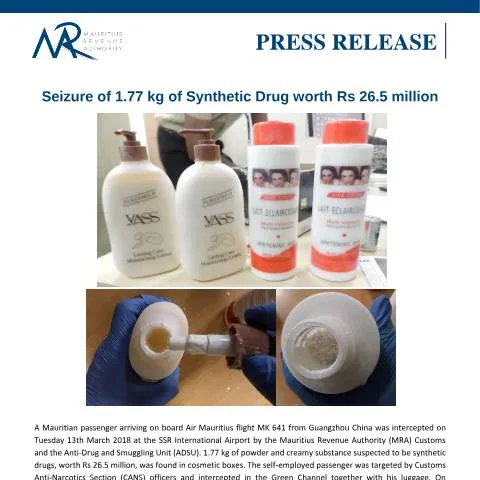
On March 13, 2018, an individual arriving in Mauritius aboard Air Mauritius flight MK 641 from Guangzhou, China, came under scrutiny by MRA Customs officials. This passenger was targeted based on intelligence received from the Customs Anti-Narcotics Section (CANS). The timeline of events unfolded as follows:
- Arrival at SSR International Airport: The passenger was intercepted in the Green Channel, which is designated for travelers without goods to declare.
- Search Operation: Upon examination of the luggage, customs officials discovered cosmetic boxes that were suspiciously heavy.
- Field Testing: The contents of the boxes were subjected to a cathinone field test, which yielded positive results for synthetic drugs.
- Legal Action: Following the discovery, the passenger was turned over to ADSU for further investigation.
Regulatory Framework Surrounding Drug Trafficking
The actions taken by the MRA are grounded in a well-defined legal framework aimed at curbing drug trafficking. The Constitution of Mauritius, alongside various acts such as the Dangerous Drugs Act, provides the necessary legal backdrop for the seizure of illegal substances. These laws empower customs and police authorities to conduct searches, seize drugs, and prosecute offenders.
In particular, the Dangerous Drugs Act outlines the penalties associated with the possession and trafficking of controlled substances, reinforcing the zero-tolerance approach adopted by Mauritian authorities.
Profiles of Individuals Targeted: A Closer Look
Understanding who gets targeted by the MRA and ADSU can provide insight into the operational strategies of drug enforcement. This seizure involved a self-employed 29-year-old male passenger, previously arrested in 2008 for possession of cannabis. His profile reflects common characteristics seen in trafficking cases, which include:
- Previous Offenses: Individuals with prior arrests for drug-related offenses often come under increased scrutiny.
- Travel Patterns: Frequent travel to countries known for drug production may lead to intervention by customs officials.
- Concealment Methods: Traffickers frequently use sophisticated methods to hide drugs within everyday items, such as cosmetic products.
Completing the Process: Following Up on Your Case
If you find yourself embroiled in a drug-related seizure case, knowing how to navigate the administrative process is crucial. After an arrest or seizure, the following steps are typically involved:
- Initial Inquiry: The individual will be questioned by ADSU officials to gather information regarding the possession and intent.
- Legal Representation: It is advisable to seek legal counsel to navigate your rights and responsibilities during the investigation.
- Awaiting Charges: Depending on the findings, charges may be filed based on the evidence collected.
Throughout this process, staying informed and proactive can greatly influence the outcome of the case.
What to Expect After a Seizure: Legal Implications
The repercussions of drug trafficking can be severe, ranging from fines to imprisonment. Upon conclusion of the inquiry, if charges are filed, individuals may face:
- Prosecution: Cases can lead to criminal charges under the Dangerous Drugs Act, with potential penalties varying based on the quantity and type of drug involved.
- Asset Seizure: Any assets or funds linked to drug trafficking may be subject to confiscation by the state.
- Public Health Initiatives: In some cases, offenders may be mandated to attend rehabilitation programs as part of their sentencing.
Community Involvement: Reporting Suspected Activities
The involvement of the general public is crucial in the fight against drug trafficking. The MRA encourages citizens to report any suspicious activities through their dedicated Stop Drug platform or by calling 8958. This collaborative effort enhances surveillance and intervention capabilities, allowing for quicker responses to suspected drug trafficking incidents.
Common Pitfalls and Challenges in Drug Seizure Cases
Understanding the intricacies of drug seizure cases can prevent missteps that could jeopardize an individual's legal standing. Common challenges include:
- Lack of Evidence: Defendants must be aware that being found in possession of drugs does not automatically imply intent to distribute.
- Misinterpretation of Laws: The complexity of drug laws may lead to confusion regarding legal rights and responsibilities.
- Failure to Seek Legal Counsel: Navigating the legal system without representation can result in unfavorable outcomes.
Being informed and prepared is essential in mitigating the impact of such legal challenges.
Implications for the Future: Strengthening Drug Enforcement Measures
The seizure of synthetic drugs on March 13, 2018, serves as a reminder of the ongoing battle against drug trafficking in Mauritius. It highlights the need for continuous improvement in enforcement strategies, community involvement, and legal frameworks to combat the evolving landscape of drug-related crimes. The collaboration between various government agencies and the public will be crucial in effectively addressing these challenges moving forward.
Legal Framework Surrounding Drug Seizures in Mauritius
The legal landscape governing drug enforcement in Mauritius is multifaceted, shaped by a combination of local statutes and international conventions. Drug-related offenses, including the seizure of synthetic drugs, are primarily regulated under the Dangerous Drugs Act, which delineates the types of substances classified as illegal and prescribes penalties for possession, trafficking, and distribution.
According to the Dangerous Drugs Act, the threshold for possession of certain quantities can lead to severe penalties, including long-term imprisonment and hefty fines. The enforcement of these laws is particularly guided by the principles of the Constitution of Mauritius, which strives to balance individual rights with public safety. Law enforcement agencies, such as the Anti-Drug and Smuggling Unit (ADSU), operate under this legal framework to conduct operations that can lead to significant drug seizures. In the context of the noted seizure of 1.77 kg of synthetic drugs valued at Rs 26.5 million, it is essential to recognize that such quantities are likely to fall into a higher penalty bracket under the Dangerous Drugs Act, thus highlighting the importance of legal compliance during investigations.
Moreover, the role of international cooperation cannot be overstated, as Mauritius is a signatory to several treaties aimed at curbing drug trafficking globally. This cooperation extends to sharing intelligence with other nations, which plays a crucial role in preventing the inflow of synthetic drugs into the country. The proactive measures taken by local authorities reflect a commitment to combatting drug-related offenses, which is further enhanced by community engagement programs emphasizing prevention and education about the dangers of drug abuse.
Impact of Drug Seizures on Community and Public Health
Beyond the immediate legal ramifications, the seizure of synthetic drugs like the 1.77 kg cache worth Rs 26.5 million has far-reaching implications on community health and safety. Synthetic drugs, often associated with severe health risks, pose significant threats not only to users but to public health systems as a whole. The consumption of such drugs can lead to a range of health issues, including addiction, mental health disorders, and overdose incidents, which place considerable strain on healthcare resources.
Fill in your form directly online
No printing: type your details into the boxes of the official form, tick, then download the PDF ready to send.
- 1Type into the form boxes
- 2Tick in one click
- 3Save and download the PDF
Community awareness and education play pivotal roles in mitigating the adverse effects that accompany drug abuse. Following significant seizures, local authorities often engage in outreach campaigns designed to inform citizens about the dangers associated with synthetic drugs. Collaborations with non-governmental organizations (NGOs) and health professionals allow for the dissemination of critical information regarding the signs of drug abuse and the avenues available for support and rehabilitation.
Furthermore, the societal impact of drug seizures extends into the realm of crime prevention. Large quantities of drugs often correlate with organized crime and violence, which can destabilize communities. By effectively removing such substances from circulation, law enforcement not only curtails potential health crises but also contributes to enhancing the overall safety and stability of neighborhoods. This multifaceted approach highlights the importance of community involvement and the need for comprehensive strategies that address the root causes of drug abuse and trafficking.
Future Directions in Drug Law Enforcement and Policy
As drug trends evolve, so must the strategies employed by law enforcement and policymakers in Mauritius. The increasing prevalence of synthetic drugs necessitates a proactive approach that considers both enforcement and prevention. Future directions may include enhancing the capabilities of local law enforcement through advanced training and better resources for detecting and managing synthetic drug cases.
Policy reforms could focus on developing more robust rehabilitation programs to support individuals affected by drug abuse, emphasizing the need for a holistic approach that extends beyond punitive measures. Collaborative efforts between governmental bodies, healthcare providers, and community organizations could foster a more integrated response to drug challenges, prioritizing education, prevention, and recovery.
Additionally, technological advancements could play a significant role in improving drug detection and enforcement practices. The use of data analytics to track drug trafficking patterns, combined with international collaboration, can enhance intelligence sharing and operational effectiveness in combating drug-related offenses.
In summary, the challenges posed by synthetic drugs in Mauritius call for comprehensive strategies that embrace legal enforcement, community health initiatives, and forward-thinking policies that adapt to the evolving landscape of drug use and trafficking.