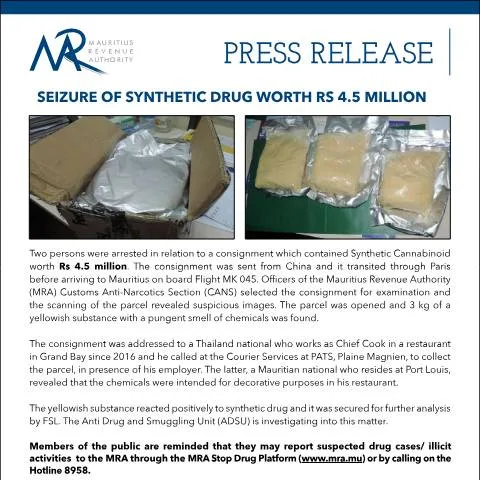
Understanding the Implications of the Seizure of Synthetic Drugs in Mauritius
The recent seizure of synthetic drugs valued at Rs 4.5 million on December 1, 2017, has raised significant awareness about the serious issues surrounding drug trafficking and illicit activities in Mauritius. This case not only involved law enforcement action but also highlighted the importance of community engagement in reporting suspected drug-related activities. Let’s delve deeper into the processes involved, the responsibilities of individuals, and the broader context of this seizure under the Mauritius Revenue Authority (MRA).
Timeline of Events: From Arrival to Arrest
The sequence of events that led to the seizure of the synthetic drugs is a critical aspect of understanding this case:
- Consignment Origin: The synthetic cannabinoid was shipped from China, transiting through Paris before its arrival in Mauritius aboard Flight MK 045.
- Customs Examination: Officers from the MRA's Customs Anti-Narcotics Section (CANS) examined the parcel, prompted by its suspicious appearance.
- Detection: Scanning revealed unusual images, leading to the physical opening of the parcel.
- Substance Identification: Upon examination, a yellowish substance with a chemical odor was discovered, which later tested positive for synthetic drugs.
- Arrests Made: Two individuals were arrested in connection with the consignment, including a Thailand national and his Mauritian employer.
The Role of the MRA and Community Involvement
The Mauritius Revenue Authority plays a pivotal role in intercepting illegal drugs. This incident exemplifies how the MRA operates not just on the basis of detection but also through public involvement.
Citizens can report suspected drug activities through the MRA Stop Drug Platform or by calling the dedicated hotline at 8958. This approach encourages community vigilance and engagement, fostering a collective effort against drug trafficking.
Eligibility and Responsibilities of Key Participants
In this specific case, various parties were involved, and it is essential to understand their roles:
- Importers: Individuals or entities importing goods into Mauritius must ensure compliance with national laws, including the prohibition of illegal substances.
- Employers: The restaurant employer, a Mauritian national, revealed that the chemicals were allegedly for decorative purposes. Employers must ensure that their employees adhere to legal importation practices.
- Law Enforcement Agencies: The MRA and the Anti Drug and Smuggling Unit (ADSU) are responsible for investigating potential criminal activities and enforcing the law.
Consequences of Involvement in Illicit Activities
Being implicated in drug-related activities carries severe consequences in Mauritius:
- Legal Penalties: Individuals found guilty of drug trafficking can face substantial fines and imprisonment.
- Reputational Damage: Involvement in such activities can lead to long-term damage to personal and professional reputations.
- Community Impact: The broader community suffers from the repercussions of drug trafficking, including increased crime rates and health issues.
Addressing Errors and Missing Information
In instances where documentation or information is missing during investigations, several protocols are in place:
- Notification: Authorities will notify involved parties of any missing information and may provide a specific timeframe for submission.
- Resolution Path: Parties may be required to submit additional documentation or evidence to clarify their involvement.
- Legal Assistance: Engaging with legal professionals can be crucial to navigate the complexities of drug-related cases.
The Broader Context of Drug Enforcement in Mauritius
This seizure is not an isolated incident but part of an ongoing effort to combat drug trafficking in Mauritius. The MRA’s initiatives include:
- Enhanced Screening Techniques: Employing advanced technologies to identify suspicious shipments.
- Collaboration with International Agencies: Working alongside global law enforcement bodies to monitor and intercept narcotics trafficking.
- Public Awareness Campaigns: Initiatives aimed at educating the public about the dangers of illicit drugs and the importance of reporting suspicious activities.
Next Steps Following a Seizure
Once a seizure is made, a structured process unfolds:
- Initial Investigation: The ADSU conducts a thorough investigation to determine the origin and intended use of the seized substances.
- Forensic Analysis: Samples are sent to the Forensic Science Laboratory (FSL) for detailed analysis.
- Legal Proceedings: If warranted, legal action will be taken against the individuals involved, based on the findings of the investigation.
Understanding the Legal Framework Surrounding Drug Trafficking
The legal backdrop for drug seizure incidents in Mauritius is grounded in a hybrid system of laws, incorporating both civil and common law principles. Key provisions include:
- PSC Act 1955: Establishes the frameworks for public service operations, including the enforcement of drug-related laws.
- Constitution 1968: Provides fundamental rights and freedoms, which intersect with law enforcement operations.
- Local Regulations: Specific guidelines and regulations govern the importation and handling of controlled substances.
Engagement with Authorities: The Importance of Reporting
Reports from the public are invaluable in the fight against drug trafficking. Citizens are encouraged to engage actively by:
- Identifying Suspicious Activities: Remaining vigilant to unusual behaviors or shipments can aid law enforcement.
- Utilizing Reporting Channels: Making use of hotlines and online platforms can facilitate timely responses from authorities.
- Participating in Community Initiatives: Engaging with local programs aimed at combating drug use can strengthen community resilience.
Conclusion: A Collective Responsibility
The seizure of synthetic drugs valued at Rs 4.5 million serves as a stark reminder of the ongoing battle against drug trafficking in Mauritius. It highlights the collective responsibility of authorities, businesses, and individuals to remain vigilant and proactive in combating illegal activities. The cooperation between the MRA and the public is paramount in safeguarding the community and ensuring a drug-free environment.
Implications of Synthetic Drug Seizures on Public Health Policy
The recent seizure of synthetic drugs worth Rs 4.5 million on December 1, 2017, has brought renewed focus on the public health implications of drug trafficking in Mauritius. Such incidents emphasize the need for comprehensive public health policies that address not only the legal ramifications but also the health consequences of drug abuse. Authorities must evaluate the effectiveness of current preventative measures, treatment options for addiction, and education programs to mitigate the impact of synthetic drugs.
Certain synthetic substances pose severe health risks, including addiction, mental health disorders, and even death. The Ministry of Health and Quality of Life (MOHQL) has a critical role in developing strategies to combat the public health crisis associated with synthetic drugs. This may include expanded community outreach programs, improved access to addiction treatment services, and collaborative efforts with law enforcement to reduce the supply of these harmful substances.
Utilizing data from recent seizures, health officials can identify trends in drug use and inform targeted interventions. Moreover, stakeholders must engage in public education campaigns to raise awareness about the dangers of synthetic drugs. Youth-targeted initiatives, in particular, are essential in preventing the onset of drug use through education about the risks involved.
Fill in your form directly online
No printing: type your details into the boxes of the official form, tick, then download the PDF ready to send.
- 1Type into the form boxes
- 2Tick in one click
- 3Save and download the PDF
Legal Framework and Consequences for Traffickers
Understanding the legal framework surrounding drug trafficking in Mauritius is crucial, particularly following the seizure of synthetic drugs. Under the Dangerous Drugs Act of 1988, severe penalties exist for drug trafficking, which can include lengthy prison sentences and substantial fines. The law categorizes synthetic drugs as controlled substances, subjecting traffickers to stringent enforcement measures.
In cases involving large quantities, such as the Rs 4.5 million seized, the law often imposes heavier penalties, reflecting the seriousness of the crime. Those found guilty of trafficking may also face asset forfeiture, where proceeds from the drug trade can be confiscated by the government. This legal framework serves a dual purpose: deterring trafficking activities and addressing the socio-economic consequences that accompany drug-related crimes.
Furthermore, the collaboration between the Mauritius Police Force (MPF) and the National Drug Control Agency (NDCA) is critical in enforcing these laws. Regular training and capacity-building for law enforcement personnel are necessary to adapt to evolving drug trends and trafficking methods. Enhanced inter-agency communication can lead to more effective operations and intelligence-sharing, which are vital for dismantling drug syndicates.
The Role of Community Engagement in Combating Drug Abuse
Community engagement plays a pivotal role in addressing the multifaceted issue of drug abuse, particularly in the wake of significant seizures like the one on December 1, 2017. Local communities must be proactive in creating environments that discourage drug use and promote healthy lifestyles. Initiatives that involve local leaders, schools, and non-governmental organizations can foster a united front against drug trafficking and abuse.
Grassroots campaigns that emphasize peer education can be particularly effective in reaching younger demographics. By equipping individuals with accurate information about the dangers of synthetic drugs, communities can cultivate resilience against peer pressure and societal influences that may encourage drug use. Furthermore, creating safe spaces for dialogue about substance abuse can help destigmatize the topic and encourage those struggling with addiction to seek help.
Additionally, community-based rehabilitation programs can complement governmental efforts, providing support systems for individuals recovering from addiction. Such programs often focus on holistic approaches, combining therapy, vocational training, and social reintegration. Collaboration with local businesses can also facilitate job opportunities for recovering individuals, reducing the likelihood of relapse.