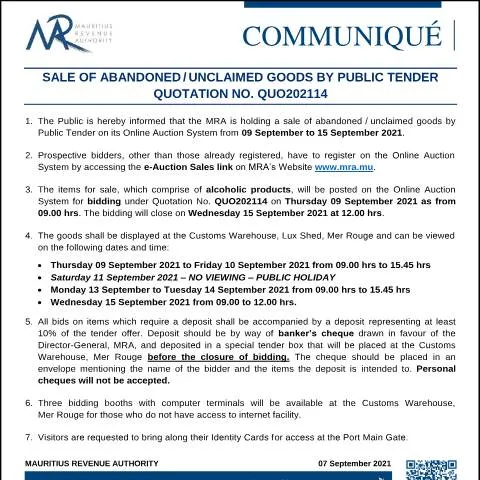
Understanding the Sale of Abandoned Goods: A Deeper Dive into Quotation No. QUO202114
In the intricate landscape of public procurement and auctions, the Sale of Abandoned / Unclaimed Goods by Public Tender under Quotation No. QUO202114 stands out as a notable event for many potential bidders in Mauritius. This process, facilitated by the Mauritius Revenue Authority (MRA), encompasses both a unique opportunity and a structured set of regulations that govern how unclaimed or abandoned goods are auctioned to the public.
The Timeline: Bidding Window and Viewing Period
From September 9 to September 15, 2021, the MRA hosted an online auction for various unclaimed goods, primarily consisting of alcoholic products. This period is critical, as it not only sets the stage for potential bidders to place their offers but also aligns with specified viewing days for interested parties.
Key Dates for Participation
- Online Bidding: Begins on September 9, 2021, at 09:00 hrs and concludes on September 15, 2021, at 12:00 hrs.
- Viewing Schedule:
- September 9 - 10, 2021: 09:00 hrs to 15:45 hrs
- September 11, 2021: No Viewing - Public Holiday
- September 13 - 14, 2021: 09:00 hrs to 15:45 hrs
- September 15, 2021: 09:00 hrs to 12:00 hrs
The brief window for bidding emphasizes the need for bidders to be well-prepared, ensuring they understand the items available and the bidding process before the closing time.
Who Can Participate? Profiles of Potential Bidders
This auction is not limited to seasoned bidders. A diverse range of individuals and entities can participate, from private citizens looking for unique items to businesses seeking to stock their inventories. Understanding the profiles of potential participants is essential for those interested.
Categories of Bidders
- Individuals: Adults who possess a valid identity card can place bids on items of interest.
- Businesses: Companies registered in Mauritius can also participate, providing they adhere to the bidding requirements.
- Foreign Bidders: Non-residents must ensure they have the necessary documentation, which may include a valid identification and proof of business registration, if applicable.
In each case, registration on the MRA’s Online Auction System is mandatory, inviting a wider audience to engage with the auction process.
The Registration Process: Steps to Enter the Online Auction
Before placing bids, prospective bidders must complete the registration process on MRA’s Online Auction System. This step is crucial for ensuring a smooth bidding experience and compliance with the auction regulations.
Registration Steps
- Access the MRA Website: Navigate to the e-Auction Sales link.
- Complete the Registration Form: Fill in all required fields accurately.
- Verification: Await confirmation of your registration from the MRA, which may take a few hours.
- Deposit Submission: Prepare to submit the mandatory deposit for your bids.
Each step is designed to ensure that bidders are serious and that the auction retains its integrity.
Deposits and Bidding: Financial Obligations and Procedures
Understanding the financial commitments tied to the bidding process is essential for potential bidders. Specifically, deposits are a prerequisite for participating in the auction, ensuring bidders have a stake in their bids.
Deposit Requirements
When placing bids on items that require a deposit, bidders must adhere to the following guidelines:
- Deposit Amount: A minimum of 10% of the tender offer must accompany each bid.
- Payment Method: Deposits must be made via a banker’s cheque drawn in favor of the Director-General, MRA.
- Submission: The cheque should be enclosed in an envelope detailing the bidder's name and the items for which the deposit is intended and deposited in a special tender box at the Customs Warehouse.
Personal cheques are not acceptable, reinforcing the need for bidders to ensure their payment methods are in order prior to the auction.
Viewing the Goods: Practical Considerations Ahead of Bidding
One of the unique aspects of this auction is the opportunity for bidders to view the goods prior to placing bids. This provides a significant advantage, allowing participants to assess the quality and condition of items in person.
Logistics for Viewing
Potential bidders must plan their visits according to the stipulated viewing days and times, which have been established to facilitate public access while maintaining security. The viewing is held at:
Customs Warehouse, Lux Shed, Mer Rouge, Port Louis.Participants should bring their Identity Cards for access, ensuring a streamlined process upon arrival.
Technical Support: Bidding Assistance on Site
For bidders who may lack internet access or need technical assistance, the MRA has thoughtfully arranged for three bidding booths equipped with computer terminals at the Customs Warehouse. This provision ensures that everyone, regardless of their digital capabilities, can partake in the auction.
Utilizing the Booths
- Accessibility: These booths are open during the entire bidding period.
- Assistance: MRA staff will be available to help potential bidders navigate the online auction system.
Such arrangements reflect the MRA’s commitment to inclusivity and accessibility, enhancing the overall bidding experience.
After the Auction: What Happens Next?
Once the bidding concludes, successful bidders are notified and must follow specific procedures to finalize their purchases. This phase is just as critical as the bidding process itself.
Finalizing the Purchase
- Notification of Success: Winning bidders will receive a notification through the provided contact details.
- Payment of Remaining Amount: Bidders must pay the outstanding balance for their won items within the timeframe set forth in the auction rules.
- Collection of Goods: After completing payment, bidders can arrange for the collection of their items from the Customs Warehouse.
Failing to follow through with these steps may lead to forfeiture of the deposit and the item itself, underscoring the importance of compliance with all auction regulations.
Addressing Challenges: What to Do in Case of Issues
Despite careful planning, participants may encounter challenges during the auction process, from issues with registration to concerns over deposits. Understanding how to navigate these problems is essential for a successful bidding experience.
Common Issues and Solutions
- Registration Problems: If you encounter issues during registration, reach out to the MRA customer support via phone or email for immediate assistance.
- Deposit Issues: Ensure that your banker’s cheque is correctly addressed. If rejected, contact the MRA to understand the discrepancy.
- Bid Disputes: Should there be any discrepancies in bidding, bidders are encouraged to raise their concerns directly with the MRA for clarification.
Quick and effective resolution of these issues is vital to maintaining the integrity of the auction process.
The Regulatory Framework: Understanding the Legal Context
The Sale of Abandoned / Unclaimed Goods by Public Tender is not merely an ad hoc event; it operates within a broader regulatory framework established by Mauritian law. This context offers insight into the purpose and authority behind the auction process.
Key Legal Provisions
The auction is governed by principles articulated in the MRA guidelines, which draw upon the hybrid legal framework of Mauritius that combines elements of French civil law and English common law. This framework ensures transparency and fairness in public procurement.
Moreover, the provisions in the Public Procurement Act provide a robust foundation for the auction process, establishing clear guidelines and protocols that all participants must adhere to.
Conclusion: Navigating the Auction Landscape with Confidence
Participating in the Sale of Abandoned / Unclaimed Goods by Public Tender under Quotation No. QUO202114 represents a unique opportunity for a variety of bidders. By understanding the timeline, registration requirements, financial obligations, and post-auction processes, participants can navigate this landscape with confidence. Embracing this structured approach ensures that all bidders are well-prepared for a successful auction experience, ultimately benefiting from the diverse range of items available for acquisition.
Understanding the Process of Public Tender for Abandoned Goods
The sale of abandoned or unclaimed goods in Mauritius is governed by a structured public tender process. This process is crucial for ensuring transparency, fairness, and adherence to legal obligations in the disposal of public property. The specific guidelines for the sale of such goods are outlined in Quotation 14 (08.09.21), which provides a framework for both public authorities and potential bidders.
To engage in this process, interested parties must be aware of the requirements set forth by the relevant authorities, primarily the Public Service Commission (PSC). The tender process begins with the public advertisement of the abandoned goods, where details regarding the items, their condition, and the terms of sale are made available. This advertisement is usually published in major newspapers and on official government websites, ensuring wide accessibility to potential bidders.
Fill in your form directly online
No printing: type your details into the boxes of the official form, tick, then download the PDF ready to send.
- 1Type into the form boxes
- 2Tick in one click
- 3Save and download the PDF
Bidders are required to submit their quotations within a specified timeframe, indicated in the tender notice. Each submission must comply with the guidelines outlined in the tender document, which includes detailed instructions on how to prepare and submit the quotation. It is also essential for bidders to provide all necessary documentation, including identification, proof of address, and any relevant certifications that may be required by the tender specifications.
Upon the closing of the tender, the evaluation committee, appointed by the relevant authority, reviews the submitted quotations. The evaluation is conducted based on predetermined criteria such as the offered price, the bidder's capability to fulfill the terms of the sale, and compliance with all legal requirements. Successful bidders are then notified and required to complete additional formalities, including payment of the tender amount and collection of the goods.
Legal and Regulatory Framework Surrounding Unclaimed Goods
The legal framework governing the sale of unclaimed goods in Mauritius combines elements of French civil law and English common law, reflecting the country's hybrid legal system. Under the PSC Act 1955, public authorities have the mandate to manage and dispose of unclaimed properties, ensuring that such transactions adhere to stipulated laws and regulations.
One crucial aspect of this legal framework is the requirement for public tender as the preferred method of disposal. This ensures that the process not only remains transparent but also provides an opportunity for fair competition among potential buyers. Furthermore, the law stipulates that any goods deemed abandoned must undergo a specific period where the original owner is given the chance to claim their property before it becomes eligible for tender. This period allows for due diligence and is crucial for upholding the rights of property owners.
In addition to the PSC Act, specific regulations may be outlined in local government ordinances or departmental policies, which provide additional guidance on the handling and sale of unclaimed goods. It is essential for bidders to familiarize themselves with these regulations as they can vary significantly depending on the nature of the goods and the governing authority involved. For example, the Local Government Service Commission (LGSC) may have its own set of rules applicable to the sale of abandoned items that fall under its jurisdiction.
Moreover, the legal ownership of unclaimed goods can also raise unique considerations. In instances where goods have been abandoned for extended periods, complexities regarding ownership may arise, particularly if multiple claims are submitted for the same item. It is advisable for bidders to obtain adequate legal advice and documentation before participating in the tender process to safeguard against potential disputes.
Guidelines for Participants in the Tender Process
For individuals and businesses looking to participate in the public tender for abandoned goods, there are several essential guidelines to follow, ensuring a smooth and successful bidding experience. First and foremost, it is imperative to stay informed about upcoming tenders by regularly checking the PSC's official announcements and relevant government portals such as govmu.org.
Next, potential bidders should thoroughly read the tender documents associated with Quotation 14 (08.09.21). These documents provide critical information on the items for sale, including descriptions, conditions, and any specific stipulations. Understanding these details will enable bidders to make informed decisions about their offers.
Another key guideline is the preparation of the requisite documentation. This includes PSC Form 7 or any other specific forms highlighted in the tender announcements. Documentation should be completed meticulously to avoid any administrative hiccups. Additionally, obtaining any necessary clearances, such as tax clearance certificates from the Mauritius Revenue Authority (MRA), is essential to facilitate a smooth transaction.
It is also recommended to prepare a competitive yet realistic quote based on the condition of the goods and market rates. While it can be tempting to submit a low bid, ensuring that the offer adequately reflects the item’s value is crucial for success. Bidders should also consider additional costs, such as transportation and potential refurbishments of the acquired goods, as these can impact the overall investment.
Lastly, post-tender procedures are equally important. Upon successful bidding, participants must adhere to all payment timelines and follow the instructions for the collection of goods. Any delay in these processes could result in penalties or disqualification from future tenders. Maintaining communication with the relevant authority throughout the process can also help mitigate any potential issues.