Skip to content
Government & admin

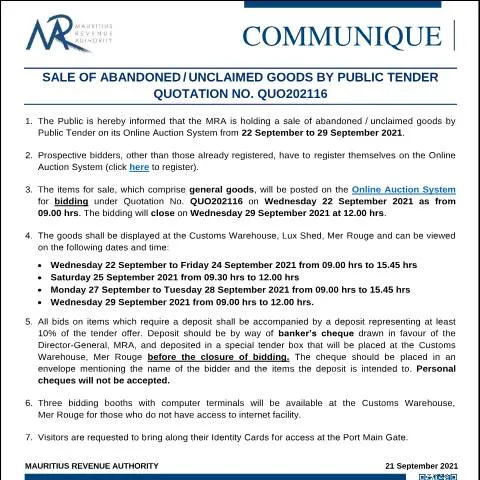
Explore the Sale of Unclaimed Goods: Quotation QUO202116

Official documentGovernment & admin
PreviewDocument preview: Explore the Sale of Unclaimed Goods: Quotation QUO202116 — Government & admin (CommuniqueQUO202116)
Official document

What would you like to do?

After payment, download your document or edit it in your account.

After payment, download your document or edit it in your account.

Unlocking Opportunities: The Role of the Sale of Abandoned/Unclaimed Goods Form

Imagine stumbling upon a treasure trove of items, all waiting for a new owner. The Sale of Abandoned/Unclaimed Goods by Public Tender, specifically under Quotation No. QUO202116, opens doors to unique opportunities for prospective buyers. This form, part of a regulated public tender process, facilitates the sale of items that have been abandoned or unclaimed by their original owners. It serves as a bridge between the Mauritius Revenue Authority (MRA) and the public, enabling the disposal of goods while ensuring transparency and fairness in the bidding process.

Understanding the Sale of Abandoned/Unclaimed Goods form is deeply rooted in the legal framework of Mauritius. The MRA operates under the auspices of various laws that govern customs and taxation, ensuring that all sales conducted are compliant with Mauritian legal standards.

The practice of selling abandoned goods dates back many years, with the aim of reducing clutter and maximizing the use of government resources. By public tender, the MRA adheres to principles of fairness, accountability, and transparency, allowing multiple bidders the opportunity to compete for goods that might otherwise go to waste.

Who Stands to Gain? Profiles of Interested Bidders

This form is primarily aimed at individuals or entities interested in acquiring goods through competitive bidding. Among the potential bidders are:

  • Private Collectors: Individuals looking to expand their collections with unique or rare items.
  • Small Business Owners: Entrepreneurs seeking inventory at competitive prices can benefit significantly from this auction.
  • Resellers: Those in the resale market can find valuable goods to flip for profit.
  • Non-Profit Organizations: Charities and community groups may seek items to support their initiatives.

However, it's essential for bidders to recognize that not all abandoned goods are suitable for all purposes. For example, certain items may require specific licenses or permits for resale, and bidders must conduct their due diligence before participating in the auction.

A Deep Dive into the Form: Understanding Each Section

Filling out the form for participating in the public tender involves careful attention to detail. Here’s a breakdown of the critical sections to consider:

Form Section Description Common Pitfalls
Bidder Information Details such as name, contact information, and identity card number. Incorrect ID numbers can lead to disqualification.
Item Details Specification of the goods you are bidding on. Missing item reference numbers can result in confusion.
Deposit Information Indicating the deposit amount and payment method. Personal cheques are not accepted; only banker’s cheques are valid.
Signature and Date Confirmation of the bidder’s agreement to terms. Missing signatures will invalidate the bid.

Each section plays a pivotal role in ensuring that the bidding process runs smoothly. Any oversight can not only jeopardize the individual bid but also impact future opportunities for participation.

How to Submit: Channels for Form Deployment

The submission of the Sale of Abandoned/Unclaimed Goods form can be accomplished through various channels, catering to different user preferences. Familiarizing yourself with these options can save time and reduce stress during the bidding process:

  1. Online Submission: Through the MRA’s Online Auction System, bidders can fill and submit their forms electronically. This method is convenient and allows for real-time updates.
  2. Paper Submission: For those who prefer traditional methods, printed forms can be dropped off at designated MRA offices.
  3. On-site Registration: Bidding booths equipped with computer terminals will be available at the Customs Warehouse for individuals lacking internet access. This ensures that no one is excluded from the bidding process.

Regardless of the method chosen, ensure that all necessary documentation is complete to avoid delays or disqualification from the auction.

Timing is Everything: Important Dates and What Follows

Engagement in the bidding process requires keen awareness of key dates. The public tender auction is scheduled from:

  • Start Date: 22 September 2021, 09:00 hrs
  • End Date: 29 September 2021, 12:00 hrs

During this period, prospective bidders can view the items for sale at the Customs Warehouse on specified dates prior to the bidding closure:

  • 22 September to 24 September 2021: 09:00 - 15:45 hrs
  • 25 September 2021: 09:30 - 12:00 hrs
  • 27 September to 28 September 2021: 09:00 - 15:45 hrs
  • 29 September 2021: 09:00 - 12:00 hrs

After the bidding closes, successful bidders will receive notifications regarding their bids. It is crucial to keep track of communications from the MRA, as these will detail the next steps in the acquisition process, including payment and collection of bought items.

Online editing included

Fill in your form directly online

No printing: type your details into the boxes of the official form, tick, then download the PDF ready to send.

  1. 1Type into the form boxes
  2. 2Tick in one click
  3. 3Save and download the PDF
Get started for Rs 47.16

Distinguishing Features: How This Form Differs from Similar Documents

While there may be other forms concerning the sale of goods within the public sector, the Sale of Abandoned/Unclaimed Goods by Public Tender possesses unique characteristics that set it apart:

  • Public Tender Process: Unlike regular sales or auctions, this process facilitates a competitive bidding environment, ensuring fair market value for items.
  • Specific Item Categories: This tender is strictly for abandoned or unclaimed goods, as opposed to newly acquired or donated items.
  • Deposit Requirement: Bidders must submit a deposit, which is a distinctive feature compared to general sales where payment is made upon purchase.

Understanding these differences is vital for potential participants, as it shapes their strategies and expectations when engaging with the form and the auction.

More Than Just a Form: The Broader Impact of the Sale of Abandoned Goods

The Sale of Abandoned/Unclaimed Goods form is not merely a procedural document; it plays a significant role in the larger economic landscape of Mauritius. By facilitating the sale of such goods, the MRA contributes to:

  • Waste Reduction: Items that would otherwise accumulate in storage are given a chance at a new life, promoting sustainability.
  • Revenue Generation: The sale of these goods can provide additional revenue for the government, which can be reinvested into public services.
  • Community Engagement: Bidders from diverse backgrounds come together, fostering a sense of community and shared purpose.

Ultimately, the form serves as a catalyst for economic activity, allowing individuals and organizations to benefit from the unseen potential of abandoned items.

Engaging in this bidding process not only allows bidders to gain unique items at potentially lower prices but also supports a system that values transparency, sustainability, and community involvement. As you prepare to participate in this public tender, remember that thorough preparation and understanding of the form can make all the difference.

Understanding the Public Tender Process for Abandoned Goods

In Mauritius, the sale of abandoned or unclaimed goods through public tender is governed by specific regulations that aim to provide transparency and fairness in the auction process. Typically, these goods are items that have been left unclaimed for a certain period by their owners and are now being offered for sale by governmental authorities. Understanding the procedures involved can be crucial for potential buyers looking to participate in these tenders. The process begins when the relevant authority, often a local government agency or the Mauritius Revenue Authority (MRA), identifies goods that have been abandoned or unclaimed. These items are cataloged and assessed for their condition and potential value. The government then issues a public notice, inviting potential bidders to participate in the tender process. This notice usually includes details on the nature of the goods, the location of the sale, and the date and time of the tender. Potential bidders must carefully review the terms and conditions outlined in the public notice. It is essential to note any registration requirements, as bidders may need to submit a completed application form, pay a deposit, or provide proof of identity (e.g., a National ID Card) before being allowed to participate. Additionally, it is advisable for bidders to inspect the goods prior to the tender, as this will provide insight into the quality and potential value of the items up for auction. As part of the bidding process, participants will submit their quotations within a specified timeframe. The authority overseeing the tender will evaluate all submissions based on criteria such as price and credibility of the bidder. It is important to highlight that the highest bid does not always guarantee a sale; the government retains the right to reject any or all bids if they do not meet their expectations or if the bids are deemed unsatisfactory. Successful bidders will be required to complete a purchase agreement, after which they will need to make the necessary payment within a prescribed period. Failing to do so may result in the forfeiture of their deposit and the goods being offered again in a subsequent tender. When engaging in the purchase of abandoned or unclaimed goods through public tender in Mauritius, successful bidders must understand the legal implications and responsibilities that come with their acquisition. The bid acceptance and subsequent sale are not merely transactional; they carry specific obligations that must be adhered to, in line with prevailing laws. Upon winning a tender, the successful bidder enters into a contractual agreement with the relevant government authority. This agreement typically delineates the responsibilities of both parties, including the transfer of ownership, payment terms, and the conditions under which the goods are sold. One of the critical components of this contract is the acknowledgment of the goods' condition—buyers are usually required to accept the items "as is," thereby waiving the right to return or seek any claims for defects post-purchase. This clause emphasizes the importance of thorough examination of goods prior to bidding. Additionally, successful bidders must be aware of any additional legal stipulations that might apply based on the nature of the goods being purchased. For example, if the abandoned items include vehicles, the new owner may need to ensure that they can obtain the necessary registration documents and clear any legal title issues. This might involve liaising with the MRA for tax obligations or with the Mauritius Police Force to verify the legal status of the vehicle. Moreover, bidders should also consider the regulatory landscape that surrounds the ownership and resale of such goods. Depending on the type of items acquired—be it electronics, antiques, or vehicles—there may be specific consumer protection laws that govern resale, warranty obligations, or licensing requirements. Engaging legal counsel or consulting with local authorities may be beneficial to navigate these complexities effectively. In sum, while the opportunity to purchase abandoned or unclaimed goods through public tender can be advantageous, it is imperative for bidders to be well-informed of their legal obligations and responsibilities associated with their successful bids. The landscape of public tender sales in Mauritius, particularly concerning the sale of abandoned and unclaimed goods, is evolving. With technological advancements and a shift towards digital platforms, we can anticipate several trends that may shape the future of these auctions. One significant trend is the increasing move towards e-tendering. The Government of Mauritius has been actively promoting e-services, and public tenders for abandoned goods may soon transition to online platforms. This shift would facilitate greater accessibility, enabling a wider range of participants to engage in the bidding process without the geographical constraints previously associated with in-person tenders. The anticipated integration with the MauPass system could streamline registration, bidding, and payment processes, making it more user-friendly for potential bidders. Moreover, enhanced transparency and accountability in the tendering process are expected to improve public trust. The implementation of blockchain technology could provide an immutable record of bids and transactions, ensuring that the tender process is conducted fairly and without discrepancies. This would allow bidders to verify past transactions and assess the integrity of the tendering process. Additionally, as awareness of sustainability and resource conservation grows, we may see a rising interest in the purchase and resale of abandoned goods. Eco-conscious buyers may be drawn to the idea of reclaiming and repurposing items that would otherwise contribute to waste. This trend could lead to the development of community initiatives focused on the recovery and redistribution of goods, further enhancing the concept of circular economy practices within Mauritius. Lastly, there may be a push for educational programs and workshops aimed at informing potential bidders about the tender process, their rights and obligations, and strategies for identifying valuable goods. Local authorities could partner with community organizations to create resources and events that demystify public tenders, making them more approachable for the average citizen. In summary, the future of public tender sales for abandoned goods in Mauritius is set to embrace technology, transparency, and sustainability. Stakeholders will need to adapt to these changes to ensure the continued success and integrity of the tendering process.

Frequently asked questions

What is the purpose of the Sale of Abandoned Goods?

The sale facilitates the disposal of unclaimed items, connecting the public with unique opportunities.

Who manages the sale process?

The Mauritius Revenue Authority (MRA) oversees the public tender process for abandoned goods.

How can I participate in the tender?

Interested buyers can submit their quotations as per the guidelines provided in the tender notice.

What types of items are available for sale?

The sale includes various abandoned or unclaimed goods, which can vary widely in type and value.

Are there any conditions for purchasing?

Yes, buyers must adhere to the terms outlined in the public tender documentation.

When does the sale take place?

The sale is conducted periodically, with specific dates announced in advance for each tender.

Similar documents