Understanding the Significance of Quotation No. QUO202113
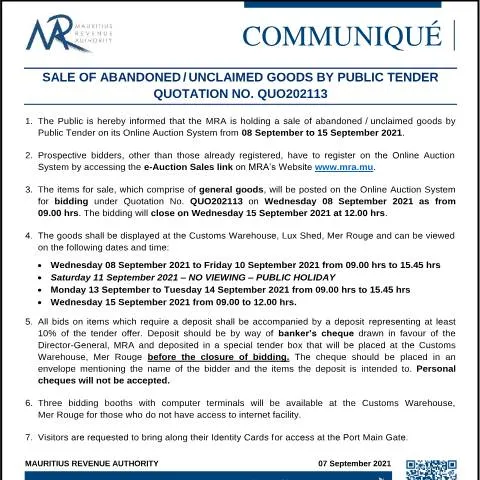
The announcement made by the Mauritius Revenue Authority (MRA) regarding the Sale of Abandoned / Unclaimed Goods by Public Tender under Quotation No. QUO202113 highlights a unique opportunity for individuals and businesses alike. Scheduled to take place from September 8 to September 15, 2021, this event allows participants to acquire a variety of general goods that have remained unclaimed for an extended period. The public tender mechanism not only facilitates the responsible disposal of these goods but also promotes transparency and fairness in the bidding process.
The Regulatory Framework Behind the Sale
The foundation for this public tender process lies within the regulatory framework established by the Mauritius Revenue Authority. This framework governs not just the sale of abandoned goods but also ensures the process aligns with the broader objectives of fiscal responsibility and public accountability. Historical precedents in Mauritius showcase various instances where unclaimed goods have been auctioned, thus streamlining the extensive custody requirements that the MRA endures for such items.
According to the Customs Act, items that remain unclaimed for a specific duration must be brought to auction to prevent unnecessary accumulation in storage facilities, thereby creating space for new items to be processed. This historical context reinforces the need for public engagement in these auctions and provides insights into the underlying rationale.
Completing Your Participation: A Step-by-Step Guide
To engage in the bidding process for Quotation No. QUO202113, prospective bidders must adhere to a structured approach. Here's a detailed breakdown:
- Registration: Individuals not already registered on the MRA's Online Auction System must initiate their registration by visiting the e-Auction Sales link available on the MRA website (www.mra.mu).
- Viewing the Goods: Goods can be inspected at the Customs Warehouse located at Lux Shed, Mer Rouge. Viewing periods span from September 8 to September 10 and then again from September 13 to September 15, allowing bidders to assess the items before making an offer.
- Bidding: The online bidding will commence on September 8, 2021, at 09:00 hrs and will conclude on September 15, 2021, at 12:00 hrs. Bids should be submitted through the Online Auction System to ensure they are recorded accurately.
- Deposit Payment: For items requiring a deposit, bidders must include a banker's cheque representing at least 10% of their tender offer. Personal cheques will not be accepted.
- Accessing Bidding Booths: For those lacking internet access, the MRA will provide three bidding booths equipped with computer terminals at the Customs Warehouse, ensuring that all individuals have the opportunity to participate.
Key Dates and Their Importance
The timeline surrounding the sale is critical for potential bidders. Each date marks an essential phase of the bidding process:
| Date | Event | Notes |
|---|---|---|
| September 8, 2021 | Commencement of Bidding | Online Auction opens at 09:00 hrs. |
| September 10, 2021 | Last Day for Viewing Goods | Viewing available until 15:45 hrs. |
| September 11, 2021 | Public Holiday | No viewing allowed. |
| September 15, 2021 | Closure of Bidding | Bidding closes at 12:00 hrs. |
Each of these dates serves a significant purpose, allowing participants to prepare adequately and understand the timeline of events leading up to the final bidding process.
Navigating Issues: What if Problems Arise?
In the event that a bidder encounters issues such as refusal of application, errors in the submission, or missing documents, it is crucial to know the steps to take:
- Contact the MRA: Immediate communication with the MRA’s customer service can clarify any misunderstandings or mistakes in the application.
- Review Submission Requirements: Ensure all required documents were submitted correctly and on time, which is essential for the validation of bids.
- Examine Alternatives: If a bid is rejected, bidders may analyze the reasons for the refusal and consider reapplying in future auctions, learning from previous experiences.
Understanding the recourse available helps participants mitigate risks and navigate the administrative process more effectively.
Distinguishing Features of Quotation No. QUO202113
It is essential to differentiate Quotation No. QUO202113 from other similar forms and procedures within the MRA framework. Notably:
- This quotation specifically targets abandoned or unclaimed goods, contrasting with sales of seized goods or other categories.
- While public tenders are common, this auction emphasizes a digital approach, encouraging e-participation through online bidding, a feature not present in many previous public sales.
- The deposit requirement ensures that only serious bidders participate, which may differ from other bidding processes that do not impose such financial prerequisites.
Awareness of these distinctions can enhance bidders' understanding of what to expect during the auction and facilitate better decision-making based on their needs and expectations.
Who Should Participate: The Target Audience
Understanding the profile of potential bidders can further clarify who might benefit from participating in this sale:
- Individual Collectors: Enthusiasts looking for unique or rare items that may be available among the unclaimed goods.
- Small Businesses: Enterprises seeking to acquire inventory at potentially lower costs, thus enhancing their product offerings without significant investments.
- Local Artisans: Craftspeople looking for materials that can be repurposed in their projects or trades.
Each of these profiles brings unique motivations and expectations to the auction, making it a diverse environment for both goods and bidders.
Following Up on Your Bid: Post-Auction Protocol
Once the bidding concludes on September 15, 2021, participants must follow specific procedural steps:
- Review Results: Bidders should regularly check the MRA website for updates regarding the outcomes of the auction.
- Payment and Collection: Successful bidders will receive instructions for payment and collection of their items, which must be adhered to promptly.
- Documentation: Ensure all necessary documentation related to the bid is retained for future reference or in case of disputes.
Being proactive in these follow-up actions not only ensures compliance but also facilitates a smoother transaction overall.
Understanding the Process of Public Tender for Unclaimed Goods
The sale of abandoned or unclaimed goods in Mauritius is primarily governed by the Public Procurement Act and the guidelines set forth by the relevant authorities. The entire process is designed to ensure transparency and fairness while maximizing value for the public. Public tenders for unclaimed goods are published widely to attract a diverse array of bidders, creating a competitive environment.
Potential bidders should be aware of the necessary steps involved in participating in this process. Firstly, it is crucial to regularly check the official government portal where notifications regarding upcoming tenders are published. This not only includes details about the goods available but also specific instructions on how to submit a bid, including deadlines and requisite documents. The quotation titled 'Quotation 13 (08.09.21)' serves as a prime example of how unclaimed goods are auctioned off, providing potential bidders with a template for understanding the norms and expectations of public tenders in Mauritius.
Moreover, interested parties should familiarize themselves with the auction catalogue, which typically contains detailed descriptions of the items, their conditions, and any applicable warranties or guarantees. This information plays a critical role in helping bidders make informed decisions. Knowing the value of the goods on auction and understanding the competition can significantly enhance bidders' chances of success.
Fill in your form directly online
No printing: type your details into the boxes of the official form, tick, then download the PDF ready to send.
- 1Type into the form boxes
- 2Tick in one click
- 3Save and download the PDF
Legal Considerations and Responsibilities of Bidders
Bidding on abandoned or unclaimed goods does not come without its legal responsibilities. All participants must adhere to the stipulations outlined in the relevant public procurement regulations. It is essential to provide accurate information during the quotation submission process. Misrepresentation may lead to disqualification and potential legal repercussions, including financial penalties.
Furthermore, bidders must be cognizant of their obligations post-purchase. Once goods are acquired through the tender process, the responsibility for their removal rests solely with the successful bidder. This necessitates a clear understanding of logistical arrangements to transport the goods from the auction site to their desired location. Failing to comply with removal guidelines may result in penalties or additional costs.
Moreover, bidders should be aware of any local regulations around the disposal of certain types of goods. For instance, hazardous materials or products requiring special permits must be handled in accordance with environmental regulations. Ignorance of such laws can lead to significant legal and financial liabilities. Therefore, it is advisable to consult with experts or legal advisors who specialize in public procurement and environmental law, ensuring compliance every step of the way.
Implications of Digital Transformation on Tender Processes
The digital transformation of public services in Mauritius has significantly impacted the tender process for unclaimed goods. The government has increasingly adopted e-services, making it easier for potential bidders to access information and submit applications online. For instance, the MauPass single-sign-on system linked to the National ID Card simplifies the login process for bidders, allowing for a streamlined application experience.
This shift towards e-tendering has numerous benefits, including increased accessibility for citizens and improved efficiency in processing bids. Online platforms eliminate the need for physical paperwork, reducing administrative burdens, and expediting the evaluation process. Bidders can track the status of their submissions in real-time, receiving instant notifications regarding the outcomes.
However, while the transition to e-services presents numerous advantages, it also poses challenges, particularly for individuals who may be less technologically savvy. To address this concern, the government has initiated training programs aimed at equipping citizens with the necessary skills to navigate online tender submissions effectively. These initiatives are crucial in fostering inclusivity, ensuring that all potential bidders can participate in the process regardless of their technological proficiency.
As Mauritius continues to embrace digital innovation, understanding how to leverage these tools is vital for anyone looking to engage in the tender process for unclaimed goods. Staying informed about technological updates and enhancements on government platforms can help bidders stay competitive in the ever-evolving landscape of public procurement.