Understanding the Sale of Abandoned Goods: A Key Public Tender Process
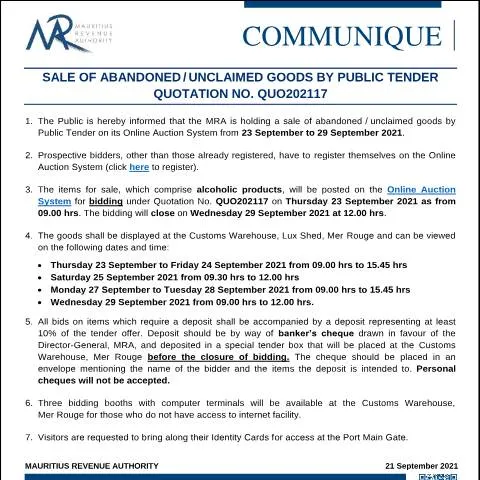
When it comes to the sale of unclaimed assets, the Mauritius Revenue Authority (MRA) plays a vital role in ensuring that these goods can be accessed by the public through a structured public tender process. The Sale of Abandoned / Unclaimed Goods by Public Tender, Quotation No. QUO202117, is an essential document that facilitates this complex yet streamlined process.
Timeline of Events: From Announcement to Auction
The timeline surrounding the sale of abandoned goods is critical for prospective bidders. The MRA has laid out a specific schedule for the public tender, highlighting important dates that will dictate the flow of this process.
- Announcement Date: The sale was officially announced on 21 September 2021.
- Registration Period: Bidders interested in participating must register on the Online Auction System before the bidding begins.
- Viewing Period: Potential bidders can view the goods from 23 September to 29 September 2021, with specific viewing hours detailed in the official communiqué.
- Bidding Period: Bidding for the auction opens on 23 September 2021 at 09:00 hrs and closes on 29 September 2021 at 12:00 hrs.
- Deposit Submission: Bidders must submit a deposit by way of a banker’s cheque prior to the close of bidding.
This timeline ensures that all participants have a clear understanding of when to act, thus reducing confusion and enhancing the tender process.
Step-by-Step Guide to Filling Out the Quotation Form
Completing the official form accurately is vital for a successful bidding experience. Understanding the specific sections of the form will facilitate proper completion.
Section Breakdown
- Bidder Information: This includes your name, contact details, and identification information. Ensure that your Identity Card number is entered correctly.
- Item Selection: Clearly specify the items you wish to bid on. Mistakes in item codes could lead to disqualification.
- Bid Amount: Enter the amount of your bid, remembering that it must meet the minimum bid requirements.
- Deposit Details: Include details of the banker’s cheque, ensuring that it is made out correctly as specified to the Director-General, MRA.
Each section of the form has its nuances, and being meticulous in your entries can prevent costly mistakes that affect your ability to bid.
How to Submit Your Bid: Online Versus In-Person
Understanding the submission channels available is crucial for prospective bidders. The MRA provides multiple options for submitting bids:
Online Submission
- Registration on the Online Auction System is required for those who wish to bid remotely.
- Online bidding will allow users to participate from the comfort of their homes or offices, provided they have internet access.
In-Person Submission
- Physical bids can be submitted at the Customs Warehouse, Mer Rouge, where designated booths with computer terminals will be accessible for those without internet facilities.
- Bidders must ensure they bring their Identity Cards for entry to the Port Main Gate.
This dual submission approach caters to a broader audience, ensuring that everyone has the opportunity to participate in the tender process effectively.
The Role of the Quotation Document in the Tender Process
The Quotation No. QUO202117 serves as a formal invitation for bids, laying the groundwork for the auction of abandoned goods. This document delineates the terms and conditions under which the tender will occur.
"The MRA’s procedure for abandoned goods sales is designed to enhance transparency and fairness in the public auction process."
From the initial announcement to the final awarding of bids, the document is crucial for maintaining order and ensuring that bidders understand their rights and obligations.
Special Considerations for Bidders: Who Can Participate?
While the tender is open to the general public, there are specific considerations depending on the bidder's status. Understanding these nuances can make a significant difference in the bidding experience.
Eligibility Criteria
- Bidders must be of legal age (18 years or older). Minors cannot submit bids independently.
- Foreign nationals are also eligible to bid but may need to provide additional documentation verifying their identity.
Complex Situations
In circumstances where a bidder has additional complexities—such as dealing with legal representatives or guardianship issues—the MRA recommends prior consultation to navigate the process smoothly.
The Legal Framework and Historical Context of the Tender Process
The tender process for abandoned goods operates within a framed legal context established by the MRA. Understanding the regulations can help bidders navigate the tender effectively.
- Legal Basis: The process is underpinned by the Public Service Commission (PSC) Act and the overarching legislative framework governing public property management.
- Past Practices: Historically, the MRA has sold unclaimed goods as a means of asset recovery and public benefit, setting precedents for transparency and fairness.
This historical context is not only of academic importance but also reflects the MRA’s commitment to the responsible management of public resources.
Differentiating Between Tender Documents: What Sets This Form Apart?
Although the Quotation No. QUO202117 is part of a broader administrative framework, it is essential to distinguish it from other forms related to public auctions or sales.
| Document Type | Purpose | Specific Requirements |
|---|---|---|
| Quotation No. QUO202117 | Sale of abandoned/unclaimed goods | Deposit required; bidding period; specific item listing |
| Public Auction Form | General public auction participation | May not require deposits; more general items |
| Private Sale Form | Disposal of specific government assets | Negotiated terms; may involve private bidders |
Recognizing these distinctions helps bidders choose the correct documentation and prepares them for the specific requirements of each process.
Final Thoughts: Preparing for the Auction Day
As the auction day approaches, preparation is key. Bidders should ensure that they have completed the necessary registration and reviewed the items thoroughly during the viewing period. Maintaining a clear focus on the bidding process will enhance the chances of securing goods at favorable terms.
By understanding the intricacies of the Quotation No. QUO202117, bidders are well-equipped to engage effectively in the sale of abandoned goods, fostering a more transparent and fair marketplace for all participants.
Understanding the Process of Public Tender for Abandoned and Unclaimed Goods
The sale of abandoned or unclaimed goods in Mauritius is a structured process primarily managed by the relevant authorities under the provisions outlined in the Public Procurement Act. The procedure involves a series of stages designed to ensure transparency, fairness, and equal opportunity for all participants. The Public Procurement Board (PPB) oversees these operations, ensuring adherence to established legal frameworks and guidelines.
Initially, the goods must be verified as abandoned or unclaimed, according to specific criteria defined by the government. This verification process may involve various stakeholders, including the police, local authorities, and any other entities that were initially responsible for the handling of these goods. Following this, a public notice is issued, detailing the nature of the items available for tender, the criteria for bidding, and the tender submission process itself. This ensures that potential bidders are adequately informed and prepared to participate.
Fill in your form directly online
No printing: type your details into the boxes of the official form, tick, then download the PDF ready to send.
- 1Type into the form boxes
- 2Tick in one click
- 3Save and download the PDF
The tender process typically includes the following key components:
- Public Notification: The items to be sold are advertised through official channels, including local newspapers and online platforms, to reach a wide audience.
- Submission of Quotations: Interested parties must submit their quotations within the specified timeframe. This usually involves filling out an official form and providing necessary documentation to prove their eligibility.
- Evaluation of Quotations: Submitted bids are evaluated based on predetermined criteria such as price, bidder qualifications, and compliance with the submission requirements.
- Awarding the Tender: The successful bidder is notified, and arrangements are made for payment and transfer of ownership of the goods.
This structured approach not only promotes transparency and accountability but also provides an opportunity for the public to acquire items that would otherwise remain unutilised. It is advisable for bidders to carefully review the specific tender documents and requirements related to each public tender as these may vary from one auction to another.
Common Challenges and Considerations in the Bidding Process
Participating in the public tender for abandoned and unclaimed goods can present certain challenges and requires careful consideration from potential bidders. Understanding these challenges is crucial to ensuring compliance with the tender requirements and successfully acquiring the desired goods.
One common challenge is the thoroughness of documentation required during the bidding process. Bidders must prepare a range of paperwork, including identification documents, proof of address, and financial declarations. Failure to provide any of these documents may result in disqualification from the bidding process. It is, therefore, recommended that potential bidders prepare all necessary documentation well in advance of the submission deadline.
Another challenge is the competitive nature of the bidding process. Depending on the perceived value of the abandoned goods, multiple bidders may be interested, driving the prices up. Bidders are encouraged to conduct market research to ascertain the potential value of the goods on offer, allowing them to formulate a competitive yet realistic bidding strategy.
Additionally, bidders should consider the logistics involved in collecting the goods if they are awarded the tender. This includes understanding the location of the items, the timeframe allowed for collection, and any costs associated with transport. Clear communication with the relevant authorities is essential to avoid unexpected complications during the collection process.
Legal Framework and Compliance Obligations for Bidders
Understanding the legal framework governing the sale of abandoned and unclaimed goods in Mauritius is vital for anyone intending to participate in public tenders. The process is anchored in the Public Procurement Act and other relevant regulations, which define the obligations and rights of the bidders.
As per the provisions of the Public Procurement Act, bidders must ensure compliance with various legal obligations, including but not limited to:
- Registration: Bidders must be registered with the appropriate public sector authority, and in some cases, may need to obtain specific licenses or certifications depending on the type of goods being sold.
- Financial Integrity: Bidders are often required to submit declarations regarding their financial standing, including information about previous bankruptcies or insolvencies, to ensure they are capable of fulfilling the financial commitments associated with the tender.
- Ethical Conduct: The bidding process is expected to be conducted with integrity. Any form of collusion or unethical behavior can lead to disqualification and legal repercussions.
The adherence to these compliance measures not only fosters a fair bidding environment but also enhances the bidder's reputation and credibility in future tenders. Therefore, it is in the best interest of all bidders to familiarize themselves with the legal requirements and ensure all necessary measures are in place to comply fully.