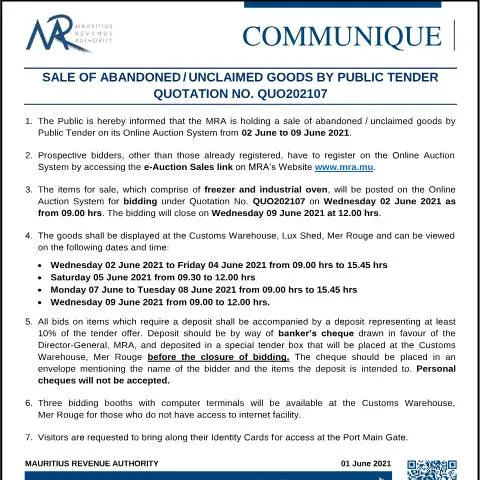
The Significance of the Sale of Abandoned Goods in Mauritius
The public tender for the sale of abandoned or unclaimed goods plays a vital role in ensuring that items which have not been claimed are effectively reallocated. This not only allows potential buyers to acquire goods that might otherwise go to waste, but also serves the dual purpose of clearing storage space within the Customs Warehouses. The necessity for a structured approach to such sales is underscored by the regulations set by the Mauritius Revenue Authority (MRA) and is essential for maintaining accountability in public resource management.
Navigating the Bidding Process: A Step-by-Step Guide
If you are interested in participating in the upcoming public tender, it is essential to understand the process involved. The sale, as outlined in Communique QUO202107, provides a clear structure for potential bidders. Here are the steps to follow:
- Registration: If you are not already registered on the MRA’s Online Auction System, you must complete this step. Access the e-Auction Sales link on the MRA website and follow the prompts for registration.
- Viewing Goods: Items available for bidding, including a variety of unclaimed goods, will be displayed at the Customs Warehouse from 2nd to 9th June 2021. Ensure you visit during the specified viewing times.
- Placing Bids: Bids can be submitted online during the auction period, which commences on 2nd June 2021 and closes on 9th June 2021. Make sure to place bids within this timeframe.
- Deposit Requirement: Be aware that certain items require a deposit of at least 10% of your tender offer, submitted via a banker’s cheque.
Who Can Participate: Understanding Eligibility
Participation in the tender is open to the general public; however, there are specific requirements regarding the registration process and payment. Here’s a breakdown:
- Individuals: Any adult with a valid Identity Card can register and bid.
- Non-Residents: Foreign participants must ensure they comply with local laws and regulations, which may involve additional documentation or requirements.
- Minors: Individuals under the age of 18 should have a legal guardian or parent submit bids on their behalf, accompanied by necessary consent documentation.
Dealing with Common Issues: What Happens If Your Bid is Rejected?
It is crucial to understand the circumstances under which your bid may be rejected. Common issues leading to rejection include:
- Incomplete Registration: Ensure that all registration details are accurately filled out and submitted prior to the bidding period.
- Deposit Issues: Bids submitted with personal cheques or without the required deposit will not be accepted.
- Time Constraints: Bids submitted after the closure on 9th June 2021 at 12.00 hrs will be disregarded.
Should your bid be rejected, you will receive notification detailing the reasons. It is advisable to take immediate steps to rectify any issues for future bids.
Understanding the Legal Framework: Historical Context and Regulations
The framework governing the sale of abandoned goods in Mauritius is rooted in a combination of laws aimed at ensuring transparency and efficiency in public tenders. The MRA operates under the guidelines established by the Public Governance Act and adheres to the overarching legal requirements of the Constitution of 1968 and the PSC Act of 1955.
As such, the tender process is not merely a transactional operation but rather a critical function of public resource management. The historical context underscores a commitment to maximizing state assets while offering citizens the opportunity to acquire goods that are no longer claimed.
Your Responsibilities as a Bidder: Rights and Obligations
Engaging in the bidding process comes with specific responsibilities. As a prospective bidder, you should be aware of your rights and obligations, which include:
- Right to Information: You have the right to access detailed information about the items up for auction, including descriptions and photographs.
- Obligation to Comply: Ensure compliance with all bidding rules and regulations, including timely payment of deposits and bids.
- Accountability: Once a bid is accepted, you are obligated to follow through on the payment and collection of the item.
Failure to meet these responsibilities can result in penalties or exclusion from future auctions.
Logistics for Viewing and Bidding: Venue and Technical Support
The viewing of goods and bidding process takes place at the Customs Warehouse, Mer Rouge. In-person viewing will be available from 2nd June to 9th June 2021 during specified hours, as noted in the communique.
Fill in your form directly online
No printing: type your details into the boxes of the official form, tick, then download the PDF ready to send.
- 1Type into the form boxes
- 2Tick in one click
- 3Save and download the PDF
For those who may not have internet access, the MRA provides facilities at the Customs Warehouse, including three dedicated bidding booths equipped with computer terminals to facilitate online bidding. Ensure you have your Identity Card with you when accessing these facilities.
Final Thoughts: Making the Most of Your Bidding Experience
Participating in the sale of abandoned or unclaimed goods through public tender can be an opportunity for both personal and financial gain. By understanding the nuances of the process, adhering to the regulatory framework, and preparing adequately, you can enhance your chances of successfully acquiring valuable items.
Stay informed about updates related to the auction and maintain clear communication with the MRA for any clarifications or additional assistance. Engaging in such tenders not only aids in responsible public asset management but also gives you, the bidder, an avenue to explore potential treasures within the unclaimed goods.