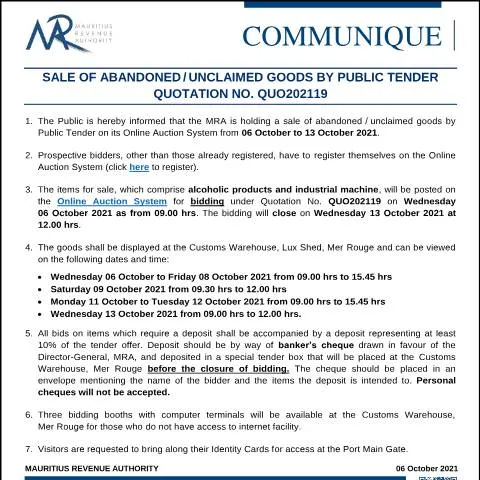
Understanding the Sale of Abandoned/Unclaimed Goods by Public Tender
When it comes to the sale of abandoned or unclaimed goods, it’s essential to recognize the procedural landscape that governs these transactions. The Mauritius Revenue Authority (MRA) conducts such sales, allowing the public to bid on items that have been left unclaimed. The need for this process arises from the necessity to manage surplus goods effectively and ensure that these items are disposed of in a regulated manner. The document titled “Sale of Abandoned / Unclaimed Goods by Public Tender” outlines the specifics of this auction, including important dates and procedural requirements.
The Auction Timeline: Key Dates to Mark
The timeline for the auction is crucial for potential bidders. Here are the significant dates associated with the current public tender:
- Start of Bidding: 06 October 2021, 09:00 hrs
- End of Bidding: 13 October 2021, 12:00 hrs
- Viewing of Goods:
- 06 October to 08 October 2021, 09:00 to 15:45 hrs
- 09 October 2021, 09:30 to 12:00 hrs
- 11 October to 12 October 2021, 09:00 to 15:45 hrs
- 13 October 2021, 09:00 to 12:00 hrs
It is imperative for bidders to keep these dates in mind to ensure they do not miss the opportunity to participate in the auction.
Registration and Participation: Who Can Bid?
To take part in the auction, interested bidders must be registered on the MRA’s Online Auction System. This requirement ensures that all bidders are properly identified and that the bidding process remains fair and transparent. Below are the details regarding registration:
- New bidders must click on the registration link provided on the Online Auction System to establish an account.
- For those who have previously registered, they should ensure their accounts are active and in good standing.
It’s worth noting that individuals who are not registered cannot participate in the bidding process, highlighting the importance of timely registration.
Deposit Requirements: What You Need to Know
As part of the bidding process, a deposit is required for items that necessitate one. This deposit is vital as it demonstrates the bidder’s commitment to purchasing the item if their bid is successful. Here’s how the deposit system works:
- The deposit must be at least 10% of the tender offer.
- Payments should be made with banker’s cheques drawn in favor of the Director-General, MRA.
- The cheque must be placed in an envelope indicating the name of the bidder along with the items for which the deposit is intended.
- Personal cheques are not accepted.
The deposit must be submitted in a special tender box located at the Customs Warehouse, Mer Rouge before the bidding closes to ensure your bid is considered.
Viewing the Goods: Important Considerations
Potential bidders are encouraged to physically inspect the goods before placing their bids. The viewing of items offers a firsthand opportunity to assess the condition and value of the goods. Here are the specifics:
- Goods will be displayed at the Customs Warehouse, Lux Shed, Mer Rouge.
- Viewing is available during the specified times outlined earlier in the timeline section.
Being able to evaluate the items closely can significantly impact your bidding strategy and the overall outcome of your participation.
Access and Security: Requirements for Entry
Accessing the Customs Warehouse requires adherence to specific security protocols. To ensure a smooth entry, bidders should come prepared:
- Bring along your National Identity Card for verification.
- Expect security checks at the Port Main Gate, which might slow down the entry process.
Having your identification on hand will facilitate a quicker and more efficient entry, allowing you to focus on the auction.
In Case of Challenges: What to Do When Things Go Wrong
While participating in a public tender, various challenges may arise: an incorrect bid submission, missing documentation, or even a lost deposit cheque. It’s crucial to know how to navigate these potential pitfalls:
- Document Errors: If you realize there is an error in your tender application, promptly contact MRA for guidance. They may allow amendments if approached before the bidding closes.
- Missing Deposits: Ensure your deposit cheque is submitted in a timely manner. If misplaced, you will need to reissue a new cheque following the guidelines provided.
- Bid Rejection: If your bid is not successful, you will typically receive a notification via the contact details provided during registration.
Understanding these steps can help mitigate the stress associated with the bidding process and provide a clearer pathway forward in case of complications.
Final Thoughts: The Significance of the Tender Process
The sale of abandoned and unclaimed goods by public tender is not merely a transactional event; it reflects broader principles of governance, resource management, and public engagement. For the public, this process opens doors to acquire goods that may otherwise remain unutilized.
Moreover, it emphasizes the importance of participation, adherence to guidelines, and the necessity of being proactive throughout the bidding process. By understanding the nuances of this tender process, bidders can position themselves for success and contribute to the efficient management of public resources.
Understanding the Legal Framework for the Sale of Abandoned Goods
The process of selling abandoned or unclaimed goods in Mauritius is governed by various statutes that provide the necessary legal framework. One of the primary pieces of legislation is the Sale of Goods Act 1979, which outlines the rights and obligations of sellers and buyers. In particular, Section 62 of the Act allows for the sale of goods that are unclaimed or abandoned. This section clarifies the conditions under which these goods can be sold, emphasizing the need for proper notification and attempts at locating the rightful owners before proceeding to the sale. Moreover, the Public Procurement Act 2006 also plays a crucial role, particularly regarding the tendering process. Public entities must comply with transparent procedures to ensure fairness and competitiveness when disposing of unclaimed or abandoned goods.
Fill in your form directly online
No printing: type your details into the boxes of the official form, tick, then download the PDF ready to send.
- 1Type into the form boxes
- 2Tick in one click
- 3Save and download the PDF
It is essential for potential buyers and public entities to observe the stipulations laid out in these legal frameworks. The goods must be cataloged properly, and a public announcement must be made, usually through local newspapers or official government websites, to inform the public about the upcoming tender. This is vital to ensure that the sale is conducted legally and transparently, minimizing the risk of disputes arising over ownership or the legitimacy of the sale.
Process and Requirements for Participation in Public Tenders
Participating in public tenders for the purchase of abandoned or unclaimed goods involves a specific set of steps that interested parties must follow. First and foremost, potential buyers need to be aware of the announcements published in official channels regarding such tenders. These announcements typically provide crucial details such as the types of goods available, the sale conditions, the deadline for submission, and the location of the sale.
To participate, interested bidders must fill out the appropriate forms, which can usually be found on the government’s e-services portal or obtained from the relevant department. For instance, potential buyers may need to complete PSC Form 7 or an equivalent form designated for tender applications, along with any specific attachments or supporting documents. Bidders may be required to provide proof of identity, such as a National ID Card, and sometimes a deposit may be required to ensure serious bidding.
Once the forms are completed, they must be submitted by the stipulated deadline, which is crucial for maintaining the integrity of the tender process. Late submissions are typically not accepted and can lead to disqualification from the tendering process. After the evaluation of the bids, successful bidders will be notified and given details regarding payment methods and collection of the goods. It is imperative to adhere to all instructions carefully, as failure to comply may result in forfeiture of the goods or cancellation of the sale.
Common Challenges in the Acquisition of Abandoned Goods
Engaging in the purchase of abandoned or unclaimed goods can present several challenges that prospective buyers should be aware of before participating in tenders. One such challenge is the risk of legal disputes arising from previous ownership claims. Even if the goods are deemed abandoned, former owners may contest the sale, leading to potential legal complications. Therefore, conducting thorough due diligence on the goods is advisable before placing a bid.
Another challenge lies in the condition of the goods being sold. Abandoned items may range from slightly used to entirely damaged, and prospective buyers must assess the value of the goods effectively. Often, the goods are sold "as-is," meaning that once a purchase is made, there is usually no recourse for refunds or exchanges. It is prudent for bidders to inspect the goods whenever possible, or if inspection is not feasible, to carefully review any descriptions or photographs provided in the tender announcement.
Moreover, the nature of the tender process itself can be challenging. The competitive atmosphere may lead to bidding wars, resulting in prices that exceed the anticipated value of the goods. Potential buyers should establish a clear budget before entering the bidding process to avoid overspending. Understanding the market value of similar items can also provide useful insights during the tender.