Navigating the Sale of Abandoned/Unclaimed Goods: A Comprehensive Guide
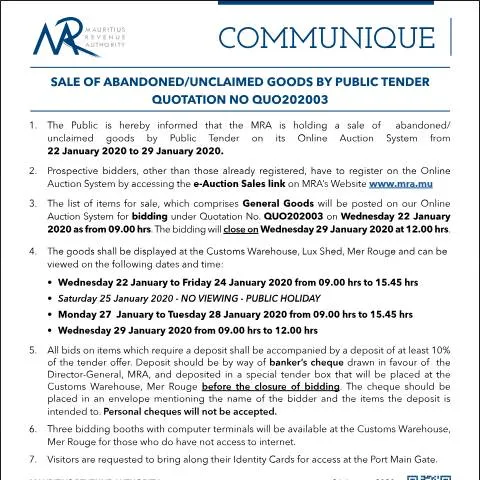
The process of acquiring abandoned or unclaimed goods through public tender is not just a simple auction; it is a meticulous procedure governed by specific regulations and requirements. Under the Mauritius Revenue Authority (MRA), the sale of such goods takes place periodically, allowing members of the public to bid on a variety of items. Understanding the nuances of the Sale of Abandoned/Unclaimed Goods by Public Tender (Communique03of2020), including registration, bidding, and the necessary preparations, is crucial for prospective bidders aiming to secure valuable goods.
The Role of the Mauritius Revenue Authority in Public Tender Sales
The MRA plays a pivotal role in organizing and conducting public tenders for the sale of abandoned and unclaimed goods. These items typically include goods that have been confiscated, left unclaimed, or otherwise forfeited. The MRA’s objective is to ensure transparency and fairness in the bidding process while also maximizing revenue derived from these goods.
Key Dates and Bid Instructions
- Online Auction Period: Bidding opens on January 22, 2020, and closes on January 29, 2020, at 12:00 hrs.
- Viewing Dates: Items can be viewed from January 22 to January 24 and January 27 to January 28, 2020.
This timeline is not just a guideline; it is essential for interested bidders to plan ahead to ensure they do not miss out on potential purchases. Moreover, registered users will have the opportunity to participate in the auction via the MRA’s Online Auction System, ensuring a streamlined bidding experience.
Registration Process for New Bidders
For those who are new to the bidding process, registering on the MRA’s Online Auction System is the first step. This can be done by accessing the e-Auction Sales link on the MRA website. Here’s a step-by-step breakdown:
- Visit the MRA website.
- Navigate to the e-Auction Sales section.
- Complete the registration form with your personal details.
- Submit the form and await confirmation of your registration.
Registration is essential, as it provides bidders with a unique identifier that is required for placing bids during the auction. Ensure all details are accurate to avoid any delays in the bidding process.
Understanding the Bid Submission Protocol
Bidding is not merely a matter of showing interest; it involves adhering to specific protocols. When submitting a bid, particularly for items that require a deposit, bidders must ensure they follow these crucial steps:
- A deposit of at least 10% of the tender offer is required.
- This deposit must be in the form of a banker’s cheque made out to the Director-General, MRA.
- The cheque should be placed in a designated envelope that includes the bidder's name and the relevant item details.
All deposits must be submitted in a tender box located at the Customs Warehouse, Mer Rouge, prior to the auction closing. Note that personal cheques will not be accepted, emphasizing the importance of adhering strictly to these financial stipulations.
Viewing and Inspecting the Items
One of the advantages of participating in public tenders is the opportunity to inspect the items before placing bids. The Customs Warehouse at Lux Shed, Mer Rouge, serves as the viewing area for prospective bidders. Access to view these goods is permitted during the following hours:
| Date | Viewing Hours |
|---|---|
| January 22-24, 2020 | 09:00 - 15:45 hrs |
| January 25, 2020 | No Viewing (Public Holiday) |
| January 27-28, 2020 | 09:00 - 15:45 hrs |
| January 29, 2020 | 09:00 - 12:00 hrs |
It is recommended that bidders take advantage of this viewing period to assess the condition and potential value of the items before placing bids. Bringing an identity card for entrance at the Port Main Gate is also necessary.
Special Considerations for Bidders
While the general process is straightforward, certain situations may complicate the bidding experience. Consider the following scenarios:
- International Bidders: Foreign nationals wishing to participate in the auction are advised to verify their eligibility and should be prepared to provide additional documentation, such as a valid passport and residence details in Mauritius.
- Minors: Individuals under 18 years of age may face restrictions and are typically not allowed to bid without parental consent or representation.
- Complex Situations: Should bidders face complications such as disputes over item ownership or other legal issues, it’s highly advisable to seek legal counsel before proceeding with bids.
Dealing with Bidding Errors or Refusals
In the event that a bid is rejected or if an error is detected in the submission, it is crucial for bidders to follow up promptly. Here’s how to manage these situations:
- Contact the MRA through the official channels provided on their website, detailing your inquiry.
- If there are missing documents or errors, provide any additional information or verification as requested by the MRA.
- Keep records of all communication for your reference.
Understanding that the process is regulated and that mistakes can happen, it is important to remain proactive and attentive to requests from the MRA.
Following Up Post-Bid Submission
Once bids are submitted, bidders must await the outcome. The MRA typically communicates the results following the closure of the bidding period. Successful bidders will receive instructions on payment and collection of their won items, while unsuccessful bidders are advised to keep an eye on future sales. It’s prudent to monitor the MRA’s website for updates and future auction announcements.
Conclusion: Preparing for Future Auctions
Participating in public tenders for abandoned and unclaimed goods is an excellent opportunity for savvy bidders to acquire unique items at competitive prices. By understanding the entire process—from registration to bid submission and follow-up—bidders can enhance their chances of success. Preparing well, following the guidelines, and staying informed will enable prospective bidders to navigate future auctions with confidence.
Understanding the Process of Public Tender for Abandoned Goods
When it comes to the sale of abandoned or unclaimed goods in Mauritius, the process is regulated under specific guidelines set by the Ministry of Public Infrastructure and Land Transport. The objective is to ensure transparency and fairness in the disposal of goods that have been left unclaimed for a period deemed appropriate by the authorities.
The process typically begins with an identification phase, where the relevant government agency catalogues the abandoned goods. This inventory may include items from various sources, such as abandoned vehicles, goods left at ports, or items surrendered to the police. Once the goods have been properly recorded, they are classified according to their value and potential for resale.
Next, the agency issues a public notice, which outlines the details of the upcoming tender. This notice is published in local newspapers and may also be available on the official government website. The notice includes essential information such as the types of goods available, the tender submission deadline, and the terms and conditions of the sale.
It is crucial for interested bidders to thoroughly review this information, as it provides guidance on how to participate in the tender process. Those interested must prepare a bid which includes necessary documentation as specified in the public notice. This generally involves completing the appropriate tender form, which can often be obtained directly from the issuing agency or downloaded from their website.
Fill in your form directly online
No printing: type your details into the boxes of the official form, tick, then download the PDF ready to send.
- 1Type into the form boxes
- 2Tick in one click
- 3Save and download the PDF
Eligibility Criteria for Bidders
The eligibility criteria for participating in the tender for abandoned goods are essential to ensure that the process remains equitable. Generally, any individual or entity can submit a bid, provided they meet certain requirements. For instance, bidders must be of legal age (18 years and older) and possess a valid National Identity Card, which is essential if you wish to utilize the MauPass system for submission.
Additionally, bidders are often required to provide proof of address and may need to submit a financial statement or a bank guarantee to demonstrate their capability to fulfill the financial obligations associated with the tender. This is especially important because some unclaimed goods can have considerable value, and the authorities need assurance that bidders are serious about their bids.
In some cases, specific conditions may apply depending on the nature of the goods. For instance, if the abandoned items include vehicles, bidders may need to have a valid driver's license or a specific certification proving they are legally allowed to operate such vehicles. Furthermore, agencies may reserve the right to exclude any bidder who has previously violated terms associated with public tenders.
Post-Tender Procedures and Item Collection
Once the tender submissions have been reviewed and the successful bidders identified, the next steps are crucial for ensuring a smooth transition from bid acceptance to item collection. Successful bidders are typically notified through formal communication channels, often via letters sent to the addresses provided in their bid submissions. The notification outlines the winning bid amount and provides detailed instructions for the payment process.
Payment methods may vary, but they generally include options such as direct bank transfers or payments made at designated government offices. It is imperative that bidders comply with the payment deadlines outlined in the notification. Failure to do so may result in the forfeiture of the bid and the opportunity to acquire the goods.
After successful payment, arrangements for collection are made. The collection process usually involves scheduling an appointment with the agency overseeing the tender. During this appointment, the successful bidder must present their identification and proof of payment. It is advisable to inspect the goods during collection to ensure they meet the conditions outlined in the tender notice.
Finally, once the items are collected, bidders assume full responsibility for them, including any costs associated with repairs, registration, or disposal of the goods if they are not to be retained. This highlights the importance of understanding the specifics of the goods being tendered, as some may come with additional obligations, such as environmental considerations for discarded or hazardous materials.