Understanding the Public Tender for Abandoned Goods: An Insight into Quotation No. QUO202517
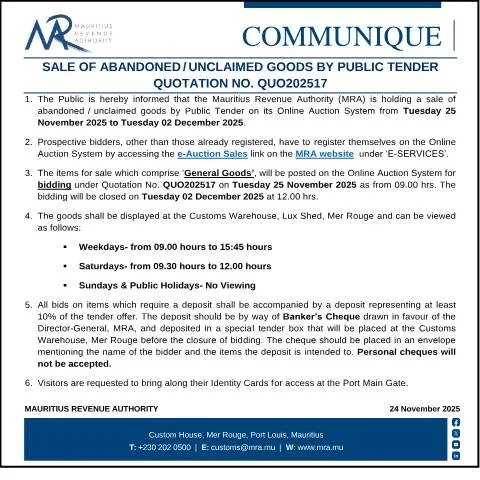
The Mauritius Revenue Authority (MRA) is set to conduct a public sale of abandoned and unclaimed goods, as outlined in Quotation No. QUO202517. This event, running from 25 November to 02 December 2025, is an opportunity for individuals and businesses to acquire various general goods that have been left unclaimed. Those interested in participating need to approach this process with a clear understanding of the requirements and procedures involved.
The Legal Framework Behind Abandoned Goods Sales
The sale of unclaimed goods by public tender is governed by the regulations set forth by the MRA. This legal framework ensures transparency and fairness in the auction process. Over time, various laws and administrative guidelines have evolved to address the handling of abandoned goods, especially considering the interests of rightful owners and the public at large.
Historical Context
The practice of auctioning abandoned goods dates back several decades, aligning with common customs globally. In Mauritius, the MRA has streamlined this process to ensure maximum participation and compliance with local laws. The sales typically involve goods that have not been claimed within specified periods, allowing the MRA to recuperate some financial loss while providing opportunities for the public.
Who Can Participate in the Quotation No. QUO202517 Auction?
The public auction is open to a wide range of participants, but it is crucial for potential bidders to understand their eligibility and the conditions required for participation. Here’s a breakdown of the profiles of typical bidders:
Registered vs. Unregistered Bidders
- Registered Bidders: Those who have previously registered on the MRA's Online Auction System may participate directly without additional steps.
- Unregistered Bidders: New participants must register on the Online Auction System prior to the auction dates. This involves filling out relevant details and potentially submitting identification.
Preparing for the Auction: Essential Documentation and Registration
Before engaging in the bidding process, prospective bidders must complete several preparatory steps. This preparation is essential to ensure compliance and enhance the chances of successful bidding.
Steps for Registration
- Access the MRA website and navigate to the e-Auction Sales link under 'E-SERVICES'.
- Complete the online registration form with valid identification and contact details.
- Submit the form and await confirmation of registration from the MRA.
Gathering Required Documents
In addition to the registration, bidders are advised to prepare the following documents:
- National Identity Card for verification purposes.
- Banker’s Cheque for any deposits related to bids.
The Auction Process: Key Dates and Timeline
Understanding the timeline of the auction is crucial for potential bidders to ensure they are prepared at each stage. The auction for Quotation No. QUO202517 will follow a structured timeline:
Timeline of the Auction
| Date | Activity |
|---|---|
| 25 November 2025 | Start of bidding at 09:00 hours |
| 02 December 2025 | Closing of bidding at 12:00 hours |
| Viewing Period | Weekdays from 09:00 to 15:45; Saturdays 09:30 to 12:00 |
Deposits and Bidding Mechanics: What to Know
When participating in the auction, understanding the deposit requirements and bidding mechanics is vital. This ensures bidders are prepared and can navigate the auction smoothly.
Deposit Requirements
For certain items, a deposit equivalent to at least 10% of the tender offer is required. This deposit must be made via a Banker’s Cheque specifically drawn in favor of the Director-General of the MRA. Personal cheques are not accepted, which emphasizes the need for careful financial preparation.
Submitting Bids
Bids must be placed electronically through the Online Auction System. It is advisable to familiarize oneself with the system prior to the auction date to avoid any technical issues. Deposits should be submitted in a sealed envelope which indicates the bidder's name and the items the deposit pertains to.
Viewing the Goods: What to Expect
Potential bidders have the opportunity to inspect the goods before placing their bids. This is an essential step as it allows bidders to assess the condition and value of the items they are interested in.
Viewing Schedule
The viewing of goods will take place at the Customs Warehouse, Lux Shed, Mer Rouge. The guidelines for viewing include:
- Weekdays: 09:00 to 15:45
- Saturdays: 09:30 to 12:00
- Sundays and Public Holidays: No viewing allowed
Post-Auction Procedures: Next Steps After Bidding
After the bidding period closes, there are several important follow-up steps to consider, particularly for successful bidders.
Winning Bidders: What Comes Next?
Those who emerge victorious in the bidding process will receive formal communication from the MRA. It is crucial for winning bidders to promptly follow the instructions provided to finalize the sale.
Payment and Collection
Payment must be made in full, and specific instructions will be given regarding the collection of goods. Generally, collection must occur within a stipulated timeframe after winning the bid, and bidders should keep their identification documents ready for verification purposes.
What to Do in Case of Issues or Disputes
In the rare event of issues arising from the auction, such as disputes over bidding or errors in registration, it is essential for participants to know the proper channels for resolution.
Addressing Errors or Missing Documentation
- Contact the MRA through their official communication channels outlined in the auction documentation.
- Ensure you have all relevant details at hand, including bid receipts and identification.
Process of Appeal in Case of Refusal
If a bid is rejected or an issue arises post-auction, bidders have the right to appeal. This usually involves submitting a formal letter to the MRA stating the grounds for the appeal, accompanied by any supporting documents.
Final Thoughts on Participating in the Auction
Participating in the sale of abandoned/unclaimed goods can be a rewarding experience, provided bidders are prepared and informed. Understanding the auction's processes, requirements, and the broader legal context will enhance the chances of a successful acquisition.
For further assistance, bidders are encouraged to reach out to the MRA using the contact information provided, ensuring they have all necessary guidance for a smooth bidding experience.
Understanding the Process of Public Tender for Abandoned Goods
The sale of abandoned or unclaimed goods by public tender is a significant aspect of asset management within the public sector in Mauritius. This process is overseen by various government authorities including the Ministry of Finance, Economic Planning and Development, and may involve the Public Service Commission (PSC) under certain conditions. It operates on the principle that unclaimed property, often sitting idle, can be repurposed or sold to recover costs or generate revenue for the state.
Fill in your form directly online
No printing: type your details into the boxes of the official form, tick, then download the PDF ready to send.
- 1Type into the form boxes
- 2Tick in one click
- 3Save and download the PDF
The tendering process is initiated when goods are deemed abandoned after efforts to locate the rightful owner have failed. This can include items left in public facilities, lost property turned in to police stations, or any goods that have been forfeited to the state. For instance, vehicles that are left unclaimed at impound lots may fall under this category.
To participate in these tenders, potential bidders should pay close attention to announcements published in local media and on the official government portals such as govmu.org. Each tender, such as Quotation No. QUO202517, outlines specific details about the goods, including their condition, estimated value, and inspection dates. Interested parties must ensure they meet all eligibility criteria as stipulated in the tender documentation.
The Role of Transparency in the Tender Process
Transparency is a vital component of the public tendering process in Mauritius. All tenders, including those for the sale of abandoned goods, are expected to adhere to a code of conduct that promotes fairness and integrity. The government emphasizes conducting these sales in a manner that is open to scrutiny by public watchdogs, ensuring that the process is accountable and equitable.
Every public tender follows a set procedure, which includes the publication of tender notices, submission of quotations, evaluation of bids, and the final award of the tender. During the evaluation phase, bids are subjected to a thorough review based on predefined criteria, which may include the financial offer, bidder reputation, and compliance with regulatory requirements. This meticulous evaluation process helps to ensure that the most suitable bidder is awarded the tender, minimizing the risk of corruption or misappropriation of funds.
Potential bidders are advised to keep records of their submissions and any communications regarding their bids, as this can be crucial in addressing any disputes that may arise later. The emphasis on transparency also extends to the post-tender process, where details about the awarded tender and the successful bidder may be published on government websites, thus informing the public about how the assets are managed and utilized.
Legal Considerations and Compliance in Public Tenders
When engaging in public tenders for the sale of abandoned goods, it is essential to understand the legal framework that governs these transactions. In Mauritius, the legal basis for public procurements, including the sale of abandoned goods, is primarily found within the Public Procurement Act and other relevant statutory instruments. These regulations outline the rights and obligations of both the government and bidders throughout the tendering process.
Bidders must ensure compliance with all legal stipulations, which may include registration with appropriate authorities, adherence to tax regulations as enforced by the Mauritius Revenue Authority (MRA), and fulfilling any specific qualifications required by the tender notice. Additionally, businesses interested in these tenders should be aware of their tax obligations, particularly as they pertain to the fiscal year, which runs from July 1 to June 30. Failure to comply with these regulations could disqualify a bidder or lead to legal repercussions.
Moreover, the tender documents will often specify any warranties or liabilities associated with the purchased goods. It is crucial for bidders to understand these clauses thoroughly to mitigate risks. For example, buyers should inquire whether the government assumes any liability should the goods prove defective post-sale, and whether there are any provisions for returns or exchanges.
In conclusion, engaging in the public tender process for the sale of abandoned goods in Mauritius requires a comprehensive understanding of the operational procedures, transparency expectations, and legal compliance obligations. By adhering to these principles, bidders can navigate the process more effectively and contribute to the efficient management of public resources.