Understanding the Sale of Abandoned and Unclaimed Goods by Public Tender
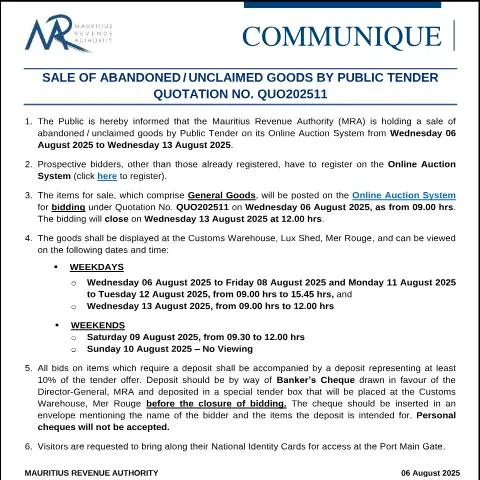
The transaction of abandoned or unclaimed goods is an essential component of the Mauritius Revenue Authority's (MRA) operational framework. This sale, specifically referenced as Quotation No. Quo202511, is set to occur from 06 August 2025 to 13 August 2025. During this period, interested parties can bid on various general goods that have been declared unclaimed. However, navigating the complexities of this process requires clarity about the roles of prospective bidders, the requirements for participation, and the practical steps involved.
Navigating the Registration Process
To participate in the auction for the abandoned goods, bidders must first complete a registration process through the Online Auction System. This system is crucial for managing tenders and facilitating bids. Here’s how prospective bidders can ensure their registration is successful:
- Visit the Online Auction System: Access the system and look for the registration option. It is highly recommended to register beforehand.
- Provide Necessary Information: Fill in all required fields accurately. This may include personal identification details, contact information, and any other requested data.
- Confirmation: After submitting your registration, you should receive a confirmation of your registration. Make sure to retain this confirmation for future reference.
Key Dates to Remember
Understanding the timeline of the auction process is vital for successful participation. Here's a brief overview:
| Date | Event |
|---|---|
| 06 August 2025 | Auction begins at 09:00 hrs |
| 08 August 2025 | Last day for viewing goods (Weekdays) |
| 09 August 2025 | Viewing available from 09:30 hrs to 12:00 hrs (Saturday) |
| 10 August 2025 | No viewing (Sunday) |
| 12 August 2025 | Final day for viewing before bidding closes |
| 13 August 2025 | Auction closes at 12:00 hrs |
Preparation for Bidding
Once registered, potential bidders should prepare for the bidding process by understanding the requirements associated with their bids. Here are the essential steps:
- Deposit Requirement: All bids that require a deposit must be accompanied by a bank cheque which represents at least 10% of the tender offer. Personal cheques are not permitted.
- Deposit Submission: The deposit cheque must be deposited in a designated tender box at the Customs Warehouse, Mer Rouge, before the bidding closes.
- Identification for Participation: Bidders must present their National Identity Cards to gain entry at the Port Main Gate.
Exploring the Auctioned Goods
The goods available for bidding encompass a variety of general items that have been classified as abandoned or unclaimed. It is advisable for bidders to take the opportunity to view these goods before placing any bids. The following guidelines can enhance your viewing experience:
- Viewing Schedule: As outlined in the announcement, the goods will be accessible for inspection on specified dates. Make sure to adhere to the viewing time frames.
- Understanding the Goods: Make notes on the condition and specifics of the items you are interested in. This will aid in making informed bidding decisions.
Common Pitfalls When Bidding
While participating in the auction, bidders should be aware of potential pitfalls that can complicate the tender process:
- Incomplete Registration: Ensure that the registration process is fully completed. Missing documentation can lead to disqualification.
- Failure to Meet Deposit Requirements: Not adhering to the deposit requirement will result in bids being discarded.
- Timing Issues: Be punctual. Late submissions for bids or deposits will not be entertained.
From Tender to Final Decision
The journey from placing a bid to receiving a final decision entails several critical steps following the close of bidding:
- Bidding Closure: After the closing time, all bids will be reviewed by the MRA.
- Evaluation of Bids: Bids will be evaluated based on the amount and compliance with the required deposit.
- Notification: Successful bidders will be notified of their wins, along with instructions on how to proceed with payment and collection.
- Payment and Collection: Bidders must complete payments promptly and follow the necessary procedures for collecting their goods.
The Legal Framework Behind the Sale
This tender process is encapsulated within a framework that ensures transparency and fairness. The MRA operates under a hybrid legal structure that integrates French civil law with English common law principles, specifically within the context of the Constitution of 1968 and the PSC Act of 1955. Such regulations underscore the authority of the MRA to manage and liquidate abandoned goods effectively.
Importance of Compliance
Adhering to the compliance requirements outlined in the related legal framework not only facilitates a smooth auction process but also safeguards against legal disputes that may arise from non-compliance. This includes proper registration, the deposit of requisite funds, and the timely submission of bids.
What Happens After the Auction?
After the auction concludes, several outcomes may follow, depending on the participation and success of bids:
- Successful Bidders: They will proceed with payment and pick-up processes as instructed post-auction.
- Unsuccessful Bidders: Those who do not win a bid will not incur any charges but should review the auction results for future bidding opportunities.
- Future Auctions: The MRA regularly conducts similar auctions. Interested parties should remain vigilant about upcoming sales and their timing.
In conclusion, the auction of abandoned and unclaimed goods by the MRA is not just a financial transaction; it is a structured process that involves registration, compliance, and understanding. For anyone serious about participating, knowing the steps, preparing adequately, and adhering to the guidelines can lead to successful bidding outcomes.
Understanding the Public Tender Process for Abandoned Goods in Mauritius
The sale of abandoned or unclaimed goods in Mauritius is governed by specific regulations that ensure transparency and fair competition. The public tender process is a critical mechanism that allows interested parties to bid for these goods. This process is managed by the relevant authorities, primarily the Ministry of Finance and the Economic Development, in conjunction with local government bodies where applicable.
When participating in a public tender, it is essential for potential bidders to familiarize themselves with the procedures outlined in the Public Procurement Act. This legislative framework provides guidance on how tenders should be advertised, evaluated, and awarded. For instance, all public tenders, including the sale of unclaimed goods, must be publicly advertised to invite a broad range of bidders. The advertisement typically includes details such as the nature of the goods, the location for inspection, and the submission deadline.
Participants in the tender should also understand the importance of the quotation number, such as Quotation No. Quo202511, which is unique to each tender and must be referenced in all communications. Each tender notice will outline the specific requirements for documentation, including proof of identity, business registration documents, and any other compliance certificates that may be required by the tendering authority.
In addition to the documentation requirements, bidders should also be prepared to pay any associated deposits or fees stipulated in the tender notice. Familiarity with the evaluation criteria established by the tender committee will significantly enhance a bidder's chances of success, as these criteria will dictate how submissions are assessed and selected for award.
Key Documentation Required for Participation in the Sale of Abandoned Goods
To effectively participate in the public tender for the sale of abandoned goods, prospective bidders must gather and prepare a specific set of documents. The required documentation ensures that all bidders meet eligibility criteria and that the tendering process operates smoothly and fairly.
1. Identity Verification: A copy of a government-issued identification document is mandatory. For individuals, this may include a National Identity Card. For companies, the registration certificate is required.
2. Business Registration and Tax Compliance: Bidders must provide proof of their business registration with the Registrar of Companies in Mauritius. Additionally, a tax compliance certificate from the Mauritius Revenue Authority (MRA) may be necessary to demonstrate that the bidder is in good standing with tax obligations.
Fill in your form directly online
No printing: type your details into the boxes of the official form, tick, then download the PDF ready to send.
- 1Type into the form boxes
- 2Tick in one click
- 3Save and download the PDF
3. Financial Capacity: Depending on the value of the goods being tendered, bidders may be required to submit financial statements or evidence of financial capacity to support their bid. This could include bank statements or letters of credit.
4. Bid Submission Form: Each tender will have a specific form that must be completed and submitted alongside the quotation. This form may ask for details such as the bidder's offer, payment method, and any additional terms they wish to include in their bid.
5. References and Past Performance: Some tenders may request references or documentation of previous experience in similar transactions. Providing this information can enhance credibility and demonstrate capability in handling the abandoned goods.
It is advisable to review the tender documents thoroughly upon receipt to ensure that all requirements specific to Quotation No. Quo202511 are met and that the submission is comprehensive. Missing documentation can lead to disqualification from the tender process.
Upcoming Changes and Trends in Public Tendering for Unclaimed Goods
The landscape of public tendering for unclaimed goods in Mauritius is evolving, with several trends and potential changes on the horizon that stakeholders should be aware of. These developments are largely influenced by advancements in technology and changes in regulation aimed at improving efficiency and transparency in the process.
One of the most significant trends is the increased emphasis on digital submissions. The government is pushing for more e-services, and prospective bidders should prepare for a transition to fully online tender submissions. Utilizing the govmu.org platform could be a requirement in the near future, making it crucial for bidders to have reliable internet access and familiarity with digital processes. This transition could also streamline the evaluation process, reducing the time taken to award contracts and enabling quicker sales of unclaimed goods.
Moreover, there is a growing focus on sustainability and environmental impact. Bidders may soon need to demonstrate how they plan to handle unclaimed goods in an environmentally responsible manner. This could involve outlining methods for recycling, repurposing, or safely disposing of any goods that are not sold, aligning with the government's broader sustainability goals.
Lastly, we could see an increase in community engagement initiatives related to the procurement process. Encouraging local vendors and small businesses to participate in tenders for unclaimed goods can foster economic development and community resilience. As a result, the tendering authorities may implement outreach programs to educate potential bidders about the process and how to effectively participate in bids, thus enhancing inclusivity.