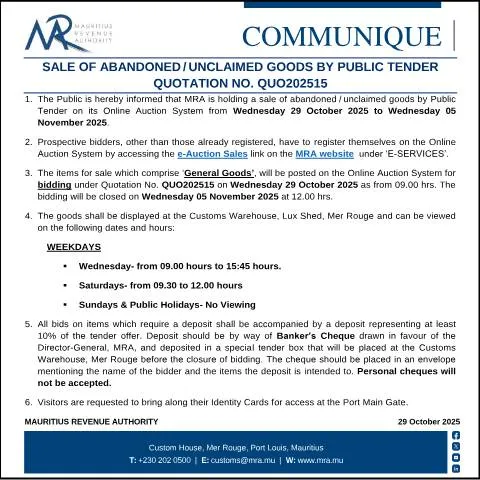
Navigating the Sale of Abandoned Goods: A Step-by-Step Guide to QUO202515
Every year, a range of abandoned and unclaimed goods finds their way to the Mauritius Revenue Authority (MRA) warehouses. As a potential bidder, it’s crucial to understand the intricate details surrounding the Sale of Abandoned / Unclaimed Goods by Public Tender, particularly under Quotation No. QUO202515. This unique opportunity not only provides an avenue for acquiring general goods but also necessitates compliance with specific administrative protocols. Here’s how to successfully navigate this process.
The Timeline: Important Dates to Note
Time plays a pivotal role in this tender process. The bidding commences on Wednesday, 29 October 2025, and concludes on Wednesday, 05 November 2025. Here’s a breakdown of significant dates and activities:
| Date |
Event |
Time |
| 29 October 2025 |
Start of Bidding |
09:00 hrs |
| 05 November 2025 |
End of Bidding |
12:00 hrs |
| 29 October - 05 November 2025 |
Viewing Hours |
Weekdays: 09:00 - 15:45Saturdays: 09:30 - 12:00 |
Understanding this calendar is essential, as missing these dates could result in losing out on potential bids.
Understanding Who Can Participate in the Public Tender
The tender is open to both registered and prospective bidders. While registered bidders can place bids directly, newcomers must first navigate the registration process on the MRA’s Online Auction System. This involves accessing the e-Auction Sales link on the MRA website. Here’s a detailed look at the participant profiles:
- Registered Bidders: Those with existing accounts on the Online Auction System. They will have access to all the features required for bidding.
- New Bidders: Required to register online. It is essential to complete this before the bidding commences to participate actively.
- Eligibility: All participants must carry their Identity Cards for verification purposes at the Port Main Gate.
Detailing the Bid Submission Process
Once registered, bidders can place their bids, but the process entails a few essential steps to ensure compliance:
- Deposit Requirement: Bids on items requiring a deposit must be accompanied by a financial guarantee, typically at least 10% of the bid offer. This deposit ensures seriousness in bidding.
- Deposit Method: The deposit must be provided via a Banker’s Cheque made out to the Director-General, MRA. Personal cheques are not acceptable.
- Submission of Deposit: The cheque should be placed in an envelope labeled with the bidder’s name and the specific items it pertains to. This envelope must be dropped in a special tender box located at the Customs Warehouse.
Failure to adhere to these requirements may result in disqualification from the bidding process.
Unlocking the Bidding Process: Common Pitfalls and Tips
As with any public tender process, bidders must be vigilant and thorough. Here are potential pitfalls and how to avoid them:
- Incomplete Bids: Ensure all forms are filled out accurately. Missing information could lead to bid rejection.
- Incorrect Deposit Amounts: Double-check the percentage required for your specific bid. Deposits that do not meet requirement criteria will be disqualified.
- Identification Issues: Always have your Identity Card ready. Entry without identification may restrict access to viewing and bidding.
Viewing the Goods: An Essential Pre-Bid Step
Before placing a bid, potential buyers have the opportunity to view the abandoned goods. This step is vital to assess the condition and value of items. Here’s what to keep in mind:
- Viewing Location: Goods are displayed at the Customs Warehouse, Lux Shed, Mer Rouge.
- Viewing Schedule: On-site viewing is allowed on weekdays and Saturdays, but not on Sundays or public holidays.
- Time Allocation: Ensure you arrive during the designated hours to avoid missing this important step.
After the Bidding: What Happens Next?
Once the bidding closes on 05 November 2025, the next steps are crucial for the winning bidders. Results will be processed and communicated, and it’s essential to understand what to expect:
- Award Notification: Successful bidders will receive official notifications detailing the next steps for payment and collection of items.
- Payment Deadline: Payments must be made promptly according to the instructions provided in the notification.
- Collection of Goods: Following payment, details regarding the collection process will also be communicated. It’s essential to adhere to this timeline to avoid forfeiting the items.
Addressing Issues: Handling Refusal or Missing Documentation
In cases where a bid is refused or if there’s a discrepancy in documentation, candidates should act swiftly:
- Contact the MRA: Immediately reach out to the MRA through their official communication channels for clarification on the refusal.
- Documentation Errors: If there's an error in your submission, ensure you resolve this before the bidding deadline.
- Follow Up: Maintain communication with the MRA regarding the status of your bid and any outstanding issues.
While various forms deal with public tenders in Mauritius, understanding the specifics of QUO202515 is crucial to avoid confusion:
| Form Name |
Purpose |
Key Distinctions |
| QUO202515 |
Sale of abandoned/unclaimed goods |
Specifically focuses on the auction process for abandoned goods. |
| PSC Form 7 |
Job recruitment applications |
Related to public service recruitment rather than goods sale. |
| LGSC Form 7a |
Local government service applications |
Aimed at local government recruitment, with no relevance to goods auctions. |
By recognizing these differences, bidders can avoid cross-referencing with irrelevant forms that do not serve their intended purpose.
Understanding the Public Tender Process for Abandoned Goods
The sale of abandoned or unclaimed goods by public tender is an important process that not only helps clear out storage of unclaimed items but also allows the government to recoup some value from these goods. In Mauritius, the Public Sector Commission (PSC) regulates the sale of such goods, ensuring transparency and fairness. Understanding the steps involved in this process can help interested bidders prepare adequately.
The first step in the public tender process is the announcement of the tender. This is typically published in national newspapers and on official government websites, including the dedicated portal for public procurement. For instance, the specific quotation No. QUO202515, scheduled for the date of 29.10.25, would be made public through these channels, detailing the types of goods available, the condition they are in, and any specific requirements for bidders.
Once the tender notice is published, potential bidders are encouraged to review the terms and conditions stipulated in the tender documents. This is crucial as it outlines the bidding process, including the submission deadline, the required documentation, and eligibility criteria. For example, bidders may be required to provide proof of identity, a tax clearance certificate from the Mauritius Revenue Authority (MRA), and any other relevant documentation that demonstrates their capability to complete the purchase.
After reviewing the tender documents, prospective bidders must submit their quotations within the stipulated timeframe. It is essential to ensure that all required documents accompany the quotation. Incomplete submissions may lead to disqualification. Furthermore, bidders should also be aware of the bidding format, which may require them to provide their offer in a sealed envelope, clearly marked with the quotation number.
Once all bids are submitted, they will be opened at a designated time and location. Typically, this process is carried out in a public forum to maintain transparency, allowing anyone interested to observe the proceedings. Following the opening of bids, the evaluation process begins, wherein each bid is assessed based on predefined criteria such as the offer amount, bid qualifications, and compliance with tender specifications.
Successful bidders will then be notified and required to complete the payment process, which generally involves paying a deposit or the full amount for the goods purchased. After payment, arrangements for the collection of the goods will be made. It is imperative for bidders to understand the logistics involved in the collection, including timeframes and any associated fees.
Legal Considerations and Compliance in the Sale of Abandoned Goods
The legal framework governing the sale of abandoned or unclaimed goods in Mauritius is complex and requires compliance with various regulations. The Constitution of Mauritius, alongside the Public Service Commission Act of 1955, provides a foundation for the management and disposal of state property, including abandoned goods.
Any individual or entity interested in participating in the tender process must first ensure compliance with these legal guidelines. This includes understanding the criteria for what constitutes abandoned goods, as defined by law. Notably, items that have been left unclaimed for a specified period may qualify for sale, but the exact duration is determined by specific regulations and may vary between different categories of goods.
In addition to legal definitions, bidders must also consider their obligations under broader commercial laws in Mauritius. This includes the need for proper business registration, adherence to tax obligations, and compliance with consumer protection laws. It is advisable for bidders to consult with legal experts or procurement advisors to navigate these complexities effectively.
Furthermore, bidders should be aware of the implications of non-compliance. Engaging in the tender process without fulfilling legal requirements may lead to disqualification or, in more severe cases, legal action. Therefore, it is paramount to maintain integrity and transparency throughout the bidding process, ensuring that all information provided is truthful and accurate.
Moreover, understanding the local context and cultural sensitivities can enhance a bidder's approach in this competitive environment. The public tender process not only focuses on the financial aspect but also considers community impact, environmental concerns, and ethical practices. Bidders are encouraged to demonstrate a commitment to these values in their proposals, which can significantly enhance their chances of success.
Post-Tender Responsibilities: Collection and Disposal of Goods
Successfully winning a bid for abandoned goods through public tender does not conclude the bidder's responsibilities. Once a bidder is awarded the tender, there are several post-tender obligations they must fulfill to ensure compliance and smooth transaction completion.
One of the primary responsibilities is the collection of the goods within the stipulated timeframe. Tender documents typically outline the collection period, which may vary based on the type and quantity of goods purchased. It is essential for bidders to adhere strictly to these timelines to avoid penalties or forfeiture of their bid. In some cases, storage fees may apply if goods are not collected promptly, which can negate the financial benefits of winning the bid.
Additionally, bidders should consider the condition of the goods they are acquiring. Many abandoned items may require repairs or maintenance before they can be utilized or resold. Thus, it is prudent for bidders to conduct a thorough assessment of the goods before finalizing their collection plans. This may include arranging for transportation and storage facilities that are appropriate for the type of goods purchased.
Moreover, depending on the nature of the goods, bidders might have environmental responsibilities, especially if they involve hazardous materials. Compliance with the Environmental Protection Act and other related legislation is crucial. Therefore, bidders must ensure they have a clear understanding of any environmental regulations that may apply and take necessary actions to address these concerns.
In conclusion, while the public tender process provides an opportunity to acquire goods at potentially lower prices, it comes with its own set of responsibilities and challenges. Being well-prepared and informed about the legal and procedural requirements can significantly enhance the experience for bidders, leading to successful transactions and compliance with all regulations.