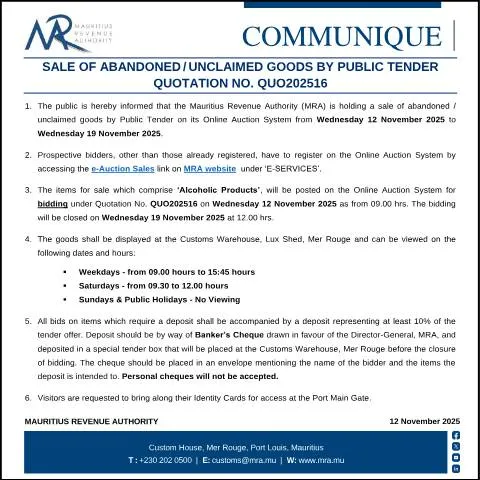
Understanding the Context of QUO202516
The Sale of Abandoned / Unclaimed Goods by Public Tender, referenced as Quotation No. QUO202516, is a significant opportunity provided by the Mauritius Revenue Authority (MRA) for individuals and businesses interested in acquiring unclaimed goods. This public tender process is set to commence on November 12, 2025, and will continue until November 19, 2025, allowing prospective bidders ample time to prepare and engage in the auction process. The context of this auction stems from the government's effort to manage and dispose of goods that have remained unclaimed, often left in customs warehouses for protracted periods.
Key Dates and Timeline
Understanding the timeline surrounding Quotation No. QUO202516 is essential for interested bidders. Here’s a structured overview:
| Event | Date | Time |
|---|---|---|
| Start of Bidding | November 12, 2025 | 09:00 hrs |
| End of Bidding | November 19, 2025 | 12:00 hrs |
| Viewing of Goods | November 12 - November 19, 2025 | Weekdays: 09:00 - 15:45, Saturdays: 09:30 - 12:00 |
Throughout this period, bidders are encouraged to familiarize themselves with the items on offer, as this will directly impact their bidding strategy.
Registration Process for Bidders
Before participating in the auction, it is crucial that prospective bidders, particularly those not yet registered, complete the registration process on the MRA’s Online Auction System. This step is vital to ensure eligibility and smooth participation.
- Visit the MRA website and navigate to the E-SERVICES section.
- Click on the e-Auction Sales link.
- Complete the online registration form with all required personal details.
- Submit the registration to receive confirmation via email, which will enable bidding access.
Note that registered bidders should ensure their accounts are active and in good standing to avoid complications during the bidding process.
Detailed Breakdown of the Auction Process
The auction process for Quotation No. QUO202516 is structured to ensure fairness and transparency. Here are the specific steps involved:
- Viewing of Goods: Bidders can view the abandoned or unclaimed items at the Customs Warehouse, Lux Shed, Mer Rouge, on specified days.
- Bidding Procedure: Bidders must submit their bids through the Online Auction System before the closing time.
- Deposit Requirements: For items requiring a deposit, a payment of at least 10% of the bid amount must accompany the tender. This deposit is critical for serious bidders and demonstrates commitment.
- Submission of Deposits: Deposits should be made via a Banker’s Cheque payable to the Director-General, MRA, and placed in a designated tender box at the Customs Warehouse.
- Finalization of Bids: At the close of the bidding period, the highest bids will be reviewed, and successful bidders will be notified accordingly.
Ensuring each step is meticulously followed is essential to avoid disqualification from the auction.
Common Pitfalls and Misunderstandings
When engaging in the public tender process, bidders often encounter certain challenges that can impede their chances of success. Understanding these pitfalls can help in navigating the auction smoothly:
- Incomplete Registration: Failing to properly register on the Online Auction System can prevent participation. Double-check registration details.
- Insufficient Deposit: The requirement for a deposit can come as a surprise. Ensure that sufficient funds are available and that the cheque is compliant with MRA specifications.
- Failure to View Items: Not attending the viewing session may lead to uninformed bidding. Understanding the condition and value of items is crucial.
- Late Bids: All bids must be submitted before the cut-off time. Technical issues can arise, so it’s wise to bid well in advance.
Regulations Governing the Tender Process
The framework for the sale of abandoned or unclaimed goods is rooted in Mauritian law, primarily managed under the auspices of the MRA. The regulatory guidelines dictate the processes in place to ensure transparency and ethical standards:
- The Public Act on Tender Sales regulates how abandoned goods can be sold, ensuring that public interests are preserved.
- Compliance with international trade regulations which govern the sale of certain goods, particularly those classified as controlled items.
- Strict adherence to the auction timetable as set forth by the MRA is mandatory.
Understanding these regulations is imperative for any potential bidder to avoid legal complications.
Profiles of Potential Bidders
The auction is open to a diverse array of bidders. However, there are specific profiles that may have advantages or need to consider particular factors:
- Small Business Owners: Those operating in the retail sector often seek unclaimed goods to resell and bolster their inventory.
- Individual Collectors: Private collectors interested in unique items may find opportunities to acquire valuable products.
- Wholesalers: Individuals looking to buy in bulk for resale can strategically bid on larger quantities.
- First-Time Bidders: New participants must familiarize themselves with the auction process and regulations to improve their chances of success.
Each profile comes with its own set of considerations, impacting how bids are placed and the types of items sought.
Next Steps Following a Successful Bid
For those fortunate enough to win a bid in the QUO202516 auction, specific subsequent actions must be taken to finalize the acquisition:
- Payment Completion: Successful bidders must complete payment as per the bid amount, minus the initial deposit already submitted.
- Collection of Goods: Arrangements must be made to collect the purchased items from the Customs Warehouse, adhering to the stipulated pickup times.
- Documentation: Ensure all necessary paperwork is completed, including invoices and receipts, to validate ownership.
- Compliance with Local Laws: Verify that the acquired items meet all local regulations, including any permits or licenses required for specific goods.
Adhering to these steps ensures a smooth transition from bidding to ownership.
Addressing Challenges: What If You Encounter Issues?
Occasionally, bidders may face challenges during or after the auction process, such as discrepancies in bids, issues with deposits, or misunderstandings regarding item conditions. Here’s how to effectively navigate these challenges:
- Documentation: Keep thorough records of all correspondence and transactions related to the auction; they can be vital in dispute resolution.
- Contacting MRA: Should any issues arise, promptly contact the MRA via their official channels, including the provided email and phone number, to address concerns.
- Appeals Process: In cases of disputes, familiarize yourself with the MRA’s grievance procedures to formally appeal any decisions made.
Taking proactive measures can alleviate potential complications and enhance the overall experience of the bidding process.
Understanding the Legal Framework for Sale of Abandoned Goods
The sale of abandoned or unclaimed goods in Mauritius is governed by specific legal provisions that aim to protect the interests of all parties involved. The framework is primarily derived from principles of both French civil law and English common law, as established under the Constitution of 1968 and the PSC Act of 1955. It is essential for potential bidders and the general public to be aware of these provisions to ensure compliance and a clear understanding of their rights and obligations when participating in such tenders.
Under the current framework, unclaimed goods typically refer to items that have been left unattended or have not been claimed by their rightful owners after a certain period. The government, through various agencies such as the Public Service Commission (PSC) and local governmental authorities, is responsible for managing and facilitating the sale of these goods. The process usually involves public tenders, where interested parties can submit quotations for the items up for sale.
Fill in your form directly online
No printing: type your details into the boxes of the official form, tick, then download the PDF ready to send.
- 1Type into the form boxes
- 2Tick in one click
- 3Save and download the PDF
For clarity, the legal definition of "abandoned goods" may vary depending on the specific context in which it is applied. For instance, goods that have been left in public places, such as public transport, may fall under different regulations compared to items left in private property or government premises. Understanding the nuances of these definitions is crucial for potential buyers, as it dictates the legitimacy of the sale and the rights of the original owners.
Moreover, it is advisable for bidders to familiarize themselves with the terms and conditions associated with the tender process. This includes understanding the bidding procedure, payment terms, and any necessary documentation required to participate. Failure to adhere to these legal stipulations can result in disqualification from the bidding process or, in more severe cases, legal repercussions.
Key Considerations for Bidders Participating in the Tender
Participating in a public tender for the sale of abandoned goods necessitates thorough preparation and consideration of various factors that can influence the bidding outcome. Here are some crucial aspects that bidders should take into account before submitting their quotes:
- Eligibility Criteria: Before submitting a bid, it is vital to review the eligibility criteria specified in the tender document. Certain restrictions may apply, such as age limits, residency requirements, or prior bidding experience. Understanding these criteria will ensure that your bid is valid and avoid unnecessary disqualification.
- Inspection of Goods: Where possible, bidders should arrange to inspect the abandoned goods prior to placing a bid. This may involve visiting the location where the goods are stored or requesting additional information regarding specific items. A thorough inspection can provide valuable insight into the condition, value, and potential resale opportunities of the goods offered.
- Quotation Submission: Bidders must ensure their quotations are submitted in accordance with the specified format in the tender document. This typically involves completing a designated form (e.g., QUO202516) and providing any required supporting documentation. Attention to detail is crucial, as missing or incomplete submissions can lead to rejection.
- Payment Terms: Familiarize yourself with the payment options and timelines outlined in the tender conditions. It's essential to understand how and when payments need to be made following a successful bid, including any deposits or fees that may be required in advance.
- Legal Obligations: Successful bidders may have responsibilities concerning the abandoned goods they acquire. This could include compliance with local laws regarding disposal, as well as the obligation to notify any potential claimants regarding the sale. Understanding these legal obligations can safeguard bidders from future liabilities.
Post-Tender Process and Responsibilities of Successful Bidders
Once the tender process concludes, and successful bidders are announced, there are several critical responsibilities that they must fulfill to ensure a smooth transition of ownership of the abandoned goods. This phase is crucial as it sets the groundwork for proper ownership transfer and compliance with legal obligations.
Firstly, successful bidders must complete all required documentation to finalize their purchase. This usually involves signing an agreement that outlines the terms of the sale, including any warranties or guarantees regarding the condition of the goods. It is advisable for bidders to carefully review these documents, as they may contain clauses that could affect their rights post-purchase.
Secondly, payment must be made according to the specified terms in the tender. This often includes a full payment upfront, although some tenders may allow installment payments under specific conditions. Adhering to these payment terms is essential, as failure to do so could result in the forfeiture of the goods and potential legal action from the tendering authority.
Furthermore, successful bidders should be proactive in taking possession of the goods once payment is confirmed. This may involve coordinating logistics for transportation and storage, especially if the items are large or require special handling. Bidders should also be aware of any deadlines for removing the goods, as delays could incur additional costs or penalties as stipulated in the tender conditions.
Lastly, it is crucial for successful bidders to remain aware of any ongoing responsibilities regarding the abandoned goods. This may include compliance with local regulations concerning the resale or disposal of certain items, particularly if they could pose safety or environmental risks. Bidders should conduct due diligence to ensure that they are not inadvertently violating any laws that could result in fines or legal repercussions.