Understanding the Sale of Unclaimed Goods: A Unique Opportunity
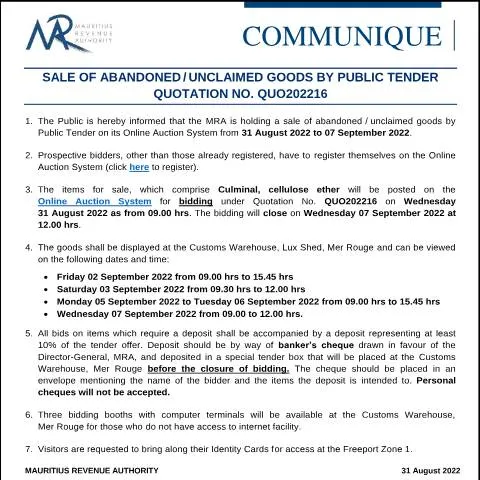
The sale of abandoned or unclaimed goods as conducted by the Mauritius Revenue Authority (MRA) presents a distinctive opportunity for prospective bidders. This procedure aims to recover items that have been left without ownership claims and is facilitated through a structured public tender process. As part of the Quotation No. QUO202216, this event showcases a range of goods, particularly focusing on materials such as culminal and cellulose ether. The timeline for this tender runs from 31 August 2022 to 07 September 2022, making it essential for interested parties to prepare thoroughly and engage promptly.
The Role of MRA in Abandoned Goods Sales
The MRA plays a pivotal role in managing the auction of unclaimed items, ensuring that the process is transparent and accessible. The authority's responsibilities include overseeing the registration of bidders, the display of goods, and the facilitation of bidding processes. By utilizing the Online Auction System, the MRA not only fosters efficiency but also provides a platform for both registered and new bidders to participate.
Key Dates and Bidding Schedule
- Registration Opens: 31 August 2022
- Bidding Starts: 31 August 2022, 09:00 hrs
- Bidding Closes: 07 September 2022, 12:00 hrs
In addition to these dates, potential bidders are encouraged to physically view the items available for auction at the Customs Warehouse in Mer Rouge. Specific viewing days and hours are:
- 02 September 2022 from 09:00 hrs to 15:45 hrs
- 03 September 2022 from 09:30 hrs to 12:00 hrs
- 05 September 2022 to 06 September 2022 from 09:00 hrs to 15:45 hrs
- 07 September 2022 from 09:00 hrs to 12:00 hrs
Navigating the Registration Process
To engage in the bidding for this sale, prospective bidders who are not yet registered must complete a registration process through the Online Auction System. This system allows for a seamless entry into the auction and ensures that all participants are verified. It is crucial to complete this registration prior to the commencement of bidding to avoid missing out on the opportunity.
Step-by-Step Registration Guide
- Visit the Online Auction System via the MRA website.
- Fill out the registration form with accurate personal details.
- Submit your application and await verification from MRA.
- Upon confirmation, you will receive login credentials for the auction.
Completing this process in advance is vital, as late registrations may not be accommodated.
Preparing to Bid: Understanding the Tender Process
The tender process itself requires a clear understanding of the bidding requirements, including the need for a deposit. Bidders must provide a deposit amounting to at least 10% of their tender offer. This deposit must be submitted via a banker’s cheque in favour of the Director-General of the MRA and placed in a designated tender box at the Customs Warehouse before the bidding closure.
Essential Points Regarding Bids
- All bids must be accompanied by the appropriate deposit.
- Personal cheques will not be accepted, which underscores the importance of preparing a banker’s cheque.
- Ensure that the cheque is placed in an envelope clearly labelled with your name and the items associated with the deposit.
Viewing the Goods: A Critical Step
The physical viewing of the goods is not just a formality; it is a crucial step that can greatly influence a bidder’s decision. The ability to inspect the items allows for an informed bidding strategy. Visitors are reminded to bring their Identity Cards as access to the Freeport Zone 1 is required.
What to Look for When Inspecting Goods
- Condition of the items: Assessing any visible damages or wear.
- Understanding the specifications: Knowing exactly what you are bidding on.
- Market value assessment: Considering the resale value or usefulness of the goods.
Handling Issues: What If Things Don’t Go as Planned?
Despite thorough preparation, issues may arise during the bidding process. This could include rejection of bids, missing documents, or errors in the submission. It’s essential to know how to address these challenges promptly.
Common Issues and Resolutions
| Issue | Possible Resolution |
|---|---|
| Bid rejected due to an insufficient deposit | Review your deposit amount and ensure it is at least 10% of your tender offer. |
| Missing documents | Check the registration requirements and submit any necessary documentation as soon as possible. |
| Error in bid submission | Contact the MRA office immediately to rectify the issue or discuss possible alternatives. |
Understanding the Follow-Up Process After Bidding
After the bidding closes, successful bidders will receive notifications from the MRA regarding the next steps. This includes payment instructions and arrangements for the collection of the purchased goods. It is crucial for bidders to act swiftly on these notifications to secure their items.
Next Steps for Successful Bidders
- Make the full payment as outlined in the notification.
- Arrange for the collection of items from the Customs Warehouse.
- Prepare any necessary identification or documentation required at the time of collection.
Exploring Special Cases: Unique Bidding Circumstances
While the standard bidding procedure applies to most participants, there may be unique situations requiring special attention. This includes bids from foreign nationals, minors, or individuals with complex financial situations.
Guidelines for Special Cases
- Foreign nationals must ensure compliance with local regulations regarding bidding.
- Minors will need a legal guardian to participate in the bidding process.
- Individuals facing financial complexities should consult with a legal advisor for guidance on how best to proceed.
Conclusion: A Structured Path to Acquisition
The sale of abandoned and unclaimed goods via public tender is not merely a transaction; it is a structured process filled with regulations and opportunities. Ensuring a thorough understanding of each component—from registration to bidding and beyond—will empower participants to navigate the auction successfully. Engaging with the MRA and adhering to the outlined procedures guarantees a transparent and fair bidding experience, leading to potential acquisition of valuable unclaimed goods.
Understanding the Process of Public Tender for Abandoned Goods
The sale of abandoned or unclaimed goods through public tender is a process designed to ensure transparency and fairness in the disposal of items that have been left unattended. The procedure is governed by the relevant provisions of the law, including the requisite documentation and steps to be followed by individuals or entities interested in participating in such tenders. It is critical to familiarize oneself with the regulations set out under Qu. 16 of 2022, as well as the various stakeholders involved in the tender process.
To begin with, the public tendering process is initiated when a property or item has remained unclaimed for a specific period, typically as outlined in the legislation. Interested parties must keep abreast of announcements made by the relevant authorities, such as the Ministry of Finance or the Public Procurement Board, which may publish notices regarding upcoming tenders. These notices usually contain essential details including the nature of the goods, the location for viewing, and the timeline for submitting bids.
Moreover, prospective bidders are required to prepare a comprehensive submission that includes a completed tender application form, proof of identity, and any necessary financial guarantees, such as a bid bond or deposit. The bid must be competitive, reflecting the market value of the goods, and should adhere to the guidelines stipulated in the tender document. Failure to comply with these requirements could result in disqualification from the tender process.
Legal Considerations and Compliance Obligations
Engaging in the tender process for abandoned goods requires a keen understanding of the legal framework governing such sales, particularly the implications of the Public Tender Act and any local ordinances that may apply. Participants must ensure that they are compliant with all statutory obligations, including licensing requirements, tax obligations, and environmental regulations that pertain to the disposal of certain types of goods.
Fill in your form directly online
No printing: type your details into the boxes of the official form, tick, then download the PDF ready to send.
- 1Type into the form boxes
- 2Tick in one click
- 3Save and download the PDF
For instance, if the abandoned goods include vehicles, it is essential to check for any outstanding taxes or fines associated with them before submitting a bid. Additionally, certain goods may require special permits for their sale or disposal, particularly if they fall under the category of hazardous materials. It is advisable to consult with legal experts or the appropriate authorities to clarify any uncertainties regarding compliance to avoid potential legal pitfalls.
Moreover, transparency in the bidding process is paramount. All bidders should be aware of the tender evaluation criteria, which may include factors such as the bidder's financial stability, experience in handling similar goods, and proposed plans for the use or resale of the items. Understanding these criteria can provide bidders with a strategic advantage, enabling them to tailor their proposals effectively.
The Role of Technology in Tender Management
The integration of technology into the tender management process has significantly enhanced the efficiency and transparency of public tenders for abandoned goods. With the advent of e-tendering platforms, potential bidders can access tender documents, submit bids, and track the status of their applications online. This transition to digital platforms aligns with the government's push towards e-services, ensuring a more streamlined and accessible process for all stakeholders.
Through portals like govmu.org, interested parties can find detailed information about upcoming tenders for unclaimed goods, including deadlines and specific requirements. This digital infrastructure not only reduces paperwork but also minimizes the chances of fraudulent activities, as all submissions are logged and monitored electronically.
Furthermore, technology facilitates real-time communication between bidders and relevant authorities. Queries regarding the tender process can be addressed through online communication channels, ensuring timely responses and clarity for all participants. This level of engagement promotes a more informed bidding environment, where stakeholders can make well-researched decisions based on accurate information.
In conclusion, the intersection of legal requirements, compliance obligations, and technological advancements plays a pivotal role in the successful navigation of the public tender process for abandoned goods. For individuals and businesses participating in these tenders, staying informed and prepared is key to maximizing their chances of success.