Understanding the Sale of Abandoned/Unclaimed Goods: A Practical Guide
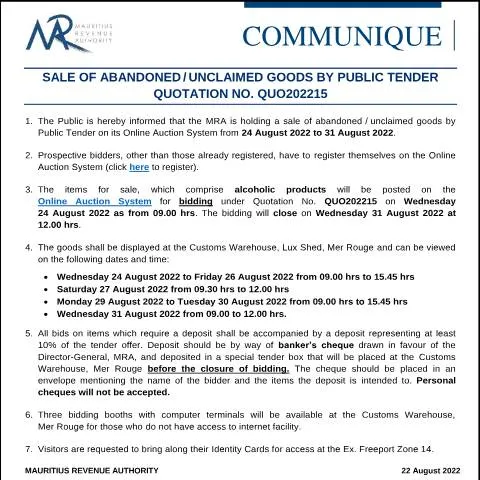
In a dynamic market like Mauritius, the sale of abandoned or unclaimed goods offers valuable opportunities for both consumers and the government. This guide explores the process, requirements, and crucial timelines associated with the sale as per the official document, "Sale of Abandoned / Unclaimed Goods by Public Tender - Qu. 15 of 2022 (23.08.22)," released by the Mauritius Revenue Authority (MRA).
Who is Involved and What to Expect
The process primarily involves the Mauritius Revenue Authority (MRA) as the governing body overseeing the auction of unclaimed goods. Participants in this process include:
- Bidders: Individuals or entities interested in acquiring goods through public tender.
- MRA Officials: Responsible for organizing, supervising, and executing the auction process.
- Customs Warehouse Staff: Ensures proper display and management of goods available for bidding.
Potential bidders should be mindful that the items up for auction are often seized or abandoned goods that have not been claimed. These can include a range of items, often including alcoholic products, which are detailed in the official auction announcement.
Breaking Down the Tender Process
The sale of unclaimed goods operates through a structured tender process. It encompasses several key phases, which bidders must navigate to successfully place a bid:
- Registration: Bidders must register on the MRA's Online Auction System. This step is crucial for those who are not already registered. The registration opens prior to the auction date.
- Viewing of Goods: Interested parties have the opportunity to inspect the items available for bidding at the Customs Warehouse. Specific dates and hours for viewing are established, allowing bidders to evaluate their potential purchases.
- Bidding: Bids can only be placed during the designated auction period. Each bid must comply with the specified requirements, including deposits.
- Payment of Deposit: A deposit of at least 10% of the bid amount must accompany every tender. This deposit serves as a commitment to the bid and must be made via a banker’s cheque to the Director-General, MRA.
- Closure of Bidding: Bidding concludes at a predetermined time, after which no further bids will be accepted.
- Awarding of Goods: Successful bids are announced, and the goods are allocated to the highest bidders who have met all conditions.
Key Dates and Timeline: What You Need to Know
Timing is critical in the tender process for abandoned or unclaimed goods. Here’s a breakdown of essential dates based on the official announcement:
| Event | Date | Details |
|---|---|---|
| Start of Bidding | 24 August 2022 | Bidding opens at 09:00 hrs. |
| End of Bidding | 31 August 2022 | Bidding closes at 12:00 hrs. |
| Viewing Period | 24 to 30 August 2022 | Goods available for viewing during specified hours. |
It is essential for bidders to adhere to these timelines to ensure their participation in the auction.
Identifying Key Documentation and Preparations
Proper documentation is paramount in the tendering process. Participants are required to prepare and submit specific documents, which may include:
- Identity Card: Necessary for access to the Customs Warehouse and for registration purposes.
- Banker’s Cheque: Required for the deposit, clearly stating the bidder's name and the items for which the deposit is intended.
- Registration Confirmation: Proof of registration on the Online Auction System if not previously registered.
Completing these preparations ahead of time will streamline the bidding process and reduce the risk of missing out on desired items due to documentation errors.
Challenges and Recourse: What Happens in Case of Errors
Even with careful preparation, participants may encounter issues during the bidding process. It is important to understand the possible challenges and how to address them:
- Missing Documentation: If a bidder fails to present the required documents, they will likely be disqualified from the bidding process. It is advisable to double-check all documentation before the deadline.
- Disqualification Due to Insufficient Deposit: Bids that do not include the necessary deposit amount will not be considered. Ensure that the cheque is correctly written and submitted in the designated manner.
- Incorrect Bidding Amounts: Errors in bid amounts can lead to misunderstandings; thus, all bidders are encouraged to review their bids carefully before final submission.
In the event of any discrepancies or disputes, bidders are encouraged to reach out to MRA officials promptly for guidance on how to rectify the situation.
Special Considerations: Who Can Bid?
While the bidding process is generally open to the public, there are specific considerations regarding who can participate:
- Individuals: Any Mauritian citizen or resident over the age of 18 can participate, provided they meet registration requirements.
- Foreign Bidders: Non-residents may also bid, but must ensure compliance with any local regulations concerning foreign transactions.
- Minors: Individuals under 18 years of age cannot participate in the auction independently, but may do so through a legal guardian.
Details of the Online Auction System
The MRA has established an Online Auction System to facilitate the tendering process. Bidders must familiarize themselves with this platform for efficient participation:
- Registration Process: Visit the MRA website to initiate registration. Ensure that all personal information is accurate and up to date.
- Navigation and Bidding: Once registered, bidders can navigate the system to view available goods, place bids, and monitor the auction progress.
- Technical Support: In case of issues accessing the Online Auction System, MRA provides technical assistance. It is advisable to reach out early to avoid last-minute complications.
Final Thoughts on Bidding for Abandoned Goods
Participating in the auction of abandoned or unclaimed goods provides a unique opportunity for individuals and businesses to acquire valuable items, often at competitive prices. However, active involvement requires understanding the intricate details of the bidding process:
- Ensure compliance with all documentation requirements.
- Adhere strictly to the timelines indicated for registration and bidding.
- Be prepared for possible challenges and know the recourse available to you.
By approaching the bidding process with due diligence and preparation, bidders can maximize their chances of success in acquiring goods during the MRA's public tender.
Understanding the Process of Public Tender for Abandoned Goods
The sale of abandoned or unclaimed goods through public tender is a structured process governed by specific regulations in Mauritius. Under Qu. 15 of 2022, this process involves several key steps that ensure transparency and fairness. Initially, the concerned government department must identify and compile a list of goods that are deemed abandoned or unclaimed. This list is then published to notify the public, allowing potential buyers to have an awareness of the items available for tender.
Interested parties are required to submit their bids in a prescribed format, typically using PSC Form 7 or other relevant forms depending on the department managing the auction. It is essential that bidders carefully read the terms and conditions associated with the tender before submitting their applications. Each bid must include requisite identification and proof of financial capability to ensure that bidders are serious and able to complete the transaction if selected.
Fill in your form directly online
No printing: type your details into the boxes of the official form, tick, then download the PDF ready to send.
- 1Type into the form boxes
- 2Tick in one click
- 3Save and download the PDF
Once the bidding period concludes, the department will assess all submissions based on predetermined criteria, such as the highest bid amount, bidder credibility, and adherence to submission guidelines. This evaluation process is crucial as it determines the successful bidder who will be awarded the unclaimed goods. Transparency in this evaluation is maintained through public announcements of the results, which are typically accessible through the government’s digital platforms.
Legal Framework and Compliance for Tendering Process
The legal framework governing the sale of abandoned goods by public tender in Mauritius is primarily derived from the Constitution of 1968 and the Public Service Commission Act of 1955, which outlines the procedural aspects that must be adhered to during the tendering process. Compliance with these laws is mandatory to ensure that the process is not only fair but also legally sound.
Moreover, any public tender must align with the principles of good governance, including accountability, transparency, and integrity. This means that all stakeholders involved in the tender process must operate within the confines of the law, ensuring that the procedures are followed meticulously. Bidders should be mindful that any violations can lead to disqualification or potential legal repercussions. Regular audits and evaluations of the tendering process are conducted by the relevant authorities, such as the Ministry of Finance and the Public Sector Commission, to ensure compliance with established guidelines.
Furthermore, it is vital to be aware of the implications of non-compliance, which can include forfeiture of deposits or legal action. The MRA (Mauritius Revenue Authority) also plays a crucial role, especially regarding taxation issues linked with the sale of any goods acquired through public tender. Bidders must ensure that they are up to date with their tax obligations and that any goods purchased are accurately reported in their subsequent tax filings.
Strategies for Successful Bidding in Public Tender for Abandoned Goods
Participating in a public tender for abandoned or unclaimed goods can be a rewarding experience, but it often requires careful planning and strategic thinking. Here are some effective strategies for potential bidders to enhance their chances of success in the tendering process:
- Research Thoroughly: Before placing a bid, conduct comprehensive research on the items listed for tender. Understand their market value and assess whether the potential acquisition aligns with your needs or investment strategy. Familiarizing yourself with past tenders can also provide valuable insights into bidding patterns and winning amounts.
- Prepare Financially: Ensure that you have sufficient funds available to support your bid. This includes being ready to cover not only the bid amount but also any additional costs such as taxes, fees, and transportation. Establishing a budget that outlines all potential expenses can help mitigate financial surprises.
- Follow Submission Guidelines: Adhering strictly to the submission guidelines is crucial. This involves using the correct forms, providing all required documentation, and meeting submission deadlines. Any deviation from the stipulated process could result in disqualification.
- Network and Collaborate: Engaging with others who have experience in public tenders can be beneficial. Networking may provide insights into the process, possible pitfalls, and strategies for successful bidding. Collaborating with other bidders can also increase buying power, especially for high-value items.
- Stay Updated: Monitor official announcements regarding future tenders. Being proactive can give bidders a competitive edge, particularly in knowing when to prepare and what items could be coming up for auction.
By implementing these strategies, bidders can substantially enhance their likelihood of winning a tender for abandoned or unclaimed goods, ultimately making the process both beneficial and rewarding.