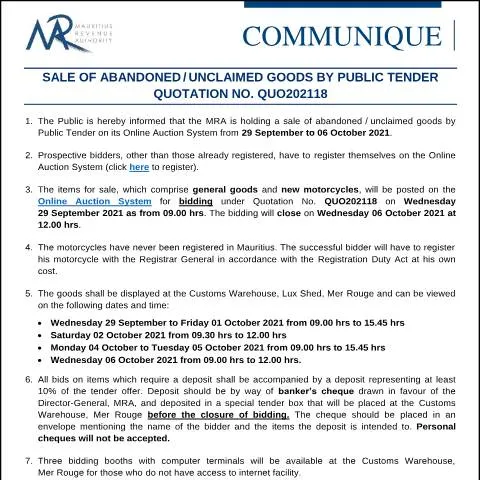
Understanding the Sale of Abandoned/Unclaimed Goods by Public Tender
In the dynamic landscape of public service and revenue management, the Mauritius Revenue Authority (MRA) plays a pivotal role. One significant manifestation of this authority's functions is the Sale of Abandoned/Unclaimed Goods by Public Tender, a process designed not only to clear out unclaimed items but also to generate revenue for the government. This initiative harnesses the power of modern technology, allowing for online bidding through the MRA's Online Auction System. Understanding the intricacies of this process is crucial for prospective bidders.
The Legal Framework Governing Public Tender Sales
The legal underpinning of the sale of abandoned or unclaimed goods in Mauritius is primarily shaped by the Public Procurement Act and various regulations established by the MRA. These laws ensure that the process is transparent, equitable, and accessible, fostering a fair bidding environment. The framework is designed to protect the interests of the public while facilitating the disposal of goods that have languished unclaimed.
Historical Context
The practice of selling abandoned goods is not new. Over the years, governments worldwide have sought effective methods to manage and monetize unclaimed property. In Mauritius, this initiative gained substantial traction as a means of boosting government revenues while simultaneously clearing out warehouses filled with items whose owners have long since departed. The MRA's public tender sales serve as a testament to the government’s commitment to responsible fiscal practices.
Chronology of the Tender Process
To grasp the full procedure of the sale of abandoned goods, it is essential to understand the timeline from the announcement to the conclusion of the tender. Here is a detailed account of the critical stages involved:
- Announcement of Sale: The MRA officially announces the sale, as seen in the Communique dated 29 September 2021.
- Online Registration: Bidders must register on the Online Auction System ahead of the bidding period, opening an avenue for new participants.
- Viewing Period: Interested bidders can inspect the goods at the Customs Warehouse, allowing them to make informed bidding decisions.
- Bidding Period: This specific tender run from 29 September to 06 October 2021, with bids submitted online or at designated booths.
- Closing of Bids: All bidding activities conclude sharply at 12:00 hrs on the closing date.
- Post-Tender Process: Successful bidders are notified, and arrangements for payment and collection of the goods are made.
Key Dates in the Auction Timeline
| Event | Date | Time |
|---|---|---|
| Sale Announcement | 29 September 2021 | 09:00 hrs |
| Goods Available for Viewing | 29 September - 01 October 2021 | 09:00 - 15:45 hrs |
| Special Viewing on Saturday | 02 October 2021 | 09:30 - 12:00 hrs |
| Final Viewing Days | 04 - 05 October 2021 | 09:00 - 15:45 hrs |
| Bidding Closes | 06 October 2021 | 12:00 hrs |
Deciphering the Tender Form Sections
Completing the official tender form is a critical step for bidders, and getting it right is essential. Below is a breakdown of the form sections and insights on how to accurately complete each part:
- Bidding Information: Bidders must provide accurate details about the items they wish to bid on, including the item description and the proposed bid amount.
- Deposit Requirement: As per the guidelines, a deposit amounting to 10% of the bid must accompany the submission. This deposit must be submitted via a banker’s cheque, which must specify the tender offer and include the bidder's name.
- Identity Verification: Bidders are required to present their identity cards, ensuring that all bids originate from verified individuals.
It is essential to avoid common pitfalls such as incorrectly stating bid amounts or failing to include required documentation, as these errors could disqualify a bid.
Identifying Potential Bidders
The sale of abandoned goods appeals to a wide range of participants. Understanding the profiles of potential bidders is critical for those looking to engage in this public tender process:
Regular Bidders
These are individuals or businesses who regularly participate in such auctions. They often have established strategies and a good understanding of market values.
First-Time Bidders
New entrants may find the process daunting. However, it is crucial for them to familiarize themselves with the tender process, including registration and document requirements.
Considerations for First-Time Bidders:- Understand the bidding process and terminology.
- Attend viewing sessions to gauge the quality of items.
- Prepare financial resources to meet deposit requirements.
Businesses and Resellers
Various businesses may see value in purchasing goods for resale or operational use, making them significant participants in the tender process.
Distinguishing Features from Similar Processes
The MRA's public tender for abandoned goods should not be conflated with other governmental sales processes, such as disposal of surplus government assets or liquidation sales. Some key distinctions include:
| Feature | Sale of Abandoned Goods | Surplus Asset Sales |
|---|---|---|
| Type of Goods | Abandoned or unclaimed items | Government-owned surplus |
| Bidding Process | Public Tender via Online Auction | Varies by department; often sealed bids |
| Deposit Requirement | 10% of bid amount | May vary or be non-existent |
Ensuring Smooth Participation and Compliance
To successfully navigate the tender process, compliance with all procedural requirements is paramount. Here are some practical tips for potential bidders:
- Register Early: Ensure that you register on the MRA's Online Auction System well before the bidding begins to avoid last-minute issues.
- Review the Purchase Requirements: Familiarize yourself with the requirements for successful bids, including the necessary documentation and payment methods.
- Track Deadlines: Keep an eye on key dates and deadlines, as missing them could invalidate your participation.
Above all, potential bidders should approach the tender with a clear understanding of their goals and financial limits, ensuring they are prepared for a competitive bidding environment.
As the sale of abandoned or unclaimed goods by public tender unfolds, it presents an opportunity for citizens and businesses alike to acquire valuable items while contributing to the efficient management of public resources. By understanding the framework, processes, and requirements, bidders can engage effectively in this unique governmental initiative.
Understanding the Legal Framework for Abandoned and Unclaimed Goods
The sale of abandoned or unclaimed goods through public tender in Mauritius is governed by specific legal provisions that ensure transparency and accountability. The legal framework primarily draws from the principles of French civil law, embedded within the context of English common law procedures. The Constitution of Mauritius, enacted in 1968, alongside the relevant administrative regulations, dictates the procedures involved in handling such goods.
Under the relevant laws and public administration guidelines, entities that come into possession of abandoned goods must adhere to a clear set of protocols. This usually involves establishing the ownership status of the goods, ascertaining the rightful claimants, and ultimately deciding on the method of disposal, which often culminates in a public tender process. The aim is to protect the rights of potential claimants while also facilitating the efficient use of unclaimed property for public benefit.
Moreover, the Public Procurement Act provides additional directives on how these sales should be conducted, ensuring that they are fair and open to competition. This legal attention is crucial for maintaining public trust in the management of state resources and unclaimed goods. Authorities must document all steps taken in the tendering process to maintain an audit trail for accountability.
Process Flow for Public Tender Sales of Abandoned Goods
The process of selling abandoned or unclaimed goods through public tender involves several critical steps. It begins with the identification of the goods deemed abandoned or unclaimed, which often includes items that have been uncollected or left in public spaces for an extended duration. Once identified, the following procedural steps are typically followed:
- Notification and Advertising: Authorities must notify the public about the upcoming tender. This is done through various channels such as local newspapers, official websites (e.g., govmu.org), and public notices. The aim is to ensure that potential buyers are well informed about the sale.
- Evaluation and Assessment: A thorough evaluation of the goods is conducted to determine their condition and estimated value. This assessment will influence the reserve price and conditions of sale during the tender process.
- Preparation of Tender Documents: Tender documents must be prepared meticulously, detailing the goods for sale, their conditions, and any reserve prices set. Interested parties are provided with these documents to facilitate informed bidding.
- Submission of Bids: Bidders are required to submit their tenders within a specified timeframe. All submissions must comply with the formats outlined in the tender documents, including necessary identification details and any required deposits.
- Evaluation of Bids: Once the submission period has closed, a designated committee evaluates the bids. This assessment focuses on financial offers, compliance with tender requirements, and the credibility of the bidders.
- Awarding the Tender: The winning bid is selected, and the successful bidder is notified. A formal contract is then drafted, detailing the transaction terms, payment conditions, and any other relevant stipulations.
- Transfer of Ownership: Upon receipt of payment, ownership of the goods is formally transferred to the winning bidder, and the goods are handed over as stipulated in the contract.
This flowchart not only underscores the procedural integrity of the public tender process but also highlights the commitment of public authorities to uphold fairness and transparency in dealing with abandoned goods.
Challenges and Considerations in Managing Abandoned Goods Sales
While the framework for the sale of abandoned goods through public tender is well-defined, several challenges can arise during its implementation. Public authorities must navigate these issues to ensure that the process remains efficient and equitable.
One significant challenge is ascertaining the ownership of goods. In many instances, items may remain unclaimed due to lack of proper identification, making it difficult to determine rightful ownership. This issue necessitates a robust system for tracking and managing abandoned items, which may involve engaging with legal experts to navigate potential disputes over ownership.
Another concern involves the condition of the goods themselves. Often, abandoned items may be damaged or in disrepair, complicating the assessment for their sale value. Public entities must deploy skilled personnel to evaluate these goods accurately, ensuring that the reserve prices set are realistic and reflective of their condition.
Furthermore, public perception plays a critical role in the success of these sales. Authorities must strive to maintain public trust by fostering transparency throughout the tendering process. This includes providing clear information on how the tender is conducted, how bids are evaluated, and how funds generated from the sales will be utilized for community benefit.
Lastly, with the increasing shift towards digital services, authorities must ensure that e-tendering platforms are user-friendly and accessible, allowing a broader range of participants to engage in the tendering process. This digital transition not only streamlines the process but also aligns with Mauritius’ commitment to enhancing public service delivery through technology.