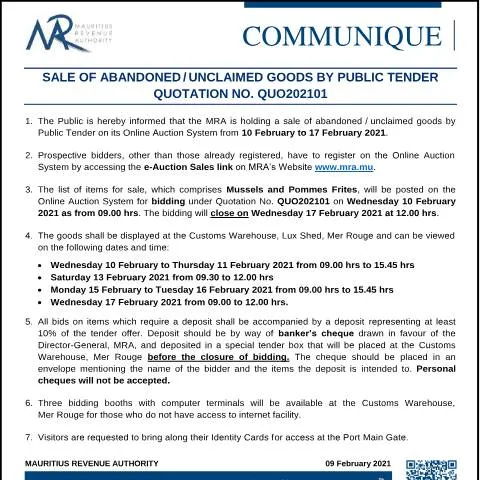
Navigating the Sale of Abandoned or Unclaimed Goods: A Pathway to Opportunity
For various reasons, goods may become abandoned or unclaimed, leading to an opportunity for individuals and businesses alike. The Mauritius Revenue Authority (MRA) has established a systematic approach through a public tender process for the sale of these items. Understanding this procedure, including the necessary steps and documentation, ensures potential bidders can navigate the auction process effectively and legally.
Contextual Framework: Legislative Underpinnings of Public Tender Sales
The sale of abandoned or unclaimed goods is governed by local statutory provisions, primarily catering to the need for transparency, public participation, and fiscal accountability. The process is established under the MRA's mandate, aligning with the overarching regulatory framework stemming from both French civil law and English common law, thus ensuring that bids are conducted fairly and judiciously.
This specific tender, identified as Quotation No. QUO202101, was announced on February 9, 2021, and encapsulates the necessary legal guidelines and operational protocols required for public participation. It is essential for participants to be familiar with these regulations to avoid any potential pitfalls while engaging in the auction process.
Who is Eligible to Participate in the Auction?
Bidders interested in acquiring unclaimed goods must meet certain criteria set by the MRA. However, it is crucial to understand that eligibility is not universal; specific circumstances or restrictions may apply.
Categories of Eligible Bidders
- Registered Bidders: Individuals or entities who have previously registered on the MRA's Online Auction System.
- New Bidders: Individuals who must register prior to participating in the auction. This involves providing basic identification details and proof of nationality or residence.
- Legal Entities: Companies or organizations must furnish additional documentation such as proof of registration and the identity of authorized representatives.
Exceptions and Special Cases
It is important to note that certain individuals may be restricted from bidding. This includes MRA employees and their immediate family members, as well as individuals previously barred from participating in public tenders due to fraudulent practices.
Completing the Tender Submission: An In-Depth Guide
Successful participation in the auction necessitates completing the tender submission accurately. Here, we delve into the key components of the application process and the critical information needed for submission.
Preparatory Steps for Bidders
- Access the Online Auction System: Navigate to the MRA’s official website and locate the e-Auction Sales link. New users will need to complete a registration form.
- Review the List of Items: Ensure to review the auctioned items, which are made available from February 10, 2021. This list can be accessed through the auction portal.
- Prepare the Deposit: A deposit of at least 10% of the intended bid is mandatory for items requiring a tender deposit. This must be in the form of a banker’s cheque.
Key Sections of the Submission Form
The tender submission form encompasses various sections, each serving a specific purpose. Here’s a breakdown of the critical components:
- Bidder’s Information: Accurate personal or corporate details must be filled in, including full name, identity card number, and contact information.
- Details of Bidding: Clearly specify the items being bid on, including item codes and descriptions as listed in the auction.
- Deposit Information: Include details regarding the banker’s cheque, ensuring it is made payable to the Director-General, MRA.
Emphasizing Compliance: The Importance of Accurate Submissions
Failure to comply with the requirements can lead to immediate disqualification from the bidding process. Understanding the importance of each section of the form is critical.
Common Pitfalls to Avoid
- Inaccurate Personal Information: Double-check that all names and identification numbers match relevant documents.
- Insufficient Deposit: Ensure the deposit meets the stipulated 10% requirement and is delivered before the bidding deadline.
- Omitting Required Documentation: All submissions must be accompanied by the necessary documentation as specified in the guidelines.
Timelines and Important Dates: Staying on Track
Timeliness is paramount in the auction process. Here are the critical dates for the related activities:
| Activity | Date | Time |
|---|---|---|
| Start of Bidding | February 10, 2021 | 09:00 hrs |
| Close of Bidding | February 17, 2021 | 12:00 hrs |
| Viewing of Goods | February 10-11; 13; 15-16; 17, 2021 | 09:00 - 15:45 hrs; 09:30 - 12:00 hrs on February 13 |
Understanding Outcomes: What Happens After the Tender Submission?
Upon the closure of the bidding process, successful bidders will be notified of their win. This section elucidates what potential outcomes may arise following the submission of bids.
Next Steps for Winning Bidders
- Payment of Balance: Winning bidders will be required to pay the balance of the bid amount as outlined in the tender conditions.
- Collection of Goods: Detailed instructions will be provided regarding the pick-up of purchased goods from the Customs Warehouse.
In Case of Disqualification or Rejection
If a bid is disqualified or rejected, the bidder will receive an official notification from the MRA explaining the grounds for disqualification. It is advisable for bidders to review the reasons and rectify any issues in future submissions.
Practical Considerations: The Role of Technology in the Auction Process
The MRA has modernized the auction process significantly through the implementation of their Online Auction System. This upgrade supports greater efficiency and transparency in bidding.
Utilization of the Online Auction System
For those unfamiliar with online bidding, MRA has installed three bidding booths at the Customs Warehouse equipped with computers for public access. This extension ensures that even individuals without personal internet access can participate in the auction process.
Final Insights: Engaging with the Auction Process
Understanding the procedures and requirements associated with the sale of abandoned or unclaimed goods is essential for those interested in capitalizing on this unique opportunity. By adhering to the guidelines set forth by the MRA and maintaining diligence throughout the process, prospective bidders can navigate the auction landscape effectively.
As the potential for acquisition presents itself, armed with knowledge about the bidding structure, deadlines, and compliance requirements, bidders stand to benefit significantly from the opportunities afforded through public tenders.
Understanding the Process for Sale of Abandoned or Unclaimed Goods
The sale of abandoned or unclaimed goods in Mauritius, particularly via public tender, requires a clear understanding of the procedures established by local authorities. The process is generally initiated after a specific period during which the goods remain unclaimed, typically following a period dictated by the relevant statutes or regulations. In the context of abandoned goods, these can include items left uncollected in public spaces or goods seized by authorities that have not been claimed by their owners.
Initially, the relevant authority, which is often the police or another government department, will conduct a thorough inventory of the items. Once the inventory is complete, a public notice is generated to inform potential buyers of the upcoming sale. This notice is usually published in widely circulated newspapers and may also be available on official government websites. According to the guidelines set forth in the Disposal of Unclaimed Goods Regulations, a minimum of two weeks' notice is typically required before the sale takes place. This allows individuals ample time to claim their belongings should they wish to do so.
During the sale, interested parties must participate in the tendering process. Each tender submission should be prepared in accordance with specific guidelines, detailing the bidder’s offer and ensuring that all required documents are attached. For instance, bidders may be required to submit a copy of their National ID card or business registration if bidding on behalf of a company. Following the submission of tenders, a designated committee evaluates the bids based on predetermined criteria, which could include the financial offer and the bidder's compliance with the required documentation.
Legal Implications of Purchasing Abandoned Goods
Engaging in the purchase of abandoned or unclaimed goods via public tender in Mauritius carries specific legal implications that potential buyers must be aware of prior to participating in the bidding process. First and foremost, it is essential to recognize that purchasing such goods does not automatically confer ownership title as per standard property law principles. The ownership may still be contested if the previous owner comes forward after the sale, unless the sale was conducted under the provisions allowing for clear title transfer.
Furthermore, it is crucial for potential buyers to conduct due diligence prior to submitting any bid. This includes verifying the provenance of the goods and ensuring that they are not subject to any legal disputes or claims by third parties. Buyers should also be aware that some items may require adherence to specific regulations before they can be sold or used, such as vehicles or machinery which may need to pass safety and emissions standards. Failure to comply with such regulations can lead to penalties or the need for costly rectifications post-purchase.
In addition to ensuring compliance with legal requirements, bidders should also consider the potential for hidden costs associated with the purchase of unclaimed goods. These may include disposal fees, transportation costs, or restoration expenses for items that require refurbishment. Transparency in these areas is paramount to avoid unexpected financial burdens after a successful bid.
Steps to Prepare for Bidding on Abandoned Goods
Preparing to bid on abandoned or unclaimed goods involves several critical steps to ensure a smooth and successful experience. Here’s a breakdown of these steps to guide prospective bidders through the process:
- Research the Auction: Always start by acquiring as much information as possible regarding the items that will be auctioned. This includes understanding the types of goods available, their condition, and their market value. Reviewing previous auction outcomes can provide insight into realistic bidding limits.
- Attend Pre-Auction Viewing: Most public tenders provide an opportunity for potential bidders to view the items prior to the auction. Take this time to inspect the quality and condition of the goods, as well as to ask any questions to the authorities conducting the sale.
- Budget Your Bids: Establish a clear budget for your bids based on both research and your financial capacity. Take into account not just the auction price but also any additional costs such as taxes, transport, and repair.
- Prepare Required Documentation: Ensure that all documentation is in order before the submission of your tender. This may include identity verification documents, proof of address, and, if applicable, a business registration certificate.
- Submit Your Tender Compliantly: Adhere to the guidelines provided in the public notice when submitting your bid. Late or incomplete submissions may lead to disqualification.
- Be Prepared for Payment: Successful bids require immediate payment following notification. Familiarize yourself with the accepted payment methods and be ready to complete the transaction swiftly.
By following these steps, prospective buyers can navigate the process of purchasing abandoned goods more confidently and effectively. Not only does it prepare bidders for the auction itself, but it also highlights the importance of due diligence and thorough planning in securing a positive outcome.