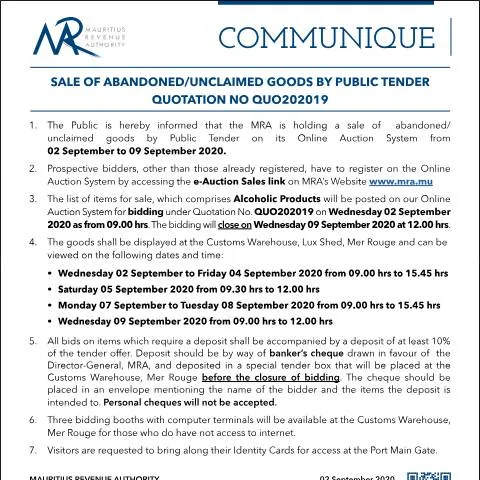
Navigating the Sale of Abandoned and Unclaimed Goods in Mauritius
The process of acquiring abandoned or unclaimed goods through public tender is an intriguing opportunity for both individuals and businesses in Mauritius. This document, identified as CommuniqueQ202019, outlines a crucial mechanism that facilitates this process, enabling citizens to bid on various items that have remained unclaimed. Understanding this framework is essential for prospective bidders who aim to take part in such auctions.
A Historical Perspective: The Evolution of Public Tenders
The roots of public tender sales in Mauritius have a rich historical context, where the management of unclaimed goods has evolved significantly over the years. Traditionally, items forfeited or abandoned would be stored indefinitely, leading to logistical challenges for storage facilities. Recognizing this, the government established regulations under the Mauritius Revenue Authority (MRA) to streamline the sale of these goods.
The current system operates under the auspices of both French civil law and English common law, reflecting the hybrid legal framework of the country. The Public Service Commission Act of 1955 lays the groundwork for such public tenders, ensuring a transparent and equitable approach to the sale of unclaimed goods.
Understanding the Role of CommuniqueQ202019
This specific communique serves as a call to action for potential bidders, detailing the sale of abandoned goods through an online auction system. It encompasses essential information such as auction dates, registration requirements, and bidding procedures. By formalizing the auction process, this document not only assists participants but also reinforces the integrity of public auctions in Mauritius.
Key Elements of the Auction Procedure
- Dates of Auction: The auction period spans from 02 September to 09 September 2020.
- Viewing of Goods: Items available for bidding can be viewed at the Customs Warehouse, a critical component for bidders seeking to assess items before placing bids.
- Bidding Process: This includes both online and physical bidding options, catering to a diverse range of participants.
- Deposit Requirements: Bidders must provide a deposit, crucial for ensuring serious bids and commitment to the auction process.
Participation: Who Can Bid and How?
Bidding is open to both registered and prospective bidders. However, it is essential to understand the registration process to participate. Interested individuals must register on the MRA's Online Auction System, a step designed to ensure that all bidders are legitimate and comply with auction regulations.
Registration Steps for Prospective Bidders
- Access the MRA’s website.
- Navigate to the e-Auction Sales link.
- Complete the registration form with necessary details.
- Await confirmation of registration before proceeding to bid.
Ensuring timely registration is paramount, as delays may hinder participation in the auction. Notably, the online registration process not only streamlines the bidding experience but also aligns with the government’s push for digital services.
The Bidding Process: From Start to Finish
The bidding process is structured yet flexible, allowing for various approaches to engagement. Here’s a detailed chronology of the steps involved in participating in the auction:
Chronological Breakdown of the Bidding Process
| Step | Action Required | Timeline |
|---|---|---|
| 1 | Register on MRA Online Auction System | Before 02 September 2020 |
| 2 | View Auction Items at Customs Warehouse | 02 September - 09 September 2020 |
| 3 | Submit Bids | 02 September, 09:00 hrs - 09 September, 12:00 hrs |
| 4 | Deposit Submission (if applicable) | Before bid closing on 09 September 2020 |
| 5 | Auction Results Announcement | After 09 September 2020 |
Each step plays a vital role in ensuring a fair and organized bidding environment. Notably, the requirement for a deposit underscores the seriousness of bids and contributes to the overall integrity of the auction process.
What Happens After Bidding? Understanding the Outcome
Post-auction, participants are eager to understand the next steps and possible outcomes. Once the bidding closes, the MRA reviews the submissions and identifies successful bidders based on the highest offers received. Successful bidders will then be notified through official communication channels.
Potential Outcomes of the Bidding Process
- Successful Bidder: If your bid is successful, you will be required to finalize the purchase, including any additional payments as stipulated in the auction terms.
- Unsuccessful Bidder: Bidders who do not win can either choose to re-bid in future auctions or explore other opportunities.
It’s important to keep in mind that failing to provide accurate information during the bidding process or neglecting to submit necessary deposits can lead to disqualification from the auction.
Addressing Post-Auction Issues
In the event of an error in the bidding process or a missing document, it’s crucial for bidders to know how to address these concerns effectively. The MRA provides a structured approach for bidders to follow in case of disputes or misunderstandings.
Steps to Take When Facing Issues
- Contact the MRA via the provided contact information to request clarification.
- Prepare any necessary documentation that supports your claim.
- Follow up regularly to ensure that your concern is being addressed.
These proactive measures can significantly impact the resolution process and assist in mitigating any potential setbacks during the auction experience.
The Importance of Compliance and Awareness
Understanding the legal framework surrounding public tenders is paramount for participants. Non-compliance with regulations can lead to disqualification, forfeiture of deposits, and other negative consequences.
Awareness of the requirements, especially regarding deposits and bid submissions, protects bidders from potential pitfalls. For instance, deposits must be made via banker’s cheque, and personal cheques are not accepted. This requirement is designed to ensure that funds are secure and authorized, thus safeguarding the integrity of the auction.
Legal Obligations of Bidders
- Complete registration accurately.
- Submit bids within the stipulated timeframe.
- Provide necessary deposits as required by the auction terms.
Failure to adhere to these obligations could result in exclusion from current and future auctions, highlighting the importance of diligence and compliance in public bidding processes.
Exploring Alternatives: What If You Don’t Win?
Not winning an auction can be disappointing, but it also opens up a range of alternative options. Bidders are encouraged to engage with the MRA for information on upcoming auctions or other ways to procure items of interest.
Future Participation Strategies
- Stay informed on upcoming auctions via the MRA’s website.
- Consider networking with other bidders to share insights and strategies.
- Participate in training or informational sessions offered by the MRA.
These strategies can enhance your chances of success in future endeavors within the public tender space in Mauritius.
Conclusion: Empowering Citizens Through Knowledge
Understanding the nuances of the Sale of Abandoned/Unclaimed Goods by Public Tender facilitated by the MRA is a significant step towards informed participation in public auctions. By familiarizing oneself with the requirements, processes, and potential outcomes, bidders can navigate this opportunity with confidence and integrity. The MRA’s commitment to transparency and accessibility underscores the importance of public engagement in the auction process, fostering a community of informed and responsible bidders.
Understanding the Legal Framework for Abandoned Goods in Mauritius
The sale of abandoned or unclaimed goods in Mauritius is intricately governed by both local laws and administrative guidelines. The key legislation revolves around the principles of public procurement and the management of state property. Specifically, the Disposal of Unclaimed Goods Act outlines the procedures for identifying, cataloguing, and ultimately disposing of goods that have been deemed abandoned or unclaimed.
According to the Act, goods that have been left unattended or unclaimed for a specific period—typically three months—can be categorized for sale through public tenders. This legal framework ensures transparency and fairness in the disposal process, providing a structured method for the government and public entities to relinquish ownership of property that no longer serves a purpose. Public bodies are required to maintain a record of such goods, complete with necessary documentation such as serial numbers, condition reports, and previous ownership, if applicable.
It's also critical to note the importance of compliance with the PSC Act, which mandates the involvement of the Public Service Commission (PSC) for any government-related disposals. This relationship ensures that the tendering process adheres not only to legal standards but also to ethical considerations regarding public resources.
The Tender Process: Steps and Requirements
The tender process for the sale of abandoned goods is a structured procedure, consisting of several key steps that ensure compliance and transparency. Firstly, interested parties must submit an application to participate in the tender, which is typically advertised through government portals such as govmu.org. This advertisement should include detailed information about the items available for sale, including descriptions, conditions, and the minimum bid required.
Once the tender is publicly advertised, interested bidders are encouraged to inspect the goods. Arrangements for inspection are usually specified in the tender announcement, providing a window during which bidders can assess the condition and value of the items before submitting their bids. This is an essential step, as it allows bidders to make informed decisions regarding their offers.
The submission of the bid must be done through the specified channels, often requiring the completion of an official tender form (for instance, Tender Form 5/2022). Bidders may need to provide supporting documents, such as proof of identity and, in some cases, financial statements to demonstrate their capacity to fulfil the contractual obligations should they win the tender.
After the bidding period closes, the evaluation process begins. A designated committee, often comprising representatives from relevant government departments, reviews the bids based on pre-established criteria such as price, bidder credibility, and compliance with submission guidelines. Following evaluation, the winning bidder is notified, and arrangements for payment and transfer of ownership are initiated.
Post-Tender Obligations and Compliance
Winners of public tenders for abandoned goods have specific obligations to fulfil once the tender has been awarded. Firstly, the payment must be completed promptly as stipulated in the tender agreement; failure to do so can result in forfeiture of the awarded tender and potential legal ramifications.
Additionally, the buyer is responsible for collecting the goods within a designated period as outlined in the tender notice. Non-compliance can lead to further penalties, including the potential re-listing of the items for sale or imposition of storage fees. This underscores the importance of understanding the terms of the tender before placing a bid.
Moreover, once possession of the goods is transferred, the buyer assumes full liability for the items. This includes any costs associated with their disposal or any legal issues that may arise post-purchase. Therefore, due diligence is crucial for bidders to fully understand the implications of their purchase.
It is advisable for potential buyers to keep abreast of local regulations regarding the resale of purchased goods, especially if they plan to sell the items in question. Any resale must comply with the standards set by the Ministry of Business, Enterprise and Cooperatives, which oversees regulatory compliance in commercial transactions.