Navigating the Sale of Abandoned Goods: An Insider's Guide
In the bustling world of public tenders, understanding the nuances of the Sale of Abandoned / Unclaimed Goods by public tender can open the door to incredible opportunities. Whether you are a seasoned bidder or a first-timer, grasping the practical implications of Form Qu06of2017 is essential. This article delves into the crucial elements that surround this specific form and the entire bidding process, ensuring you are well-prepared for your next venture.
Understanding the Context of Abandoned Goods Sales
Every year, the Mauritius Revenue Authority (MRA) organizes public tenders for abandoned or unclaimed vehicles and goods, impacting various stakeholders. The significance of Form Qu06of2017 lies in its role within the broader context of public auctions and the legal framework governing such sales.
The Legal Framework
Form Qu06of2017 operates under the umbrella of existing legal provisions that govern the auctioning of unclaimed properties. Understanding the interplay between the Constitution of 1968 and relevant acts, such as the Public Service Commission Act of 1955, is essential for adapting to the local administrative landscape.
Why Abandoned Goods Are Auctioned
The MRA’s decision to auction abandoned goods stems from the need to manage unclaimed vehicles effectively. These sales not only help in clearing storage spaces but also provide an opportunity for the public to acquire vehicles at competitive prices.
Who Should Submit Form Qu06of2017?
Participation in the auction is open to a wide audience. However, certain conditions apply:
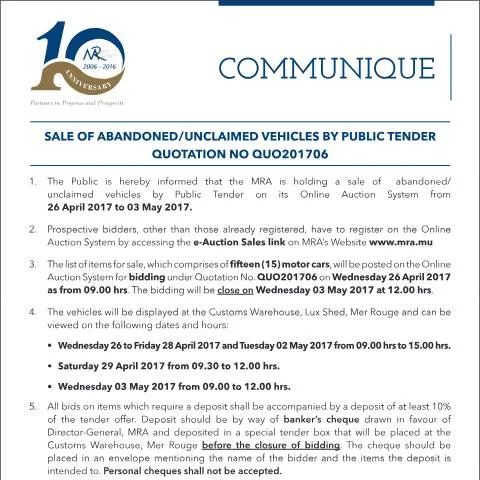
- Prospective Bidders: Individuals or entities wishing to participate must be registered users on the MRA’s online auction system.
- New Registrants: Those who are not yet registered must complete this step before attempting to place a bid.
- Legal Age: Bidders must be of legal age to enter into contracts, typically 18 years or older.
Preparing to Bid: What to Know Before You Fill Out the Form
Before diving into the details of Form Qu06of2017, it’s crucial to gather all necessary information and documentation that will support your bid. Here’s a checklist to ensure you are fully equipped:
Documentation Checklist
- Identity Verification: Bring your National Identity Card for verification purposes.
- Deposit Requirements: Be prepared with a banker’s cheque for at least 10% of your tender offer; personal cheques are not accepted.
- Item Identification: Reference the items you intend to bid on to avoid confusion during the submission process.
Step-by-Step Guide to Completing Form Qu06of2017
Once you are ready with your documents, it is time to complete Form Qu06of2017. Here’s a comprehensive guide on how to do it:
Accessing the Form
Navigate to the official MRA website and locate the e-Auction Sales link. This portal will provide you with the necessary forms and additional instructions for filling them out online.
Filling Out the Form
While completing the form, pay attention to the following sections:
- Personal Details: Input your full name, address, and contact information accurately.
- Bid Details: Clearly mention the items you wish to bid on, alongside your proposed bids.
- Deposit Information: Include the details of your deposit, specifying the amount and providing proof of payment through your banker’s cheque.
Submission Methods
You can submit Form Qu06of2017 through the online portal or in person at the Customs Warehouse, Mer Rouge. Make sure your submission is done before the bidding closes.
Viewing the Abandoned Goods: Date and Location
As a prospective bidder, inspecting the goods is essential to making an informed decision. The MRA provides ample opportunity for this, with specified viewing hours:
| Date | Time | Location |
|---|---|---|
| 26 April to 28 April 2017 | 09:00 - 15:00 | Customs Warehouse, Mer Rouge |
| 29 April 2017 | 09:30 - 12:00 | Customs Warehouse, Mer Rouge |
| 02 May 2017 | 09:00 - 15:00 | Customs Warehouse, Mer Rouge |
| 03 May 2017 | 09:00 - 12:00 | Customs Warehouse, Mer Rouge |
What Happens After the Bidding Closure?
Once the bidding closes, the process moves into a critical phase:
Bid Evaluation
The MRA will evaluate all bids based on the proposed amounts and compliance with submission requirements. Ensure you have submitted all necessary documentation to avoid disqualification.
Notification of Results
Bidders will receive notifications regarding their success in the bidding process. This typically occurs within a few days of the bidding closure.
Addressing Challenges: What If You Encounter Issues?
While the auction process is relatively straightforward, uncertainties may arise. Here are some scenarios and how to handle them effectively:
In Case of a Missing Document
If you find that your submission is incomplete due to a missing document, you may contact the MRA immediately to rectify the situation. Providing supplementary documentation may help in reinstating your bid.
What If Your Bid Is Rejected?
In the unfortunate event that your bid is rejected, you have the right to inquire about the reasons. Understanding the feedback can help you prepare better for future bids.
Appeal Process
Should you wish to contest the MRA’s decision, be prepared to submit an appeal. Familiarizing yourself with the appeal procedures outlined on the MRA website will provide clarity on the steps involved.
Final Thoughts: Your Path to Ownership
Participating in the sale of abandoned or unclaimed goods via public tender is an exciting opportunity that comes with responsibilities. By understanding the intricacies of Form Qu06of2017 and the associated bidding process, you equip yourself with the knowledge needed to navigate this domain successfully. Embrace the challenge and prepare thoroughly to make the most of the next public tender.
Overview of the Process for Sale of Abandoned or Unclaimed Goods
The sale of abandoned or unclaimed goods in Mauritius is primarily governed by the relevant local legislation, which outlines the procedures for their disposal. This process is crucial for local authorities as it allows them to manage and reclaim space occupied by unutilized assets. Typically, these goods are held by various government departments or local councils until they are officially declared as abandoned or unclaimed.
The process begins with a thorough assessment of the goods in question, which must adhere to the guidelines set forth by the local government. Authorities must ensure that the items have remained unclaimed for a specified period, often stipulated by law or internal regulations. Once this period has elapsed, a public notice is issued, advising the public of the upcoming tender sale and inviting bids for the items. The notice is usually published in local newspapers and may also be posted on relevant government websites.
It is important for potential bidders to familiarize themselves with the details of the goods being sold, including any conditions attached to the sale. Bidders are encouraged to inspect the items prior to placing a bid, as sales are typically conducted on an 'as-is' basis, where the seller does not provide any guarantees regarding the condition or functionality of the goods.
Regulatory Framework and Compliance Requirements
The legal framework governing the sale of abandoned or unclaimed goods in Mauritius can be complex, as it involves multiple layers of regulation. The Public Tender process is guided by the principles established under the Public Procurement Act, which mandates transparency, fairness, and competitiveness in public sector procurement. Furthermore, the Local Government Act outlines specific provisions for local authorities in managing and disposing of unclaimed goods.
Compliance with these regulations requires authorities to maintain meticulous records of all goods, including their origin, storage conditions, and any attempts made to locate the rightful owners. The sale process itself must be documented in accordance with established procedures to ensure accountability and traceability. This documentation typically includes:
- Inventory listings of the goods to be sold.
- Records of public notices issued.
- Bids received and evaluated.
- Final sale agreements and receipt documents.
Potential bidders must also adhere to specific compliance requirements. This includes registering as a participant in the tender process and, in some cases, providing evidence of financial capability to complete the transaction. Failure to comply with these requirements may result in disqualification from the bidding process.
Impact of Digital Services on the Tender Process
The push towards digital services in Mauritius has had a profound impact on the sale of abandoned or unclaimed goods via public tender. With the introduction of electronic platforms for submissions, authorities are now able to streamline the bidding process significantly. The use of digital solutions such as the MauPass single-sign-on system linked to the National ID Card has simplified the registration and participation of bidders.
By utilizing online portals, local governments can publish notices for upcoming tenders more efficiently, reaching a wider audience and enhancing public participation. Bidders can also submit their offers electronically, making the process more accessible and convenient. This shift not only promotes transparency but also facilitates better record-keeping and data management for the authorities involved in the tendering process.
Moreover, e-filing systems can provide real-time updates to stakeholders, allowing all participants to track the status of their bids and receive notifications regarding upcoming sales. This increased efficiency and accessibility is crucial for the effective management of unclaimed goods, ensuring that the process meets the needs of both the government and the public.