Navigating the Sale of Abandoned/Unclaimed Goods: An Introduction
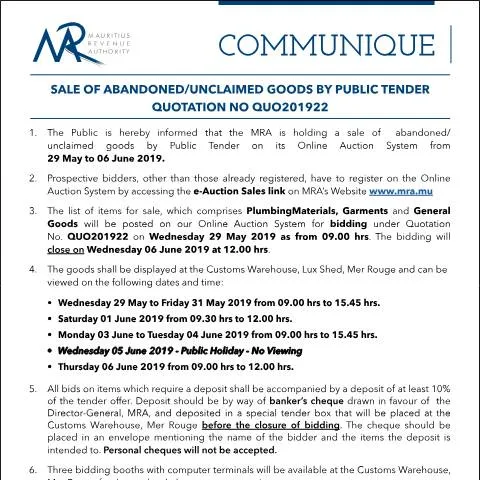
Every year, numerous items remain unclaimed or abandoned, often ending up in the custody of authorities. The Mauritius Revenue Authority (MRA) oversees the sale of these goods, providing an opportunity for the public to acquire valuable items through a competitive bidding process. The official document at hand, Sale of Abandoned / Unclaimed Goods by Public Tender, code Communique22of2019, outlines the necessary steps for participation in this public tender.
Understanding the Tender Process: Key Dates and Timeline
The timeline for the public tender is critical, as it determines when interested bidders can register, view items, and submit their bids. The tender is set to run from 29 May to 06 June 2019. Here’s a closer look at the key dates:
| Activity | Date | Time |
|---|---|---|
| Start of Online Auction | 29 May 2019 | 09:00 hrs |
| Viewing Period | 29 May - 31 May 2019 | 09:00 - 15:45 hrs |
| Viewing Date | 01 June 2019 | 09:30 - 12:00 hrs |
| Last Viewing Days | 03 June - 04 June 2019 | 09:00 - 15:45 hrs |
| Public Holiday | 05 June 2019 | - |
| Last Bidding Day | 06 June 2019 | Until 12:00 hrs |
Registration and Bidding: What You Need to Participate
To engage in the bidding process, interested individuals must first register on the MRA's Online Auction System. This requires visiting the e-Auction Sales link on the MRA’s official website. For those who might not have internet access, the MRA provides computer terminals at the Customs Warehouse.
The registration process and participation involve several necessary steps:
- Access the MRA Online Auction System.
- Complete the registration process to create a bidder profile.
- Review the list of items available for bidding.
- Prepare a deposit for all bids that require it, which is generally 10% of the tender offer.
- Submit bids within the designated time frame.
Preparing Your Deposit: Importance of Compliance
One crucial aspect of participating in the tender is the financial deposit required. Bidders must submit a banker’s cheque made out to the Director-General of the MRA. Personal cheques will not be accepted. This cheque should be placed in an envelope clearly marking the bidder's name and the items for which the deposit is intended, and deposited in a special tender box at the Customs Warehouse. Failure to comply with these regulations can result in disqualification from the bidding.
Viewing the Goods: Accessibility and Timing
Before finalizing bids, it's imperative to inspect the items firsthand. The MRA has arranged specific viewing dates and times at the Customs Warehouse located at Lux Shed, Mer Rouge. Here's what to keep in mind:
- Bring your Identity Card for access at the Port Main Gate.
- Check the viewing schedule to ensure attendance during the allotted times.
- Utilize the opportunity to evaluate the condition and value of goods prior to bidding.
Decoding the Sale Document: Essential Components of the Form
Each bidder should be familiar with the official documentation accompanying the tender process, particularly the Sale of Abandoned / Unclaimed Goods by Public Tender. The document encompasses various sections that need careful completion:
- Bidding Instructions: Guidelines on how to place bids and requirements for deposits.
- List of Available Goods: Detailed information regarding the items on sale, which is crucial for decision-making.
- Terms and Conditions: Legal stipulations outlining the responsibilities of bidders and the MRA.
Take the time to read all sections thoroughly, as they provide the framework within which the bidding process operates and highlight any potential pitfalls to avoid.
Understanding Legal Framework and Historical Context
The sale of abandoned or unclaimed goods in Mauritius is governed by regulations aimed at ensuring transparency and fairness in the bidding process. Established under the Public Service Commission Act of 1955, the MRA manages this tender system in alignment with the principles of hybrid legal frameworks, combining elements of French civil law and English common law. This historical context underpins the procedural norms required in public tenders.
Post-Bidding: What Happens After You Submit Your Bid?
Once the bidding has closed on 06 June 2019 at 12:00 hrs, all bids will be reviewed by the MRA. Bidders should await communication regarding the outcome of their bids.
- If successful, you will receive instructions on completing the purchase of the items won.
- Unsuccessful bidders should also be informed, thus closing the bidding loop for all participants.
To ensure a smooth process, it is advisable to keep track of all communications from the MRA and follow up if necessary. One can reach the MRA via their contact information provided in the official document should any queries arise post-tender.
Special Cases: Navigating Unique Situations
While most bidders will follow the standard procedures, certain circumstances might necessitate additional considerations:
- Foreign Bidders: Those coming from abroad must ensure compliance with local regulations. This includes possessing a valid passport and potentially additional identification documentation.
- Bidders with Special Needs: The MRA aims to be inclusive; hence, provisions must be made for individuals requiring assistance during the registration and bidding process.
- Minors: Bids placed by minors require parental consent and must be accompanied by legal documentation verifying this approval.
Final Considerations: Your Commitment to Compliance
Engaging in the bidding process for abandoned and unclaimed goods is not merely about acquiring items; it is a commitment to uphold the regulations and guidelines set forth by the MRA. Being proactive, informed, and compliant with all aspects of the tender process will enhance your chances of success and contribute to a seamless experience.
As you prepare to participate, remember to meticulously follow the outlined steps, pay close attention to deadlines, and adhere to all legal requirements. Your diligence will not only facilitate a successful bid but also foster trust in the public tender system.
Legal Framework Governing the Sale of Abandoned or Unclaimed Goods
The sale of abandoned or unclaimed goods in Mauritius is primarily regulated under the legal framework established by the Disposal of Unclaimed Goods Act. This legislation outlines the procedures and requirements necessary for public authorities to dispose of goods that have remained unclaimed for a specified period.
According to the Act, goods may be deemed abandoned if they have not been claimed within a period defined in the regulations, typically ranging from three to twelve months, depending on the type of goods. Authorities are obliged to make reasonable efforts to locate the owners of such goods before initiating the sale process. This often includes public notifications, such as advertisements in local newspapers or announcements on official websites.
Moreover, specific guidelines stipulate how goods should be categorized, the means of valuation, and the methodology of sale. This valuation process is particularly important as it determines the minimum reserve price for the auction. Authorities must ensure transparency and fairness, adhering to the principles of good governance.
For individuals or businesses wishing to participate in the tender process, it's critical to understand the legal implications. For instance, buyers of unclaimed goods may need to verify the ownership status and understand any legal liabilities associated with the purchase. Failure to do so may result in disputes or claims from previous owners.
Participating in the Tender Process: Step-by-Step Guide
If you are interested in acquiring abandoned or unclaimed goods through public tender, it's essential to follow a systematic approach to ensure compliance with all necessary regulations and maximize your chances of success. Here’s a comprehensive guide to navigating the tender process:
Stay Informed: Regularly check the official government portals and local newspapers for announcements regarding upcoming tenders. The Mauritius government often publishes lists of abandoned goods along with details of the tender process.
Review the Tender Notice: Once you identify a tender of interest, carefully review the tender notice. This document will outline important details such as the date and location of the sale, the categories of goods available, and any specific conditions that apply.
Prepare Required Documentation: Typically, you will need to provide identification (such as your National ID card), proof of address, and possibly a deposit to participate in the tender. Ensure that all documents are prepared in advance to avoid last-minute issues.
Attend the Pre-Tender Meeting: Authorities may hold pre-tender meetings to clarify the process, answer questions, and provide additional information. Attending these meetings can give you valuable insights into the tender and help you better prepare your bid.
Submit Your Tender Application: Follow the instructions provided in the tender notice for submitting your application. Ensure that you adhere to the stipulated format and deadlines, as late or incorrectly submitted bids will typically be disqualified.
Fill in your form directly online
No printing: type your details into the boxes of the official form, tick, then download the PDF ready to send.
- 1Type into the form boxes
- 2Tick in one click
- 3Save and download the PDF
Participate in the Auction: On the specified date, attend the auction where the tender will be conducted. Be ready to engage in bidding and ensure you understand the bidding increments and the minimum reserve prices set by the authorities.
Post-Award Procedures: If your bid is successful, you will need to complete any required formalities, including payment of the purchase price and the collection of the goods. Ensure that you receive relevant documentation confirming the transaction and any warranties provided.
By following these steps and understanding the requirements, you can effectively navigate the tender process and successfully acquire abandoned or unclaimed goods.
Potential Risks and Legal Considerations
Engaging in the purchase of abandoned or unclaimed goods carries inherent risks and legal considerations that buyers should be aware of. Understanding these risks is crucial to making informed decisions in the tender process:
Ownership Disputes: One of the primary risks associated with buying unclaimed goods is the potential for ownership disputes. Previous owners may contest the sale, leading to legal complications. Buyers should conduct due diligence to verify the legitimacy of the sale and seek legal advice if needed.
Condition of Goods: The condition of abandoned goods is often unknown and may vary significantly. Buyers may encounter items that are damaged, defective, or in need of repair. It is advisable to inspect goods thoroughly before bidding or to factor potential repair costs into your bidding strategy.
Compliance with Local Regulations: Buyers must ensure that any goods acquired comply with local laws and regulations. For example, certain items may require permits or licenses for ownership or use, particularly in the case of vehicles, firearms, or restricted goods. Familiarize yourself with applicable regulations to avoid potential legal issues.
Liabilities and Responsibilities: Once purchased, the buyer assumes all liabilities associated with the goods. This includes any damage caused by the goods or their usage, as well as any environmental or regulatory responsibilities. It’s essential to understand these liabilities to mitigate risks effectively.
Tax Implications: Purchasing abandoned or unclaimed goods may also have tax implications. Buyers should consult with the Mauritius Revenue Authority (MRA) regarding any applicable taxes or fees that may arise from the transaction, particularly if the goods are to be resold.
By being aware of these potential risks and taking precautions, buyers can navigate the complexities of purchasing unclaimed goods while minimizing exposure to unforeseen challenges.