Understanding the Context of the Sale of Abandoned/Unclaimed Goods
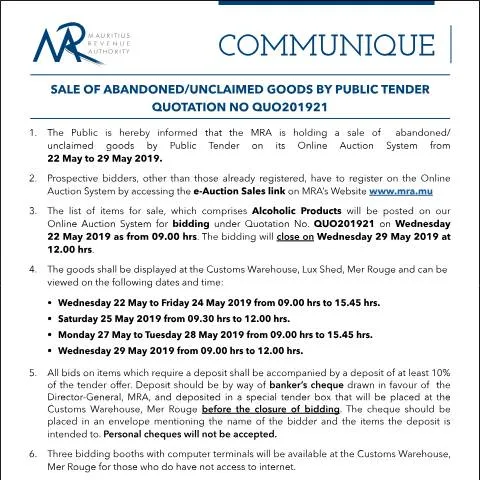
In a dynamic economic landscape, the management of abandoned or unclaimed goods is crucial for both the public and private sectors in Mauritius. This document, officially referenced as Communique21of2019, outlines the procedures and responsibilities associated with the public tender for the sale of such goods, as administered by the Mauritius Revenue Authority (MRA). The sale period, which is set from May 22 to May 29, 2019, provides an opportunity for bidders to acquire various items, including alcoholic products, that have been deemed abandoned by their original owners.
Who Can Participate in the Tender?
This public tender is open to a wide range of participants. However, it is important to note the specific requirements and registration procedures for prospective bidders:
General Eligibility
- All individuals aged 18 and above can participate, provided they have the necessary identification.
- Foreign nationals are also permitted to bid, but they must ensure compliance with any regulations pertaining to the acquisition of goods in Mauritius.
- Businesses and corporations registered in Mauritius can participate if they meet the regulatory requirements.
Registration Process for Bidders
Those who have not previously registered on the MRA’s Online Auction System will need to complete the registration process. This entails:
- Visiting the MRA website and accessing the e-Auction Sales link.
- Completing the registration form with accurate personal or corporate details.
- Awaiting confirmation of registration, which will allow access to the online bidding platform.
It is vital for all bidders to complete their registration well in advance of the auction dates to ensure participation.
Distinct Features of this Document and Process
The Communique21of2019 distinguishes itself from other official forms and documents related to public sales in several ways:
Specificity of Goods
This tender focuses specifically on abandoned or unclaimed goods, which differentiates it from regular sales or auctions that may involve a broader spectrum of items.
Online Auction Requirement
While some tenders may allow for in-person bidding, this process mandates participation through the MRA's Online Auction System, reflecting the government’s push towards e-services. This requirement underlines the importance of digital literacy for prospective bidders.
Preparation of Required Documents
To facilitate a smooth bidding experience, bidders must prepare and submit specific documentation:
Mandatory Identification
Each bidder must present an official identification document. Acceptable forms include:
- National Identity Card
- Passport for foreign participants
Financial Preparedness
As part of the bidding process, each bid must be accompanied by a deposit of at least 10% of the tender offer. This involves:
- Acquiring a banker’s cheque drawn in favour of the Director-General, MRA.
- Placing the cheque in a sealed envelope with the bidder's name and the corresponding items indicated.
Personal cheques are not acceptable, thus, financial planning is essential before entering the bidding process.
Viewing the Goods Before Bidding
Transparency is a key component of this auction. Prospective bidders are encouraged to inspect the goods prior to placing bids. The viewing schedule is as follows:
| Date | Time |
|---|---|
| May 22 - May 24, 2019 | 09:00 - 15:45 |
| May 25, 2019 | 09:30 - 12:00 |
| May 27 - May 28, 2019 | 09:00 - 15:45 |
| May 29, 2019 | 09:00 - 12:00 |
During these times, bidders can inspect the items at the Customs Warehouse, Lux Shed, Mer Rouge, ensuring they make informed decisions.
Steps to Place a Bid
Placing a bid in the public tender involves several straightforward steps:
Accessing the Online Auction System
Bidders must log into the Online Auction System on the MRA website during the auction period. Here’s how:
Fill in your form directly online
No printing: type your details into the boxes of the official form, tick, then download the PDF ready to send.
- 1Type into the form boxes
- 2Tick in one click
- 3Save and download the PDF
- Enter the auction platform using your registered credentials.
- Locate the listing under Quotation No. QUO201921.
- Select the items you wish to bid on and enter your bid amount.
Finalizing the Bid Submission
Once your bid is entered, remember that:
- Bids are recorded in real-time; ensure that the amount is one you are prepared to pay.
- Monitor any notifications regarding your bid status, as these may require immediate attention, especially close to the closing time of the auction.
Post-Bidding Procedures and Follow-Up
After the bidding process concludes, successful bidders must engage in specific follow-up actions:
Notification of Successful Bids
Once the bidding closes on May 29, 2019, bidders will be notified via the Online Auction System regarding the outcome of their bids. If successful, they will need to:
- Confirm acceptance of the bid.
- Provide any additional required documents to complete the purchase.
Payment and Item Collection
Successful bidders must pay the remaining balance for the purchased goods, typically payable through the MRA’s designated payment channels. Following payment clearance, items must be collected within stipulated timelines, which will be communicated via the auction system.
Final Considerations and Important Notes
Engaging in the sale of abandoned or unclaimed goods via public tender is an excellent opportunity for various stakeholders, including collectors, businesses, and individual buyers. Here are some final considerations:
- Timing is crucial: Ensure you are aware of all relevant dates and times to avoid missing out on potential purchases.
- Documentation: Keep all correspondence and documents related to the auction for future reference and clarity.
- Plan for contingencies: Have alternative bidding strategies in mind, should your initial bids not succeed.
By understanding the process, preparing adequately, and following the outlined steps, participants can successfully engage in this public tender. The management of abandoned goods not only serves commercial interests but also aligns with community standards, reducing waste and redistributing value within the Mauritian economy.