Understanding the Sale of Abandoned and Unclaimed Goods
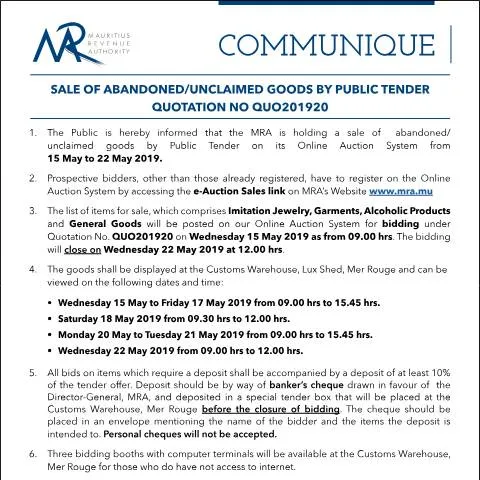
The Sale of Abandoned/Unclaimed Goods by Public Tender represents a significant opportunity for individuals and businesses to acquire goods that would otherwise remain unutilized. This process is executed by the Mauritius Revenue Authority (MRA) and plays a crucial role in the management of unclaimed assets, promoting transparency and efficiency within the public sector. The essence of this initiative is to ensure that valuable goods are repurposed rather than wasted, creating potential avenues for collectors, entrepreneurs, and the public at large to benefit.
The Role of the MRA in Public Tender Sales
The MRA oversees the entire procedure, from the initial identification of abandoned goods to the final sale through public tender. Here’s how the process unfolds:
- Identification: Goods that have been unclaimed for a designated period are identified.
- Valuation: These goods are then appraised to establish their market value.
- Public Notification: The public is notified through formal channels like the MRA website and press releases.
- Tender Process: Bidders submit their offers before the closure date.
- Awarding of Tenders: Successful bidders receive the goods based on their highest bids.
The MRA’s commitment to transparency is evident as they provide detailed lists of items, ensuring all potential buyers are informed and can participate fairly.
Who Can Participate in the Auction?
This initiative is open to all members of the public; however, there are some conditions to note:
- Individuals must be registered on the MRA’s Online Auction System to participate.
- Participants must provide a valid Identity Card upon entering the auction area.
- Only registered bidders can submit tenders, ensuring that every participant has been verified.
Therefore, it is crucial for potential bidders to prepare in advance by registering and ensuring they have all necessary documentation ready.
Sequential Breakdown of the Bidding Process
The process of bidding for abandoned and unclaimed goods is organized and follows a clear timeline. Understanding this timeline is essential for anyone interested in participating:
| Date | Action |
|---|---|
| 15 May 2019 | Start of online bidding and viewing of goods at Customs Warehouse. |
| 15-17 May 2019 | Viewing of goods from 09:00 to 15:45 hrs. |
| 18 May 2019 | Additional viewing from 09:30 to 12:00 hrs. |
| 20-21 May 2019 | Further viewing from 09:00 to 15:45 hrs. |
| 22 May 2019 | Final bidding closes at 12:00 hrs. |
This timeline is crucial for potential bidders, as attending the viewing sessions allows them to assess goods before making financial commitments.
Preparing Your Bid: Documentation and Deposits
Before participating in the tender, it’s essential to be aware of the required documentation and financial commitments:
- Registration: Ensure you are registered on the Online Auction System.
- Identity Verification: Bring your Identity Card for access.
- Deposit: A minimum deposit of 10% of the tender offer is required, which must be provided via a banker’s cheque.
It’s important to note that personal cheques will not be accepted, which emphasizes the need for planning ahead regarding financial arrangements. The cheque should be placed in an envelope that lists the bidder's name and the items for which the deposit is intended.
Accessing the Goods and Bidding Environment
For those who might not have access to the internet, provisions are made to ensure inclusive participation. The Customs Warehouse will host three bidding booths equipped with computer terminals. Here’s what to expect:
- The booths will be operational during the viewing period.
- Assistance will be available for bidders unfamiliar with online bidding platforms.
- Physical viewing of items is highly encouraged to make informed bids.
This approach ensures that everyone, regardless of their technical proficiency, can engage in the auction process.
Post-Bidding Process: What Happens Next?
After the bidding closes, the process is not over. Successful bidders will need to handle several follow-up actions:
- Award Notifications: Bidders will receive notifications regarding their bid status.
- Payment Completion: Winning bidders must complete payment within the designated timeframe.
- Collection of Goods: The collection details will be provided, and items must be picked up promptly.
The MRA emphasizes the importance of adhering to the established timelines, as failure to do so may result in forfeiture of the bid and loss of the right to claim the goods.
Differentiating Factors from Similar Forms and Processes
While there may be other forms and processes related to public sales and auctions, the Sale of Abandoned/Unclaimed Goods by Public Tender stands out due to its specific focus on unclaimed property. Here are key distinctions:
- Target Goods: This sale specifically addresses abandoned or unclaimed items, contrasting with general auctions which may include a variety of goods.
- Public Tender Process: The use of a public bidding system adds a layer of transparency and fairness not always present in private sales.
- Regulatory Oversight: The MRA’s involvement ensures compliance with local laws, providing bidders with assurance regarding the legitimacy of the sale.
These factors contribute to a unique bidding experience that prioritizes public trust and responsible asset management.
Conclusion: Maximizing Participation in Public Tenders
Engaging in the sale of abandoned and unclaimed goods through public tender is an excellent opportunity for the public. Preparation is key, and understanding the requirements, processes, and timelines will maximize success. By following these guidelines, potential bidders can navigate the auction landscape with confidence, turning unclaimed goods into valuable assets.
Understanding the Legal Framework for Abandoned Goods in Mauritius
In Mauritius, the sale of abandoned or unclaimed goods is governed by specific legal provisions that ensure both transparency and fairness in the procurement process. Under the relevant regulations, such as the Public Procurement Act and various municipal bye-laws, public authorities must adhere to defined procedures when dealing with goods that have remained unclaimed for a stipulated period. This period typically spans between three to six months, depending on the type of goods and the governing authority.
Additionally, it is essential to understand the criteria that constitute 'abandonment' or 'unclaimed' status. For example, items left in public transport without proper identification or luggage that has not been collected from airports fall under this category. In such cases, authorities are mandated to carry out due diligence, including public notifications, before proceeding with a public tender sale.
Fill in your form directly online
No printing: type your details into the boxes of the official form, tick, then download the PDF ready to send.
- 1Type into the form boxes
- 2Tick in one click
- 3Save and download the PDF
The legal framework also outlines the responsibilities of the authorities managing the auction process. They must ensure that all items are assessed fairly and that an inventory is created to inform potential bidders about the nature and condition of the goods. Furthermore, it is crucial for the authorities to maintain records of the sale process, including the final sale price and the identity of the winning bidder, as part of their accountability measures.
The Public Tender Process for Abandoned Goods
The public tender process for the sale of abandoned or unclaimed goods in Mauritius is structured to promote competitiveness and fairness. Once the period for claiming goods has expired, the relevant authority, often a local government body or a designated agency, initiates the process through various channels, such as official announcements in newspapers and online platforms.
Typically, the authority first publishes a notice detailing the items available for sale, accompanied by a description, photographs, and any relevant terms and conditions. Interested parties are then invited to prepare and submit their bids, usually via an official tender form, such as the LGSC Form 7a, which may be completed electronically or in hard copy. This form will require bidders to provide their official identification, contact details, and any required deposit, which varies based on the assessed value of the goods.
It's worth noting that bidders often have the right to inspect the goods prior to the sale date. This inspection period is crucial, as it allows bidders to assess the condition of the items they are interested in, which can significantly impact their bidding strategy. Following the submission deadline, bids are opened publicly on a specified date, and the authority announces the winning bid. Importantly, all transactions must adhere to tax regulations, and relevant taxes must be paid before the transfer of ownership can take place.
Post-Auction Procedures and Compliance
Once the auction has concluded, and the winning bidder has been announced, several post-auction procedures must be followed. The winning bidder is required to complete a transaction form, such as the PSC Form 7, to formalize the transfer of ownership. This process also includes the payment of applicable taxes, as stipulated by the Mauritius Revenue Authority (MRA).
It is essential for the winning bidder to ensure that they retain all documentation from the auction, including the tender submission and any correspondence regarding the sale. Documentation serves as proof of purchase and is crucial should any disputes arise in the future. Furthermore, the authority is obligated to record the transaction in their inventory management system, which helps maintain transparency and oversight.
In cases where the goods do not sell following the public tender, the authority may explore alternative disposal methods, including donations to charitable organizations or recycling. These procedures are also guided by the principles of sustainability and responsible management of public assets. Understanding these compliance measures is critical for both authorities and bidders to ensure that the sale of abandoned goods proceeds smoothly and in accordance with the law.