Navigating the Sale of Abandoned and Unclaimed Goods by Public Tender
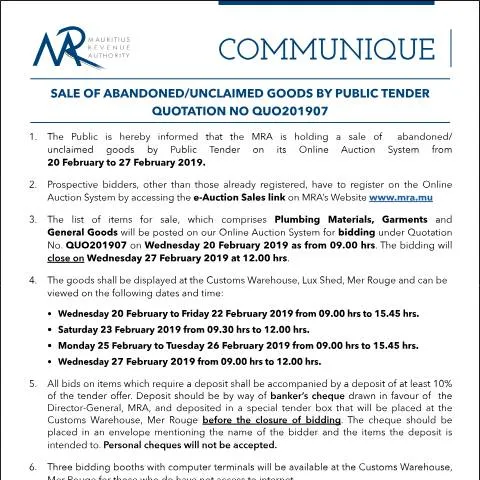
In the bustling environment of Mauritius, the sale of abandoned and unclaimed goods is a noteworthy procedure that not only serves to clear out items that have been left behind, but also presents an excellent opportunity for bidders. As outlined in the official document, particularly Communique07of2019, the Mauritius Revenue Authority (MRA) has laid out the framework for engaging in this public tender process that occurred from February 20 to February 27, 2019. Understanding this procedure, alongside the specific requirements, can be paramount for prospective bidders.
A Timeline to Remember: Key Dates of the Tender
The timeline for the public tender is critical for interested participants. Here’s a breakdown of important dates:
| Date | Event |
|---|---|
| February 20, 2019 | Public tender opens; online auction begins at 09:00 hrs. |
| February 27, 2019 | Public tender closes at 12:00 hrs. |
| February 20-22, 2019 | Viewing period for goods at Customs Warehouse. |
| February 23, 2019 | Additional viewing hours on Saturday. |
| February 25-26, 2019 | Final days for viewing the items. |
Importantly, during these dates, prospective bidders can view the items available for bidding, which typically include a variety of goods such as plumbing materials, garments, and other general items.
Preparing to Bid: Registration and Requirements
Before participating in the tender, there are essential steps to take to ensure eligibility. Bidders need to register on MRA's Online Auction System.
- Visit the MRA website and locate the e-Auction Sales link.
- Complete the registration process, providing necessary details as prompted.
- For those not already registered, ensure you do this ahead of time, as bids from unregistered users will not be accepted.
Once registered, it’s necessary to prepare the required documentation, including the 10% deposit for any bids that require it. This deposit must be made through a banker’s cheque, payable to the Director-General, MRA, and should be submitted in a sealed envelope that notes the bidder's name and the items for which the deposit is made.
The Bidding Process: Step-by-Step
Understanding how to effectively navigate the bidding process can significantly enhance your experience. Here’s how the process unfolds:
- On the first day of the tender, the items will be officially listed on the Online Auction System.
- Prospective bidders can start placing their bids through the online system or at the physical booths set up at the Customs Warehouse.
- For bidders without internet access, three bidding booths with computer terminals are available at the Customs Warehouse, Mer Rouge.
- It is crucial to deposit your tender offers, along with the required deposit, before the closure of bidding on February 27, 2019.
During the bidding period, bidders can continuously monitor the items they are interested in and adjust their bids accordingly.
Viewing the Goods: Access and Details
The viewing of goods is an integral part of the process that cannot be overlooked. Potential bidders are encouraged to examine the items in person to make informed decisions. The following dates and times were established for viewing:
- February 20 to 22: 09:00 hrs - 15:45 hrs
- February 23: 09:30 hrs - 12:00 hrs
- February 25 to 26: 09:00 hrs - 15:45 hrs
- February 27: 09:00 hrs - 12:00 hrs
It is essential for visitors to carry their Identity Cards for access at the Port Main Gate, ensuring a smooth entry to the Customs Warehouse.
Understanding the Bid Submission Process
The submission of bids is a critical juncture in the tendering process. Each bid must be accompanied by the correct deposit, and understanding the nuances of this requirement can save bidders from disqualification. Here’s what you need to do:
- Prepare a banker’s cheque amounting to 10% of your bid offer.
- Ensure your cheque is drawn in favor of the Director-General, MRA.
- Place your cheque inside an envelope that clearly indicates your name and the specific items you are bidding on.
- Deposit this envelope in the designated tender box at the Customs Warehouse prior to the closure of the bidding.
Be vigilant; personal cheques will not be accepted, underscoring the necessity of adhering strictly to the requirements. Failure to submit the bid and deposit correctly may lead to disqualification from the tender.
Post-Bidding: Awaiting the Results
After the bidding period closes, participants enter a waiting phase where they anticipate the results. The MRA will evaluate all bids received during the tender. Successful bidders will be notified in due course regarding the next steps, including payment for the items won and arrangements for pickup.
In cases where bids are unsuccessful, it is advisable to remain informed about future tenders. The process of public tenders for abandoned and unclaimed goods is periodic and presents ongoing opportunities for those interested in acquiring goods at competitive prices.
The Legal Framework: Context and Justification
The procedural guidelines surrounding the sale of abandoned and unclaimed goods by public tender are not arbitrary; they draw from a robust legal framework established by the Mauritius Revenue Authority and aligned with the local governance structure. The PSC Act of 1955 and the overarching principles of the Constitution of 1968 inform these processes.
This legal backdrop ensures transparency, accountability, and a fair process for all involved. Regular audits and oversight by relevant authorities further strengthen the integrity of the bidding process, assuring participants that they are engaging in a structured and legitimate system.
Final Thoughts: Engaging in the Tender
For prospective bidders, participating in the sale of abandoned and unclaimed goods via public tender represents a unique and potential profitable opportunity. It requires meticulous attention to detail—from understanding the timeline and registration process to adhering to the bidding requirements. By preparing adequately and following the established guidelines, participants can engage confidently in the tender process.
Whether you are a seasoned bidder or a first-time participant, leveraging the avenues for engagement with the MRA's auction platform can yield rewarding results. Embrace the diligence required and position yourself to capitalize on the opportunities presented by this public tender process.
Understanding the Legal Framework for Unclaimed Goods in Mauritius
The sale of abandoned or unclaimed goods in Mauritius operates under a specific legal framework that aligns with the principles of both French civil law and English common law. The procedures for managing such goods are primarily guided by the provisions laid out in the Public Procurement Act and relevant local statutes governing property rights and public tenders.
Under Mauritian law, unclaimed goods may include items left behind in public places, abandoned vehicles, or property whose owners are untraceable over a defined period. Typically, local authorities, such as municipal councils or other designated bodies, are responsible for identifying and inventorying such items. It is crucial to understand that the disposition of these goods must comply with the regulations set forth by the respective governing bodies, such as the Local Government Service Commission (LGSC).
Prior to any sale, authorities must make reasonable efforts to notify the owners of the unclaimed property. This can include public notices in local newspapers or on official websites. If the owners do not respond within a stipulated timeframe, the goods may be scheduled for sale by public tender. The entire process is designed to ensure transparency and fairness while adhering to the principles of public procurement.
Procedure for Bidding on Abandoned Goods
Participating in the public tender for abandoned or unclaimed goods requires potential bidders to familiarize themselves with the bidding process set forth by the local authorities. Generally, the procedure includes several key steps:
- Announcement of Tender: Local councils or designated authorities issue a public announcement regarding the sale. This announcement typically includes details about the goods, the date and location of the tender, and any specific requirements for bidders.
- Registration: Interested bidders must register formally, often using specific forms such as LGSC Form 7a for local government tenders. Registration may require providing identification or proof of residency.
- Inspection of Goods: Bidders are usually granted an opportunity to inspect the items before the tender date. This inspection phase allows bidders to assess the condition and value of the goods they are interested in purchasing.
- Submission of Bids: Bids must be submitted in accordance with the guidelines specified in the tender announcement. This often includes guidelines on bid amounts, submission deadlines, and required documentation.
- Award of Contract: Once bids are evaluated, the authority will award the contract to the successful bidder. Notification will be given to the successful party, who must then finalize payment and arrange for the collection of the goods.
It is essential for bidders to adhere strictly to the stipulated procedures to avoid disqualification. Additionally, understanding the specific terms outlined in the notice of tender can provide valuable insights into the expectations and requirements of the local authorities.
Implications of Purchasing Unclaimed Goods
Purchasing abandoned or unclaimed goods can present a unique opportunity for individuals and businesses alike, but it also comes with specific implications that potential buyers should consider. First and foremost, the ownership of such goods is transferred to the buyer upon successful purchase; however, this does not always equate to a clear title.
It is vital for buyers to be aware of possible encumbrances. For instance, if the abandoned property includes vehicles, buyers must ensure that there are no outstanding fines or legal issues associated with the vehicle. Acquiring a vehicle through public tender does not automatically guarantee that it is free from legal claims or ownership disputes.
Furthermore, buyers must consider the condition of goods purchased. Items may vary widely in quality and may require additional investments for repairs or refurbishment. Thoroughly assessing the items during the inspection phase can mitigate such risks.
Lastly, potential buyers should also be informed of the subsequent responsibilities that may arise after purchase. This may involve compliance with municipal regulations regarding the use of the items or, in some cases, responsibilities in terms of disposal or recycling if the goods are not suitable for reuse.
In summary, while purchasing unclaimed goods through public tender can be a beneficial venture, it requires careful consideration and due diligence to ensure a satisfactory outcome.