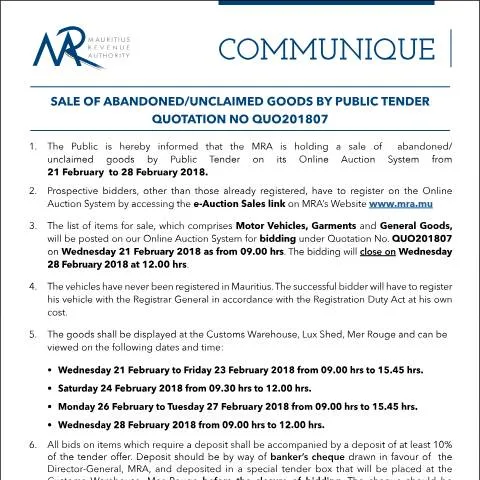
Navigating the Sale of Abandoned/Unclaimed Goods: An Essential Guide
Engaging in the sale of abandoned or unclaimed goods through public tender represents a significant opportunity for both individuals and businesses in Mauritius. The Sale of Abandoned/Unclaimed Goods by Public Tender, as outlined in Communique Q07 of 2018, is primarily organized by the Mauritius Revenue Authority (MRA). This document serves as a pivotal resource for prospective bidders who wish to participate in this auction process, paving the way for acquiring various goods, including motor vehicles and general merchandise.
The Auction Framework: Dates and Key Details
The timeline for the auction is critical for participants to understand. The sale, according to the official communique, will run from February 21 to February 28, 2018. Here’s a breakdown of the process:
- Registration Period: Prospective bidders must register on the MRA’s Online Auction System prior to bidding.
- Viewing Schedule: Interested parties can inspect the goods from February 21 to February 28, with specific viewing hours:
- February 21-23: 09:00 - 15:45
- February 24: 09:30 - 12:00
- February 26-27: 09:00 - 15:45
- February 28: 09:00 - 12:00
- Bidding Timeline: Bidding commences on February 21 at 09:00 and concludes on February 28 at 12:00.
Understanding this timeline is essential for participation, as failure to adhere to these dates may result in missing the opportunity to bid on valuable items.
The Registration Process: Securing Your Bidding Spot
To engage in the auction, potential bidders must complete a registration process via the MRA's online platform. Failure to register will exclude individuals from participating in the auction. Here’s how to ensure you’re registered:
- Visit the MRA website at www.mra.mu.
- Access the e-Auction Sales link to initiate your registration.
- Fill out the necessary personal and contact information, ensuring accuracy to avoid delays.
- Submit the registration form and await confirmation of your registration status.
For those already registered, you can log in directly to participate in the bidding process, making sure your details are up-to-date.
Understanding the Goods Available: Categories and Conditions
The goods offered during the auction encompass a variety of categories, primarily including:
- Motor Vehicles: Vehicles that have never been registered in Mauritius, necessitating registration with the Registrar General post-purchase.
- Garments: A selection of apparel items, potentially appealing to retailers and individual buyers alike.
- General Goods: Miscellaneous items that may include home appliances, electronics, and other consumer products.
Each category may come with specific terms and conditions that bidders should be aware of before placing their bids.
Deposits and Bidding Procedures: Financial Commitments
An essential aspect of the bidding process involves financial commitments through deposits. Bidders must adhere to the following guidelines:
| Item Type | Deposit Required |
|---|---|
| Vehicles | 10% of the tender offer |
| Apparel and General Goods | 10% of the tender offer |
The deposit must be submitted in the form of a banker’s cheque made out to the Director-General, MRA. This cheque should be enclosed in an envelope that clearly states the bidder’s name and the items related to the deposit. It is crucial to note that personal cheques will not be accepted, and bids must be accompanied by the necessary deposit to be considered valid.
Bid Submission: How to Ensure Your Offer is Counted
Once registered and prepared with the necessary deposit, bidders can submit their bids effectively. Bids can be made either online through the MRA’s auction system or physically at the Customs Warehouse. For those without internet access, the MRA provides three bidding booths equipped with computer terminals at the Customs Warehouse, Mer Rouge.
For a successful bid, follow these steps:
- Ensure you have registered and deposited your cheque.
- Access the bidding system and select the items you wish to bid on.
- Enter your bid amount, keeping in mind the minimum increase required.
- Submit your bid before the auction closes on February 28 at 12:00.
Post-Bidding Process: What Comes Next?
After the bidding period concludes, the MRA will review all submitted bids. Successful bidders will receive notifications regarding their winning offers. It's essential to understand the subsequent steps:
- Payment Required: Successful bidders must complete the payment for the items won.
- Registration of Vehicles: For those who bid on motor vehicles, you will need to handle the registration with the Registrar General according to the Registration Duty Act.
- Collection of Goods: Details regarding the collection of purchased goods will be stipulated in the notification received.
This post-bidding phase is crucial, as failure to comply with payment or registration processes could lead to forfeiture of the bid.
Handling Issues: What to Do in Case of Complications
While engaging in the auction process, complications may arise. It’s vital for bidders to know how to navigate potential issues, such as:
- Refusal of Bid: If your bid is refused, you will be notified. It’s essential to check if there were any compliance issues or if the auction terms were not met.
- Missing Documents: In case of missing required documents during the registration or bidding process, promptly reach out to the MRA for guidance. Providing complete documentation is critical.
- Errors in Bidding: If an error occurs while submitting your bid, contact the MRA immediately to rectify the situation, if possible.
Final Thoughts on Participating in Public Tenders
Engaging in the sale of abandoned or unclaimed goods in Mauritius offers a unique opportunity for savvy bidders to acquire valuable items. By understanding the nuances of the Sale of Abandoned/Unclaimed Goods by Public Tender, including registration, bidding, and post-auction processes, participants can navigate the system effectively. For anyone participating in this auction, be sure to adhere to all guidelines and stay informed on the specifics to maximize your chances of success. Whether you aim to purchase a vehicle, garments, or general goods, preparation is the key.
For any further assistance, prospective bidders are encouraged to contact the MRA directly through their communication channels:
Contact Information: Mauritius Revenue Authority, Custom House, Mer Rouge, Port-Louis, Mauritius Tel: +230 202 0500 Email: [email protected] Website: www.mra.mu
Understanding the Process of Public Tender for Abandoned or Unclaimed Goods
The sale of abandoned or unclaimed goods by public tender is a procedure governed by specific regulations in Mauritius. When goods are determined to be abandoned or unclaimed, the relevant authorities, such as the Mauritius Revenue Authority (MRA) or local government bodies, initiate the process to recover public storage costs and ensure these goods are appropriately disposed of. This process aims to maintain public order and efficiency in managing unclaimed property.
The first step involves the identification of items that have been abandoned for a specified duration, typically one year. Once identified, notifications are issued to potential owners or stakeholders, providing them with an opportunity to reclaim their property. If no claims are made within the stipulated period, these goods are then prepared for sale via public tender.
Public tender is an open and competitive process that ensures transparency and fairness. The authorities will prepare a detailed inventory of the goods, including descriptions, conditions, and a starting bid price. Interested parties can access this information through official channels, and they must submit their bids by a specified deadline. This process not only allows for the recovery of lost revenue but also provides an avenue for individuals and businesses to acquire unique items at potentially lower costs.
It is essential for potential bidders to familiarize themselves with the specific terms of the tender, including the conditions of sale and payment procedures. All bids are evaluated based on predefined criteria, and successful bidders will be required to arrange for the collection of their purchases within a designated time frame, which is typically outlined in the tender documents.
Legal Framework and Implications of Abandonment
The legal framework surrounding the sale of abandoned or unclaimed goods in Mauritius is primarily rooted in the Public Procurement Act and relevant local government regulations. Understanding the implications of abandonment is critical for both citizens and businesses. Abandonment can occur in various contexts, including goods left in storage facilities, unclaimed cargo at ports, or items held by public authorities.
From a legal perspective, the definition of abandonment signifies that the owner has relinquished their rights to the property. However, the authorities must follow due process before declaring goods abandoned. This includes efforts to contact the owner and provide them with reasonable time to reclaim their possessions. Failure to adhere to these legal obligations can lead to disputes or claims against the authorities.
Additionally, the implications of purchasing abandoned goods at public tender can vary significantly. Buyers must be cautious, as the nature of these items often comes with certain legal and financial risks. Depending on the type of goods, there may be outstanding debts, ownership claims, or restrictions on the use of the items. It is advisable for prospective buyers to conduct thorough due diligence before participating in a tender, ensuring they are aware of any potential liabilities associated with their purchases.
Furthermore, there are specific regulations concerning the resale of these goods. If the items are intended for commercial use, buyers may need to comply with additional licensing or regulatory requirements, particularly if the goods fall under categories such as vehicles, electronics, or perishables.
Challenges and Considerations in the Tender Process
While the public tender process for abandoned or unclaimed goods is designed to be transparent, several challenges can arise that participants should be aware of. One significant challenge is the information asymmetry that often exists between the authorities managing the tender and the bidders. It is essential for bidders to have access to clear and comprehensive information about the goods being sold, including their condition and value.
Another consideration is the potential for disputes over ownership. In some cases, individuals may contest the abandonment status of goods, leading to legal complications for authorities and new buyers. Thus, it is vital for both bidders and the authorities to be well-prepared for any legal challenges that may arise during or after the tender process.
Moreover, logistical issues related to the collection of purchased items can pose challenges. Successful bidders need to ensure they have the means to transport the goods within the specified timeframe. Failure to do so may result in additional fees or forfeiture of the purchased items, which can create frustration and financial loss for bidders.
Lastly, economic factors can impact participation in public tenders for abandoned goods. Market conditions, such as fluctuations in demand for specific items and overall economic stability, can influence the level of competition and pricing during the tender process. Bidders should stay informed about market trends to make informed decisions when participating in these sales.