Understanding the Sale of Abandoned and Unclaimed Goods
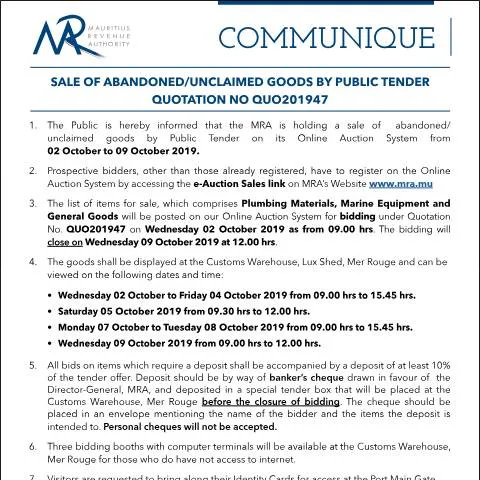
The Public Tender for the sale of abandoned and unclaimed goods presents a unique opportunity for individuals and businesses in Mauritius. This process, governed by the Mauritius Revenue Authority (MRA), allows for the acquisition of goods that may otherwise be discarded or left unclaimed. The sale process, which is facilitated through an Online Auction System, is designed to ensure transparency and equal opportunity for all interested parties.
Who Should Engage in this Public Tender?
This public tender process is particularly relevant for a diverse range of bidders, including:
- Individual Bidders: Anyone interested in purchasing items for personal use or resale.
- Small Business Owners: Entrepreneurs looking to acquire goods at a lower price to enhance their inventory.
- Collective Groups: Non-profit organizations or community groups looking for equipment or materials.
However, it is essential for all prospective bidders to understand the registration requirements and the steps involved in the bidding process.
Key Details of the Tender Process
The tender process for the sale of abandoned or unclaimed goods takes place over a specified timeframe. For example, the most recent sale was conducted from 02 October to 09 October 2019. During this week, various plumbing materials, marine equipment, and general goods were made available for bidding.
The availability of goods is announced in advance, and prospective bidders are encouraged to take note of the important dates:
- Viewing Dates: Goods can be viewed at the Customs Warehouse, Mer Rouge from 02 October to 09 October 2019, with specific hours listed for each day.
- Bidding Period: The actual bidding takes place online starting at 09:00 on 02 October and concluding at 12:00 on 09 October 2019.
Preparing for Participation: Registration and Documentation
Before participating in the auction, bidders must register through the MRA's Online Auction System. This involves:
- Accessing the Online Auction System: Navigate to the e-Auction Sales link on the MRA website.
- Creating an Account: New bidders must complete the registration process, providing necessary personal details and identification.
- Deposit Requirements: Any bid requiring a deposit must be accompanied by a banker’s cheque of at least 10% of the tender offer. Personal cheques are not accepted.
The Role of the MRA in the Tender Process
The Mauritius Revenue Authority plays a crucial role in overseeing the public tender process, ensuring compliance with legal requirements and maintaining transparency. Their responsibilities include:
- Organizing the Sale: The MRA is responsible for conducting the auction and managing the bidding platform.
- Documenting Bids: All bids are recorded, and the MRA ensures that the process adheres to established timelines and regulations.
- Facilitating Viewing: The Authority provides access to the goods for potential bidders, allowing them to inspect items prior to bidding.
Viewing and Bidding: What to Expect
During the viewing days, prospective bidders are encouraged to carefully inspect the items available for auction. The viewing is allowed on the following schedule:
| Date | Time |
|---|---|
| 02 October 2019 | 09:00 - 15:45 |
| 03 October 2019 | 09:00 - 15:45 |
| 04 October 2019 | 09:00 - 15:45 |
| 05 October 2019 | 09:30 - 12:00 |
| 07 October 2019 | 09:00 - 15:45 |
| 08 October 2019 | 09:00 - 15:45 |
| 09 October 2019 | 09:00 - 12:00 |
To facilitate bidding, three booths equipped with computer terminals are available at the Customs Warehouse for those lacking internet access. To enter the site, visitors must present valid identification at the Port Main Gate.
Post-Bidding Procedures and Results Notification
Once the bidding concludes, the MRA notifies successful bidders regarding their bids. The notification generally includes:
- Acknowledgment of Winning Bid: Confirmation that the bidder has been successful in acquiring the items.
- Payment Instructions: Details regarding the payment process must be adhered to within a specified timeframe.
- Collection of Goods: Instructions regarding when and how to collect the purchased items from the Customs Warehouse.
Successful bidders are encouraged to complete their transactions promptly to avoid complications, as goods not collected within the designated period may be forfeited.
Historical Context and Legislative Framework
The practice of selling abandoned and unclaimed goods via public tender is rooted in the broader legislative framework of Mauritius, particularly guided by the PSC Act of 1955 and subsequent regulations. This framework establishes the parameters for managing government assets and ensuring that unclaimed property is handled fairly and systematically.
Furthermore, these sales reflect a commitment to responsible governance and the efficient use of public resources, aligning with both international best practices and local legal obligations.
Final Thoughts on Participation in Public Tenders
Engaging in the public tender for the sale of abandoned and unclaimed goods offers an exciting opportunity for bidders to acquire valuable items at competitive prices. By understanding the procedures, preparing correctly, and adhering to the timelines established by the MRA, participants can navigate the process smoothly. The potential rewards of successfully bidding on unclaimed goods often outweigh the complexities involved, making it a worthwhile endeavor for many.
Understanding the Public Tender Process for Unclaimed Goods
The sale of abandoned or unclaimed goods in Mauritius is governed by specific regulations aimed at ensuring transparency and fairness in the disposal process. The Public Service Commission (PSC) and relevant authorities outline the procedures to be followed when handling unclaimed property. Understanding this process is crucial for potential bidders and stakeholders involved in the sale of such goods.
Firstly, items that are deemed abandoned or unclaimed must be securely stored by the responsible agency until sold. This period ensures that rightful owners have an opportunity to reclaim their property. After a predetermined timeframe, often specified by local regulations, items may be categorized for public tender. The notification process is an essential step that includes advertisements in local publications and online platforms to ensure public awareness.
Once the tender is announced, interested parties must submit their bids according to the guidelines provided. Each bid should include detailed information about the items the bidder wishes to purchase, along with compliance to necessary requirements such as financial stability and prior experience in dealing with similar goods. Bids are then evaluated based on predetermined criteria to ensure that the selected bid represents the best value for the government and the public.
It is also crucial to mention that there are often provisions for the disposal of goods that hold little to no economic value. In such instances, authorities may opt for a direct sale or donation rather than pursuing a formal tender process. Understanding these nuances can help bidders identify which goods may be available for purchase and the best approach for engaging in the tender process.
Legal Framework Guiding the Sale of Abandoned Goods
The legal basis for the sale of abandoned and unclaimed goods is rooted in the Constitution of Mauritius and specific legislative acts that govern property rights and public administration. Notably, the PSC Act 1955 and regulations surrounding public tenders establish a framework within which these sales are conducted.
The rights of property owners are balanced with the need for public authorities to manage unclaimed property effectively. This balance is achieved through clear guidelines on the notification process, including the duration for which goods are held before being sold, as well as the means of notifying potential bidders. For example, notices must be published in both English and French to ensure accessibility to a diverse population.
Furthermore, the principles of accountability and fairness permeate the legal framework, requiring that all sales are conducted in a manner that upholds public trust. This includes mandates that the sale process be documented extensively, with details of bids received and the rationale for selecting a winning bidder. These records may be subject to review by oversight bodies to ensure compliance with the law.
Moreover, different categories of goods may be subject to varying regulations. For instance, sensitive items such as personal documents and hazardous materials have stricter disposal requirements and may not be sold through public tender. Understanding these legal nuances is essential for anyone intending to participate in the tender process.
Future Trends in the Management and Sale of Unclaimed Goods
As Mauritius moves towards increased digitalization and e-governance, the management and sale of unclaimed goods are expected to evolve significantly. The government has been investing in digital platforms that streamline the tender process, facilitating greater accessibility for bidders. This transition not only simplifies bidding procedures but also enhances transparency by making information readily available online.
One notable trend is the integration of a digital auction system for unclaimed goods. Such a system allows bidders to participate in real-time bidding from anywhere, significantly broadening the pool of potential buyers. Additionally, the system can provide real-time feedback on bidding status and results, ensuring that the entire process is transparent and efficient.
Furthermore, sustainability considerations are increasingly influencing how unclaimed goods are managed. Authorities are beginning to explore options for recycling or upcycling items that cannot be sold at tender. This not only reduces waste but also promotes a culture of sustainability within the community.
There is also the potential for partnerships with local charities and organizations that focus on social welfare. In cases where items remain unclaimed after the tender process, authorities may consider donating goods to these organizations, further contributing to the community and ensuring that resources are utilized effectively.
As these trends develop, ongoing public education will be crucial. Stakeholders and the general public must be kept informed about changes in regulations, bidding processes, and opportunities to participate in tenders for unclaimed goods. Through such initiatives, the government can enhance public engagement and foster a sense of community involvement in the management of public resources.