Unveiling the Sale of Abandoned and Unclaimed Goods
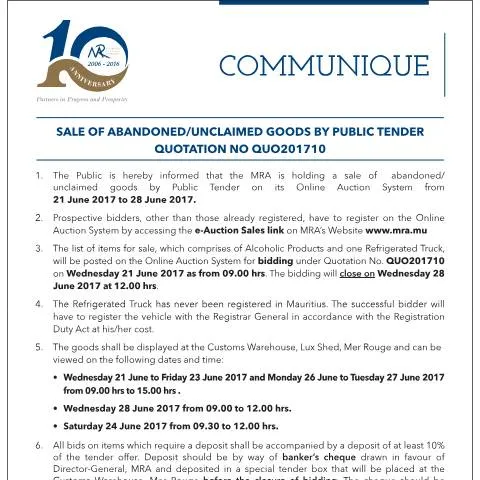
The concept of abandoned and unclaimed goods may sound obscure, yet it represents a remarkable opportunity for local entrepreneurs, collectors, and businesses alike. The Mauritius Revenue Authority (MRA) facilitates a structured process through the Sale of Abandoned / Unclaimed Goods by Public Tender, a procedure that invites bids for goods that have been left unclaimed. Through this mechanism, not only do these goods find new homes, but they also contribute to the efficient management of resources within the island nation.
A Regulatory Framework: The Legal Basis of the Sale
This public tender process is anchored by legal frameworks established under the Customs Act and the Registration Duty Act. It is essential for all prospective bidders to understand the regulatory environment shaping these sales, as it provides clarity on the rights, responsibilities, and procedures involved.
Historical Context
The MRA issued a significant communication on June 20, 2017, announcing the commencement of the sale via public tender, with specifics provided through Communique Q10 of 2017. This initiative not only promotes transparency but also encourages public participation in the bidding process, ensuring that the goods are repurposed rather than disposed of outright.
Key Legislation
- Customs Act: Governs the management and sale of unclaimed goods.
- Registration Duty Act: Mandates procedures for registering goods such as vehicles.
- Public Tender Act: Outlines the principles of competitive bidding and attendant responsibilities.
Understanding the Schedule: Important Dates and Events
Engaging in this auction requires keen awareness of timelines. The sale process spans from June 21 to June 28, 2017. Here is a snapshot of the critical dates involved:
| Date | Event |
|---|---|
| June 21, 2017 | Commencement of bidding at 09:00 hrs |
| June 23, 2017 | Last viewing of goods |
| June 28, 2017 | Bidding closes at 12:00 hrs |
The Role of the Form: Navigating the Bidding Process
Integral to participating in the tender is the official form associated with the sale. Bidders must complete this form accurately, as it acts as the gateway to the public auction. The specifics regarding the form are as follows:
How to Access and Complete the Form
- Visit the MRA's official website and navigate to the e-Auction Sales section.
- For those not yet registered, complete the online registration process.
- Upon registration, access the tender form associated with Quotation No. QUO201710.
- Ensure all required details are filled, including your identity, contact information, and item details.
Who Can Participate? Understanding Eligible Bidders
Eligibility is central to the integrity of the bidding process. Generally, any individual or legal entity that meets specific criteria can submit bids. Here are some key considerations:
Eligibility Criteria
- Must possess a valid Identity Card or Business Registration Certificate.
- Individuals under legal guardianship or with certain criminal records may have restrictions.
- Entities must be registered with the MRA and compliant with all tax obligations.
Exceptions may apply based on local regulations; therefore, it is prudent to consult the MRA for clarification if necessary.
Viewing the Goods: An Integral Step in the Process
Before placing a bid, potential bidders are encouraged to inspect the goods. This is not only a right but also a crucial step in making an informed decision. The viewing schedule is as follows:
- June 21-23, 2017, from 09:00 to 15:00 hrs
- June 24, 2017, from 09:30 to 12:00 hrs
- June 26-27, 2017, from 09:00 to 15:00 hrs
- June 28, 2017, from 09:00 to 12:00 hrs
All viewings take place at the Customs Warehouse, Lux Shed, Mer Rouge. It is mandatory to present valid identification at the Port Main Gate for access.
Deposits: Financial Commitment and Bidding Process
A requisite component of placing a bid involves the financial deposit. Successful bidders need to understand how to fulfill this requirement, ensuring their bids are valid:
Deposit Guidelines
- Prepare a banker’s cheque amounting to at least 10% of the bid.
- The cheque should be drawn in favor of the Director-General, MRA.
- Deposit the cheque into a designated tender box situated at the Customs Warehouse before the bidding deadline.
It is important to note that personal cheques will not be accepted, thus emphasizing the necessity for proper financial preparation.
Technology and Accessibility: Bidding in the Digital Age
In a move toward modernization, the bidding process is facilitated via an Online Auction System. However, recognizing that not everyone has internet access, the MRA has strategically provided alternatives:
Available Bidding Methods
- Online bidding through the MRA's e-Auction platform.
- Physical bidding booths equipped with computer terminals at the Customs Warehouse for those without internet access.
This hybrid approach ensures inclusivity, enabling broader participation across different demographics.
Post-Bid Procedures: What Happens After the Auction?
Upon the closure of bidding, successful bidders must adhere to a series of steps to finalize their purchase:
Next Steps for Winners
- Confirm the winning bid and ensure payment of the remaining balance.
- Arrange for the pickup of the goods at the Customs Warehouse.
- If applicable, complete the registration of vehicles (such as the Refrigerated Truck) with the Registrar General as mandated by the Registration Duty Act.
Handling Discrepancies: What to Do in Case of Issues
Despite thorough preparations, bidders may encounter issues such as missing documents, errors on the form, or disputes regarding bids. It is critical to know the correct procedures in such instances:
Remedial Actions
- For missing documents, contact the MRA immediately to seek guidance on supplementary submissions.
- If an error is found on the form, bidders should rectify it before the close of bidding to avoid disqualification.
- In the event of disputes regarding bids, submit a written appeal to the MRA, detailing the nature of the issue for consideration.
Such proactive measures can facilitate a smoother resolution and uphold the integrity of the auction process.
The Broader Impact: Community and Economic Benefits
The Sale of Abandoned and Unclaimed Goods via public tender extends beyond individual bidders; it cultivates economic activity, stimulates local businesses, and fosters a culture of recycling and resourcefulness. The goods, often consisting of diverse items—including alcoholic products and vehicles—can find new life and utility within the community.
Conclusion: A Call to Action
As the dates for the next auction approach, the call is clear for potential bidders to prepare diligently, understand the procedures, and engage with the MRA. This sale not only offers opportunities to acquire unique goods but also embodies a responsible approach to resource management in Mauritius. For further inquiries, bidders can reach out to the MRA's Customer Service.
Overview of the Public Tender Process for Abandoned and Unclaimed Goods
The sale of abandoned and unclaimed goods by public tender in Mauritius is governed by specific regulations that aim to ensure transparency, fairness, and public interest. When goods are left unclaimed for a specified period, authorities such as the Mauritius Police Force or other designated bodies are empowered to initiate the tender process. This process kicks off with a thorough inventory of the goods, followed by a mandatory public notification period. Such notifications are typically disseminated through local newspapers and official government websites to engage potential bidders.
It is essential for bidders to understand that the public tender process is not merely about placing the highest bid. Compliance with all procedural requirements, including the submission of necessary documentation, is crucial. Bidders must also be prepared to provide proof of their financial capability to complete the purchase, as outlined in the requirements set forth in the tender documents.
Legal Framework Surrounding Unclaimed Goods
The legal framework for handling abandoned and unclaimed goods in Mauritius is primarily outlined in the Disposal of Unclaimed Goods Act, which provides clear guidelines on how these goods should be managed prior to their sale. According to this Act, goods that remain unclaimed for a specific duration—typically three months—may be evaluated for auctioning. However, prior to disposal, a notice is sent to the owner (if known), providing them a final chance to claim their property.
In practice, different types of goods may be subject to differing regulations. For example, vehicles might require additional compliance checks or inspections prior to being listed for sale, while other items may simply be auctioned off without such requirements. It is advisable for interested parties to familiarize themselves with the specific regulations pertaining to the items they wish to bid on, ensuring that they meet all legal obligations and understand their rights as potential buyers.
Participating in a Public Tender: A Step-by-Step Guide
For individuals or businesses interested in participating in a public tender for abandoned or unclaimed goods, following a systematic approach will enhance the chances of a successful bid. Here is a step-by-step guide to navigating the process:
- Research Announcements: Regularly check the official government websites and local newspapers for announcements regarding upcoming public tenders. Pay attention to the specific items being auctioned, as well as the deadlines for submitting bids.
- Review Tender Documents: Once you identify a tender of interest, download and thoroughly review the associated tender documents. These documents will detail the conditions of sale, including the minimum bid amount, required documentation, and payment terms.
- Prepare Necessary Documentation: Gather all required documents, which may include proof of identity, proof of financial capability, and any licenses that are relevant to the goods being bid on. Ensure that these documents are complete and comply with the specifications outlined in the tender documents.
- Submit Your Bid: Bids are usually submitted electronically through the designated government portals or in a sealed envelope to the specified address. Ensure that your bid is submitted before the deadline to avoid disqualification.
- Auction Day: If your bid is successful, you will be notified, and you must be prepared to make the necessary payment within the specified timeframe. Make sure to have a clear plan for the collection of the goods post-purchase.
By adhering to this structured approach, participants can ensure they are well-prepared for the tender process, ultimately enhancing their chances of successfully acquiring the desired goods.