Understanding the Sale of Unclaimed Goods: A Key Process
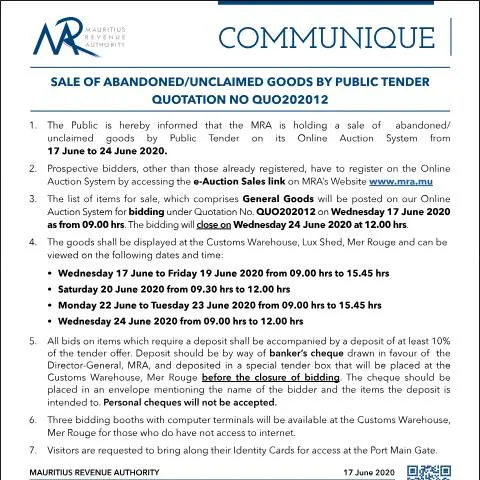
The process of selling abandoned or unclaimed goods in Mauritius is crucial for maintaining transparency and maximizing the utility of goods that would otherwise remain unutilized. The Sale of Abandoned / Unclaimed Goods by Public Tender, governed by the Mauritius Revenue Authority (MRA), involves a systematic auction process that ensures fair bidding and access to unclaimed properties. This article elaborates on the intricacies of Communique170620, highlighting the steps necessary for prospective bidders and the responsibilities that accompany participation in this public tender.
The Role of the MRA in Public Tenders
The MRA plays an essential role in regulating and conducting public sales of unclaimed goods. This authority ensures that the process follows legal frameworks and that items are sold transparently. During the auction period, which in this instance was from 17 June 2020 to 24 June 2020, the MRA facilitates the entire process, from registration to the final bid acceptance.
By utilizing the online auction system, the MRA allows potential bidders to engage remotely as well as providing physical locations for viewing and bidding. The transparency in handling these goods fulfills a public duty to manage abandoned items responsibly and in compliance with national laws.
What Items Are Up for Bid?
The auction typically features a variety of general goods. For the auction held under Quotation No. QUO202012, participants could access the list of items posted on the MRA's online auction system starting 17 June 2020 at 09:00 hrs. It is crucial for bidders to carefully review this list to identify the items they are interested in.
- Goods displayed at the Customs Warehouse are open for viewing on specific dates, providing an opportunity for assessment.
- Dates for viewing were scheduled from 17 June to 19 June 2020, and also included the weekend of 20 June and the final viewing on 23 June.
Step-by-Step Guide to Bidding
Understanding the bidding process is essential to ensure a successful acquisition of goods. Here’s a breakdown of the key steps involved:
- Registration: Prospective bidders, who are not already registered, must create an account on the MRA’s Online Auction System by accessing the e-Auction Sales link on their official website.
- Viewing the Goods: It is highly advisable to visit the Customs Warehouse during the designated periods to inspect the goods personally.
- Placing Bids: Bids must be made online or via designated terminals at the Customs Warehouse, with the requirement of a deposit.
- Depositing Required Funds: A deposit of at least 10% of the total bid amount is necessary. This deposit must be in the form of a banker’s cheque made out to the Director-General of MRA.
Specifics of the Deposit Requirement
For bidders, adhering to the deposit requirement is critical. The deposit serves as a security measure, ensuring that bidders are committed and serious about their offers. Here are some important details about the deposits:
| Requirement | Details |
|---|---|
| Deposit Percentage | 10% of the tender offer |
| Cheques Accepted | Banker’s cheque only; personal cheques are not accepted. |
| Deposit Submission | Place in a sealed envelope with bidder's name and intended item details. |
| Submission Location | Special tender box at Customs Warehouse, Mer Rouge before bidding closes. |
Accessing the Auction: Channels of Participation
Participation in the auction can take place through various channels, accommodating both online and in-person bidders. Understanding the differences between these methods can help bidders choose the route that best suits their preferences and capabilities.
- Online Bidding: Bidders can place their offers from anywhere via the MRA's online auction system, allowing for convenience and flexibility.
- In-Person Bidding: For those without internet access, the MRA provides bidding booths equipped with computers at the Customs Warehouse. This ensures that everyone has a chance to participate.
Required Documentation for Participation
Obtaining the necessary documentation is vital for a smooth bidding experience. Bidders must ensure they have the following:
- Identity Verification: An official Identity Card is required to gain access to the Port Main Gate and to verify identity during the bidding process.
- Banker’s Cheque: As previously mentioned, a banker’s cheque representing the deposit must be prepared ahead of the bidding.
- Registered Account: Bidders must ensure that their online auction account is fully set up and verified before the bidding period.
Challenges and Resolutions During the Bidding Process
While participating in the auction, bidders may encounter various challenges. Being proactive and aware of potential issues can lead to effective resolutions. Here are some common scenarios:
Handling Errors in Bidding
Occasionally, bidders may experience issues with their bids such as incorrect amounts or technical errors. In such cases:
- Contact the MRA's customer support via the provided contact details on their website.
- Verify that all details are correct on the bidding platform before finalizing the submission.
What to Do If Your Bid Is Rejected
In the unfortunate event of a rejected bid, bidders should:
- Understand the reasons for rejection as communicated by the MRA.
- Address any listed requirements or errors promptly to improve future bid submissions.
- Keep in mind that a rejected bid may still allow participation in upcoming auctions, provided adjustments are made.
Post-Bidding Process: What Comes Next?
After the bidding period concludes on 24 June 2020, successful bidders will receive immediate notifications regarding their bids. The MRA will communicate the outcomes, and the following steps will involve:
Payment and Collection of Goods
Once a bid is accepted, the successful bidder must finalize their payment. This typically involves:
- Completing any additional paperwork as required by the MRA.
- Arranging for the collection of the purchased goods promptly as specified in the notification.
It is imperative to adhere to the guidelines provided by the MRA regarding the collection timelines to avoid complications related to storage or additional fees.
What If Items Are Not Collected?
Failure to collect purchased goods within the specified timeframe may lead to forfeiture. Bidders should ensure they have logistics in place for transporting their bids upon acceptance.
A Key Resource for Bidders: The MRA Contact Channels
For further assistance, bidders are encouraged to reach out to the MRA's communication channels. This ensures clarity and guidance throughout the bidding process. The following contact details are available:
- Telephone: +230 202 0500
- Fax: +230 216 5946
- Email: [email protected]
- Website: www.mra.mu
Participating in the Sale of Abandoned/Unclaimed Goods by Public Tender is an exciting opportunity for bidders to acquire unique items while contributing to efficient public property management. By understanding the nuances of this process and adhering to the guidelines provided, bidders can navigate the auction landscape confidently and effectively.
Understanding the Process of Tendering for Abandoned Goods
The sale of abandoned or unclaimed goods by public tender in Mauritius is governed by a series of formal procedures designed to ensure transparency, fairness, and accountability. When goods are deemed abandoned by their owners, they are often handed over to the authorities for disposal. The process typically begins with a thorough inventory of the goods, which are then assessed for their value and condition.
Before the tendering process can commence, the relevant authority, such as the Ministry of Finance or the local government bodies, is responsible for informing the public about the upcoming sale. This is usually done through public notices published in local newspapers and on official government platforms, ensuring that potential bidders are adequately informed. It's critical to check these notices regularly, as they provide essential details regarding the types of goods available, the timeline for the sale, and specific instructions for participation.
Once the public notice is published, interested parties must prepare to submit their tenders. This involves filling out the appropriate application forms, which may include details about the bidder's identity, the goods they wish to bid on, and their proposed bid amounts. Reminders about required documentation should be noted, as failing to submit the correct paperwork can result in disqualification from the tender process.
Fill in your form directly online
No printing: type your details into the boxes of the official form, tick, then download the PDF ready to send.
- 1Type into the form boxes
- 2Tick in one click
- 3Save and download the PDF
In the context of Mauritius, tenders must be submitted electronically via the designated government e-portal, which requires the use of a MauPass single-sign-on linked to the individual’s National ID Card. This system not only streamlines the submission process but also enhances security by ensuring that only registered individuals can participate in the bidding.
Legal Considerations and Rights of Bidders
Engaging in the tender process for abandoned goods involves several legal considerations that participants must be aware of. Firstly, it is essential to understand the terms and conditions outlined in the tender document. These documents often include clauses that detail the rights and responsibilities of bidders, including stipulations regarding payment, collection of goods, and liabilities. For instance, once a bid is accepted, the bidder typically assumes responsibility for the goods and may be liable for any damages incurred during the collection process.
Moreover, bidders should be conscious of their rights during the tendering process. In cases where a bid is rejected or an issue arises with the tendering procedure, participants have the right to seek clarification from the authorities. This may involve submitting formal inquiries or appeals based on the guidelines specified in the tender documents. Legal recourse is available, but it is crucial that bidders follow the established protocols to ensure their cases are heard adequately.
Furthermore, potential bidders should be aware of the implications of participating in public tenders. Engaging in such activities may require compliance with local taxation laws, as successful bidders may need to report any profits gained from the resale of purchased goods. The Mauritius Revenue Authority (MRA) provides resources for individuals to understand their taxation obligations post-purchase, making it essential for bidders to factor in these potential costs when determining their bid amounts.
Impact of Digital Transformation on Tender Processes
The push towards digitalization within the Mauritian administrative framework has significantly impacted how public tenders for abandoned goods are managed. The government's initiative to enhance e-services has made it easier for individuals to access information, submit tenders, and track their submissions in real-time. This digital transformation not only increases efficiency but also promotes greater participation from the public, as the barriers to entry are lowered.
As a participant in the tender process, individuals can now enjoy several benefits associated with digital applications. For example, the online tender submission process allows bidders to receive immediate confirmation of their application status, which can alleviate concerns about paperwork being lost or misfiled. Additionally, the online format provides a platform for bidders to communicate directly with the relevant authorities, facilitating quicker responses to inquiries and issues that may arise.
However, digital transformation also brings about new challenges. Bidders must remain vigilant regarding cybersecurity measures, ensuring that their personal information and financial details are safeguarded during online transactions. Moreover, it is crucial for participants to remain informed about the latest technological requirements, as changes to the e-portal or submission guidelines can occur. Staying updated can be achieved by regularly visiting official government websites or subscribing to notifications from the relevant authorities.
Lastly, as digital engagement increases, the focus on data analytics and tracking trends has also become prevalent in the tendering process. Authorities can now analyze bidder behavior, preferences, and patterns, which can influence future tender processes and decision-making. This shift towards data-driven approaches can ultimately enhance the efficiency and effectiveness of public tenders in Mauritius, benefiting both the government and the participants.