Unveiling the Public Tender for Abandoned Goods: An Opportunity for Savvy Bidders
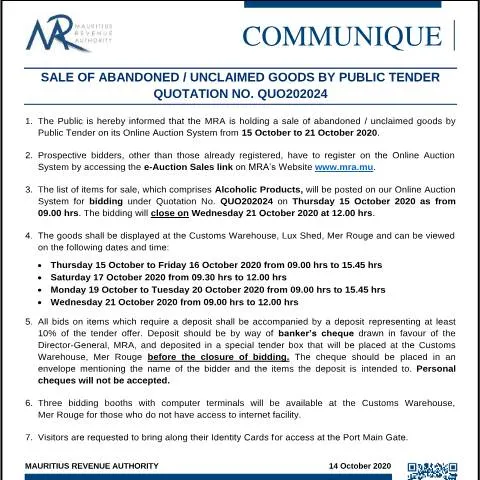
When it comes to acquiring unique items, participating in the sale of abandoned or unclaimed goods can be an enticing opportunity. The Mauritius Revenue Authority (MRA) has issued a public notice via CommuniqueQ202024, announcing the sale of these goods through a public tender format. This document outlines the intricacies involved in the bidding process, the specific requirements for prospective bidders, and a timeline that is crucial for those looking to seize the opportunity.
Understanding the Framework: What Sets This Sale Apart
The sale of abandoned or unclaimed goods by public tender is distinct from other auction formats primarily due to the legal and procedural guidelines established under Mauritian law. This type of tender involves a unique selection of items that may include various goods, most notably alcoholic products in this particular instance. The MRA, through the custom house at Mer Rouge, oversees this process, ensuring a transparent and regulated environment for all bidders.
Comparatively, other auction formats may not involve items that are considered abandoned or unclaimed and may lack the specific regulatory oversight that the MRA provides. This document thus serves as a critical guide for participants who wish to engage in this specific type of bidding.
The Significance of CommuniqueQ202024 in the Auction Process
This official communiqué shares key information about the auction's logistics, including dates, registration processes, and the nature of the items up for bid. It is essential for bidders to recognize that this document is not simply an announcement but a formal outline of the rules and procedures that govern the bidding process.
The Timeline: Key Dates to Mark on Your Calendar
Registration and Bidding Period
Timing is everything in the world of public tenders. The auction period for Quotation No. QUO202024 begins on 15 October 2020 and concludes on 21 October 2020. Here are critical dates to keep in mind:
- 15 October 2020: Bidding opens at 09:00 hrs.
- 21 October 2020: Bidding closes at 12:00 hrs.
Viewing the Goods
For those interested in the specifics of the items available, the MRA has provided designated times for prospective bidders to inspect the goods. The display schedule is as follows:
- 15 to 16 October 2020: 09:00 hrs to 15:45 hrs
- 17 October 2020: 09:30 hrs to 12:00 hrs
- 19 to 20 October 2020: 09:00 hrs to 15:45 hrs
- 21 October 2020: 09:00 hrs to 12:00 hrs
The viewing of these goods is crucial for bidders to make informed decisions and assess the value of the items they might wish to bid on.
Decoding the Auction Process: Step-by-Step Guide
Engaging in the public tender process requires a clear understanding of the steps involved. Here’s a detailed breakdown:
Step 1: Registration
Prospective bidders who are not already registered on the MRA's Online Auction System must complete their registration through the e-Auction Sales link on the MRA website www.mra.mu. This is a crucial first step to participate in the bidding.
Step 2: Preparing Bids
Upon registration, bidders need to prepare their bids. An essential requirement is the deposit, which must be at least 10% of the intended tender offer. This deposit must be in the form of a banker’s cheque made out to the Director-General, MRA.
It is imperative that bids requiring a deposit are accompanied by this cheque, which must be submitted in a special tender box located at the Customs Warehouse, Mer Rouge, before the close of bidding.
Step 3: Bidding
Bidding will occur online through the MRA’s platform, but physical bidding booths equipped with computer terminals are available for those lacking internet access. This accessibility ensures that all interested parties can participate, irrespective of their digital capabilities.
Step 4: Identity Verification
In line with security protocols, all visitors must present their Identity Cards for access at the Port Main Gate. This step is crucial for maintaining the integrity of the auction and verifying the identity of bidders.
Preparing Your Documentation: What to Bring
To ensure a smooth bidding process, bidders must prepare specific documentation prior to attending the auction. Here are the documents that should be on hand:
- Identity Card: A valid ID is mandatory for entry into the auction venue.
- Banker’s Cheque: Ensure your deposit cheque is ready, appropriately filled out, and in an envelope indicating your name and the items being bid on.
- Registration Confirmation: Have any digital or printed confirmation of your registration handy, as this may be requested at entry.
A Closer Look: Common Sections of the Form and Their Importance
While CommuniqueQ202024 is an overarching document guiding the auction, it is essential to understand the specific sections that bidders must be aware of:
Goods Description
The list of items up for bid will be published on the auction system. This list will include details about each item, including its condition and any applicable restrictions. Bidders should carefully review this list before participating. Misunderstanding the nature of goods can lead to disappointments if bids are placed on items that do not meet the bidder's expectations.
Deposit Requirements
The requirement for a 10% deposit is a significant aspect of the tender process. Failure to provide this deposit in the appropriate form will result in disqualification from bidding on the desired items. Bidders must ensure they are familiar with how to prepare and submit their deposits correctly.
Additional Terms and Conditions
Beyond the basic requirements, there may be additional terms and conditions outlined in the auction documentation that bidders need to comply with. It is advisable to review these thoroughly to avoid any misleading assumptions.
Post-Bidding: What Happens Next?
Once the bidding phase concludes, successful bidders will be notified regarding their winning bids. Here's a typical sequence of events following the close of bidding:
Notification of Winners
Bidders who have successfully secured items will receive a notification via the contact information provided during registration. This notification will include instructions on how to proceed with the payment and collection of their items.
Payment Process
Winners will be required to complete their payment promptly. Details regarding the payment methods accepted will be conveyed in the notification. Timeliness in this stage is critical, as failing to adhere to payment timelines may lead to forfeiture of the secured items.
Collection of Goods
Lastly, successful bidders will be informed of when and where to collect their items. It is important to plan accordingly to ensure a smooth collection process, adhering to any instructions provided in the notification.
Fill in your form directly online
No printing: type your details into the boxes of the official form, tick, then download the PDF ready to send.
- 1Type into the form boxes
- 2Tick in one click
- 3Save and download the PDF
Conclusion: Embracing the Opportunity
Participating in the public tender for the sale of abandoned or unclaimed goods offers a unique chance for individuals to acquire distinct items at potentially reduced prices. However, it requires diligence, meticulous preparation, and adherence to the outlined processes.
By understanding the specific requirements outlined in CommuniqueQ202024, potential bidders can navigate this auction confidently and maximize their chances of success. As this auction approaches, keep the dates, requirements, and processes in mind to ensure a smooth bidding experience.
Understanding the Process of Public Tender for Abandoned and Unclaimed Goods
The sale of abandoned or unclaimed goods by public tender in Mauritius is governed by specific regulations to streamline the process and ensure transparency. Typically, these goods have been left unclaimed for a period, following which the relevant authorities may opt to auction them off to recover costs or make use of space. The Ministry of Finance, through entities such as the Public Service Commission (PSC), facilitates the tendering process, ensuring that it adheres to legal frameworks established under the Constitution of 1968 and the PSC Act of 1955.
The process begins with the identification of goods that qualify for sale, which often include items left at government facilities, airports, and ports. Once identified, the authorities must publish a notice outlining the details of the sale, including the nature of the goods, the date, time, and location of the tender, and any conditions that bidders must meet.
It is essential for prospective bidders to familiarize themselves with the tender documents, commonly referred to as tender specifications, and to ensure they meet all eligibility criteria. These criteria may include but are not limited to, financial capability, bidding experience, and adherence to local regulations. In many instances, a refundable deposit may be required as a show of good faith, which will be returned to unsuccessful bidders following the tender process.
Key Regulations and Legal Considerations
When participating in the tender for abandoned or unclaimed goods, it is vital to understand the legal implications of bidding and purchasing these items. The legal framework in Mauritius ensures that the rights of previous owners are respected while allowing for the smooth handling of abandoned property. This framework includes adherence to the principles of French civil law and English common law, where applicable.
Potential bidders should be aware of the 'abandonment' criteria; for instance, goods may be deemed abandoned after a specific period has elapsed without any claim from their owners. Typically, this period can vary depending on the type of goods and the regulations governing them. For example, unclaimed luggage at airports may follow different regulations compared to abandoned vehicles. Understanding these nuances is critical in determining the validity of the auction.
Furthermore, buyers who successfully acquire these goods through tender should retain documentation of the purchase, as this will be crucial in establishing ownership should any disputes arise. It's advisable to consult with legal experts who specialize in property law to mitigate risks associated with potential claims from previous owners. This proactive approach can save time and resources while ensuring compliance with Mauritian law.
Best Practices for Engaging in the Tender Process
Participating in the tender process for abandoned or unclaimed goods can offer excellent opportunities for individuals and businesses alike. However, to maximize success and minimize risks, certain best practices should be observed:
- Conduct Thorough Research: Before participating in any tender, it is crucial to conduct thorough research on the items being auctioned. This includes understanding their market value, potential resale opportunities, and any costs associated with storage or transportation.
- Clarify Tender Documentation: Ensure that all tender documents are reviewed in detail. This includes understanding the conditions of sale, payment terms, and any warranties or guarantees associated with the goods. Failure to comply with these requirements can lead to disqualification.
- Inspect Goods When Possible: If the opportunity arises, inspect the goods prior to placing a bid. This can provide insight into their condition, authenticity, and any potential liabilities that may accompany the purchase.
- Networking and Collaboration: Engaging with other bidders or industry experts can provide valuable insights and allow for collaborative bidding strategies if applicable. Networking can also lead to partnerships that may yield greater benefits from acquired goods.
- Stay Informed of Changes in Regulations: Regularly monitor announcements from PSC and other relevant authorities regarding changes in the tender process or regulations surrounding the sale of abandoned goods. Staying informed can provide competitive advantages in future bidding processes.