Unlocking Opportunities: Understanding the Sale of Abandoned and Unclaimed Goods
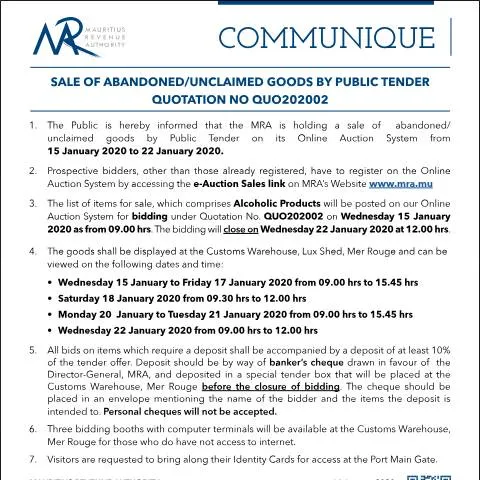
In the intricate landscape of public administration in Mauritius, the Sale of Abandoned/Unclaimed Goods by Public Tender stands out as a significant avenue for individuals and businesses alike to acquire goods that have been abandoned or unclaimed. This process, managed by the Mauritius Revenue Authority (MRA), allows bidders to participate in auctions for items that may include valuable assets, and understanding the procedural nuances is vital for potential participants.
Who Should Engage in the Tender Process?
Individuals or entities interested in participating in this auction must fit specific criteria and follow necessary preparatory steps. The process is particularly beneficial for:
- Entrepreneurs and Small Business Owners: Those looking to acquire stock at reduced prices.
- Collectors: Individuals seeking unique or rare items.
- General Public: Anyone interested in bidding for personal use or resale.
However, not all are eligible; the MRA expects participants to be registered on their Online Auction System, and prior registration is essential for those new to the bidding process. Additionally, participants must be prepared to adhere to financial obligations, including deposits.
Special Considerations for Bidders
While the general public is encouraged to participate, specific restrictions may apply:
- Potential bidders must be at least 18 years old.
- All bidders must present a valid identity card at the time of bidding.
- Businesses must provide proof of registration and may need to present additional documentation as required by the MRA.
Understanding these prerequisites will streamline the engagement process, ensuring that participants are not caught off guard at critical moments.
Preparing for the Auction: Required Documentation and Deposits
Preparation is key in navigating the tender effectively. Participants must gather necessary documentation and understand the financial commitments involved, particularly concerning deposits.
Documentation Guide for Bidders
| Document Type | Details |
|---|---|
| Identity Card | A valid ID must be presented for entry and bidding. |
| Business Registration | For corporate bidders, proof of business registration may be required. |
| Deposit | A banker’s cheque representing at least 10% of the bidding offer is mandatory. |
The deposit must be drawn in favor of the Director-General, MRA, and submitted in a clearly labeled envelope at the Customs Warehouse. Personal cheques will not be accepted, so it’s crucial to plan ahead to avoid last-minute hassles.
Timelines and Key Dates to Remember
Timing is critical in public tenders. The auction for abandoned and unclaimed goods operates within a defined timeframe, and participants must be aware of these crucial dates:
- Online Auction Dates: The sale commenced on 15 January 2020 and concluded on 22 January 2020.
- Viewing Period: Items available for inspection at the Customs Warehouse from 15 January to 22 January at specified times.
Staying informed about these timelines enables bidders to prepare adequately and ensures that no opportunity slips through their fingers.
Viewing the Goods
Inspecting the goods before bidding is essential. The MRA has allocated specific hours for viewing:
- 15-17 January 2020: 09:00 hrs to 15:45 hrs
- 18 January 2020: 09:30 hrs to 12:00 hrs
- 20-21 January 2020: 09:00 hrs to 15:45 hrs
- 22 January 2020: 09:00 hrs to 12:00 hrs
These scheduled viewing days provide bidders with the opportunity to assess items physically, ensuring informed bidding decisions.
Mechanics of Bidding: How to Engage Effectively
Once registered and prepared, participants can engage in the bidding process. The MRA has set up an Online Auction System that facilitates this interaction.
Online Bidding Process
Bidders can access the Online Auction System via the MRA website. Here's how it works:
- Access the e-Auction Sales Link: Navigate to the designated section on the MRA's website.
- Register or Log In: Provide your credentials if you are a returning bidder; otherwise, complete the registration process.
- Select Items: Review the list of available goods and place bids as desired.
- Monitor Your Bids: Keep an eye on your bids and adjust them as necessary before the auction closes.
This streamlined process ensures that all bidders have a fair chance at securing desired items while maintaining efficiency.
Alternative Bidding Options
For those unable to access the online system, the MRA provides alternatives:
- Bidding Booths: Three bidding booths equipped with computer terminals will be available at the Customs Warehouse for in-person bidding.
- Assistance: Staff at these booths will be available to assist bidders unfamiliar with the online system.
The provision of in-person bidding options illustrates the MRA's commitment to inclusivity, ensuring that no interested party is left behind due to technological barriers.
The Role of the MRA: Oversight and Operations
The MRA plays a pivotal role in regulating and managing the sale of abandoned goods. Their responsibilities include overseeing compliance with auction regulations, ensuring transparency, and managing the execution of sales.
Monitoring and Transparency
The MRA's governance of the auction process encompasses:
- Verification: All bids submitted are subject to verification to prevent fraudulent activities.
- Equal Access: Ensuring all participants have equal access to information and bidding opportunities.
- Post-bid Procedures: The MRA oversees the completion of transactions, including the proper collection of funds and distribution of goods.
The integrity of the bidding process is paramount, and the MRA's oversight helps maintain public confidence in the auction system.
After the Bidding: What to Expect Next
Once the bidding concludes, participants must navigate the next steps carefully to secure their purchases.
Winning Bids and Payment Processes
Successful bidders will be notified through the designated communication channels. To finalize their purchases, they must:
- Submit the balance payment by the specified deadline.
- Present their winning bid documentation and identity verification at the MRA office.
Failure to complete these steps could result in forfeiture of the bid, highlighting the importance of punctuality and attention to the auction rules.
Collecting Purchased Goods
Once payment is complete, bidders can collect their items. The collection protocols include:
- Identity Verification: Presenting valid ID at the collection point.
- Documentation: Providing proof of payment and the winning bid.
Items are typically available for collection at the Customs Warehouse, and bidders must adhere to the collection schedule provided by the MRA.
Consequences of Non-Compliance and Missed Opportunities
Attending to the details of the process can be the difference between success and missed opportunities. Non-compliance with any of the established rules can lead to:
- Loss of the right to bid in future auctions.
- Forfeiture of deposits for unsuccessful or unclaimed bids.
- Potential legal consequences for fraudulent activities.
Understanding the repercussions serves as a reminder of the importance of diligence and adherence to guidelines throughout the entire process.
Staying Informed: How to Follow Up on Your Bid
Once a bid has been placed, participants may wish to track the status of their submissions. The MRA encourages open communication regarding the bidding outcomes.
Communication Channels for Follow-Up
The MRA offers several channels for bidders to inquire about their bids:
- Phone: Reach out to their dedicated customer service at +230 202 0500 for real-time updates.
- Email: Contact the MRA via [email protected] for written inquiries.
- In-Person Visits: Bidders can also visit the MRA office for direct assistance.
Proactive follow-up can enhance the bidding experience and ensure that bidders remain informed about their transactions.
Conclusion: Navigating the Public Tender Landscape Effectively
Engaging in the Sale of Abandoned/Unclaimed Goods by Public Tender offers unique opportunities for individuals and businesses in Mauritius. By understanding the roles, requirements, and processes involved, bidders can maximize their chances of success in this competitive environment. Preparation, compliance, and communication are the keys to navigating the tender landscape effectively, ensuring access to valuable goods while fostering a transparent and fair auction process.
Fill in your form directly online
No printing: type your details into the boxes of the official form, tick, then download the PDF ready to send.
- 1Type into the form boxes
- 2Tick in one click
- 3Save and download the PDF
Understanding the Process of Sale of Abandoned Goods
The sale of abandoned or unclaimed goods by public tender in Mauritius is governed by a set of procedures that aim to ensure transparency and fairness. Under the Mauritius law, particularly the provisions outlined in the Public Procurement Act, the process typically starts with an inventory of the unclaimed goods. These items can range from personal belongings left in public spaces to goods that have been confiscated by public authorities.
Once the goods have been identified as abandoned or unclaimed, a notice is issued to inform the public about the impending sale. This notice must be published in at least one local newspaper and on the government portal, ensuring that all interested parties are adequately informed. The advertisement will contain details such as a description of the goods, the conditions of sale, the date of the public tender, and the location where the items can be inspected prior to the auction.
Potential buyers should note that they may be required to register for the tender and may need to provide proof of identity, typically through the submission of a national ID card. This step is essential for maintaining the integrity of the sale process. Furthermore, interested parties are encouraged to inspect the goods beforehand to ascertain their condition and value.
Legal Framework and Implications of Abandoned Goods Sale
The legal framework surrounding the sale of abandoned or unclaimed goods in Mauritius is primarily derived from the provisions of the Civil Code and the Public Procurement Act. According to these laws, unclaimed items must first be held for a specific period, typically three months, during which attempts should be made to locate the original owners or rightful claimants. If no claims are made within this timeframe, the goods may be legally deemed abandoned.
The authorities must follow due process before proceeding with the public tender sale. This includes documenting all efforts made to contact the owners, maintaining a clear inventory of items, and ensuring that the sale is conducted in a manner that upholds public trust and accountability. The public tender process not only serves to dispose of unclaimed goods but also helps generate revenue for local authorities.
Another important aspect to consider is the potential for legal disputes. If an item is sold but later claimed by its original owner, the implications can be significant. Generally, the law provides provisions for compensation; however, it varies depending on the specific circumstances involved in each case. Thus, it is advisable for sellers to keep detailed records of the sale and the steps taken to announce the availability of the goods.
Best Practices for Bidders in Public Tender Auctions
For individuals or businesses interested in bidding on abandoned or unclaimed goods, understanding best practices can make the process smoother and more successful. Here are several guidelines that potential bidders should follow:
Research and Preparation: Before the auction, conduct thorough research on the type of goods being sold, especially if you're interested in specific items. Knowing the market value can help you set a competitive bid without overextending financially.
Documentation: Ensure you have all necessary documentation ready for the tender submission. This typically includes proof of identity and any other information requested in the tender notice. Incomplete applications can lead to disqualification.
Attend Pre-Auction Inspections: Take advantage of the opportunity to inspect the items prior to the auction. This will give you a better understanding of the goods' condition and may influence your bidding strategy.
Understand the Terms of Sale: Familiarize yourself with the terms and conditions outlined in the tender documents. Pay special attention to payment terms, any fees associated with the sale, and the process for collection of the goods post-auction.
Budget Wisely: Set a clear budget for how much you are willing to spend on the items. Auctions can be competitive, and it's easy to get carried away in the excitement. Stick to your budget to ensure you do not incur unnecessary debt.
Follow Up Post-Auction: If successful, ensure that you follow through with any requirements post-auction such as payment and collection of items. If unsuccessful, consider monitoring future tenders, as unclaimed goods are regularly auctioned.
By adhering to these best practices, bidders can enhance their chances of securing valuable items while navigating the public tender process effectively.