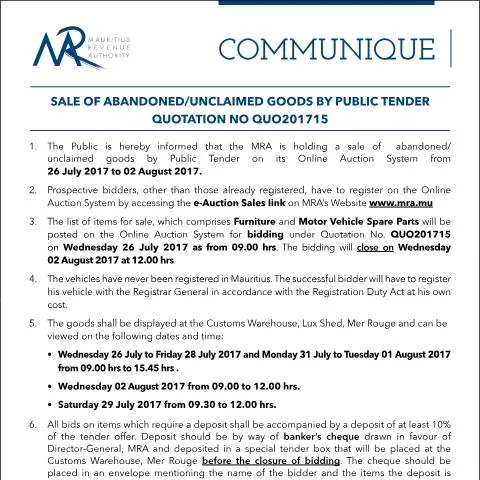
The Historical Context of the Sale of Abandoned Goods
The Sale of Abandoned and Unclaimed Goods by Public Tender is a crucial mechanism implemented by the Mauritius Revenue Authority (MRA) to manage and dispose of goods that have been left without ownership. This initiative, codified under Communique Q15 of 2017, stems from the need to ensure that these items, which can occupy valuable space within customs facilities and warehouses, are sold to willing buyers rather than left to decay or become a liability for the state. The legal foundation for this practice lies within the framework of both French civil law and English common law, as established by the Constitution of 1968 and the PSC Act of 1955.
Historically, the management of abandoned goods has evolved alongside Mauritius's growth as a trading nation. The increase in imports and exports has led to instances where goods remain unclaimed due to various reasons, including abandoned personal effects or unregistered vehicles. This process ensures that such goods are eventually returned to the economic cycle, thus benefiting local communities and the overall economy.
Overview of the Sale Process: From Initiation to Final Bid
The sale of abandoned goods is initiated well in advance, with a specific timeline outlined for both prospective bidders and the MRA. The timeline for the sale process is segmented into clear phases, ensuring transparency and accessibility for all parties involved. Here’s a chronological breakdown of the steps:
- Announcement of Sale: The MRA publicly announces the sale, detailing the date range for bidding, the items available, and bidding guidelines.
- Bidder Registration: Those interested in participating must register on the MRA’s Online Auction System. This is essential for tracking bids and ensuring compliance with bidding rules.
- Viewing Period: A specified period is provided for prospective bidders to view the goods. This allows them to assess the condition of items before placing their bids.
- Bidding Phase: The bidding begins at the stated time, with a close-off for bids announced. Prospective bidders can make their offers online or through available booths at the customs warehouse.
- Post-Bid Procedures: Successful bidders must complete necessary registration processes for their goods, including vehicle registration with the Registrar General if applicable.
This structured approach not only streamlines the auction process but also sets clear expectations for bidders.
Understanding the Form: Key Sections and Completion Tips
The completion of the relevant form for participating in the public tender requires careful attention to detail. Each section is designed to capture critical information necessary for the processing of bids. Below is a breakdown of the key sections of the form, along with tips to ensure a smooth submission:
Personal Information
This section typically requires the bidder's full name, National ID Number, and contact information. Prospective bidders should ensure accuracy; incorrect information may lead to disqualification from the tender process.
Details of the Goods
In this section, bidders must specify the items they are interested in. Clear identification of the goods, including item descriptions and quotation numbers, is essential. Be cautious; failing to accurately describe the items may result in complications during the bidding process.
Deposit Amount
For items requiring a deposit, bidders must explicitly indicate the tender amount and include a valid banker’s cheque. It is vital to adhere to the guidelines; personal cheques are strictly prohibited. Ensure that the cheque is correctly addressed to the Director-General of the MRA and enclosed in a labeled envelope.
Declaration and Signature
Finally, bidders must sign a declaration affirming the accuracy of the information provided. This signature is a legal binding agreement to the terms stipulated for participation in the tender.
In Case of Issues: Handling Refusals and Missing Information
Despite thorough preparation, issues such as refusals or missing documents may arise during the tender process. Here are steps to take if faced with such situations:
- Refusals: If your bid is refused, the MRA typically provides a rationale. It is advisable to engage with the authority directly to seek clarification and understand the grounds for refusal. This may help you adjust your future applications accordingly.
- Missing Documents: In cases where documentation is incomplete, the MRA may notify you of the missing information. Be prompt in supplying any required documents, as delays could hinder your ability to participate in future sales.
- Appeals Process: If there is a significant dispute regarding your submission, inquire about the possibility of an appeal. The MRA has protocols for addressing concerns and may offer a formal appeals process.
Viewing the Goods: Access and Inspection Details
Before placing a bid, inspection of the goods is strongly encouraged. Understanding the condition of the items can significantly impact bidding decisions. The MRA facilitates this through designated viewing periods at the Customs Warehouse in Mer Rouge.
During the specified viewing days, bidders can inspect items available for tender, which include furniture and vehicle spare parts. The following schedule outlines the viewing times:
| Date | Time | Notes |
|---|---|---|
| 26 July 2017 | 09:00 - 15:45 | Initial viewing day |
| 27 July 2017 | 09:00 - 15:45 | Second viewing day |
| 28 July 2017 | 09:00 - 15:45 | Last viewing before weekend |
| 29 July 2017 | 09:30 - 12:00 | Special Saturday viewing |
| 31 July 2017 | 09:00 - 15:45 | Viewing resumes |
| 01 August 2017 | 09:00 - 15:45 | Final viewing day before auction |
| 02 August 2017 | 09:00 - 12:00 | Last opportunity to inspect goods |
Bidders are advised to bring their Identity Cards for access at the Port Main Gate. This access control is in place to ensure the security of the venue and the items on display.
Post-Bid Process: What Happens After Submission
Following the close of bidding, successful bidders will receive notifications regarding their status. It is crucial for bidders to understand the subsequent steps involved in finalizing their purchases:
- Payment Instructions: Successful bidders will need to follow specific payment instructions provided by the MRA. This typically involves settling the winning bid amount and any applicable fees.
- Registration of Goods: For vehicle purchases, the responsibility lies with the bidder to complete the registration process with the Registrar General in accordance with the Registration Duty Act.
- Pickup Details: The MRA will provide details on when and how to collect the goods. Compliance with these instructions is necessary to avoid delays.
It is imperative to keep all communication lines open with the MRA for any queries regarding bid outcomes or subsequent steps.
The Impact of the Sale Process on Local Economy
The Sale of Abandoned and Unclaimed Goods by Public Tender contributes significantly to the local economy. Not only does it facilitate the recycling of goods, but it also provides an opportunity for individuals and businesses to acquire items at potentially lower prices.
This process can rejuvenate interest in certain goods that might otherwise remain in storage indefinitely. Additionally, the funds generated from these sales contribute to governmental revenues, which can be reinvested in community services and infrastructure.
Ultimately, the potential benefits extend beyond mere economic transactions; they support local businesses, stimulate consumer spending, and foster a sense of community engagement in the commerce surrounding these public tenders.
Understanding the Legal Framework for Abandoned Goods Sales
The process of selling abandoned or unclaimed goods by public tender in Mauritius is governed by specific laws and regulations designed to protect the rights of both the owners and potential buyers. Understanding these legal frameworks is essential for anyone interested in participating in such tenders.
According to the laws in place, goods that have been abandoned are typically held by the relevant authority for a specified period to allow the original owner the opportunity to reclaim them. The timeframe for this reclamation varies, but it is generally set at six months from the date of declaration of abandonment. After this period, the authorities can proceed with a public tender process. It is important for participants to be aware of these timelines and ensure that any claims they may have are made within the stipulated period.
Furthermore, the legal provisions surrounding the sale of these goods include adherence to principles of public transparency and fairness. Bidders should be informed of the conditions of the sale, including the nature of the goods, any associated liabilities, and the terms under which the tender will be conducted. The objective here is to foster a competitive environment where all interested parties can participate on equal footing, thereby enhancing the overall integrity of the tender process.
Moreover, potential bidders should familiarize themselves with the criteria used to determine the eligibility and authenticity of the goods being sold. This may include details about the original owner, the condition of the goods, and any relevant documentation that accompanies the tender notice.
Steps to Participate in the Public Tender for Abandoned Goods
Engaging in the public tender process for abandoned or unclaimed goods involves several critical steps that participants must follow to ensure a smooth experience. Below is a detailed guide outlining these steps:
- Research Announcements: Regularly check the official publications and announcements from local authorities, such as the Ministry of Commerce and Consumer Protection, for information regarding upcoming public tenders related to abandoned goods. Stay updated on tender announcement dates and specifications.
- Review Tender Documentation: Once you have identified an upcoming public tender, carefully review the tender documentation, which typically includes details on the goods being sold, the auction process, and conditions of sale. Pay close attention to any requirements you must meet to bid.
- Prepare Necessary Documentation: Gather all required documentation, which may include identification documents, proof of address, and any financial guarantees (if required). Ensure all documents are current and in good order.
- Attend Pre-Tender Briefing (if applicable): Some tenders may hold a pre-tender briefing session where potential bidders can learn more about the process and ask questions. Attendance can often provide valuable insights.
- Bid Submission: Submit your bid as per the instructions provided in the tender notice. Ensure your bid is complete, accurate, and submitted within the specified deadline. Late submissions are typically disqualified.
- Auction Day Participation: If the tender involves a live auction, be prepared to attend and participate actively. Familiarize yourself with the auction process and set a budget to avoid overspending.
- Payment and Collection: If successful, adhere to the payment terms outlined in the tender. Once payment is completed, arrange for the collection of the goods as per the instructions provided.
Following these steps will enhance your chances of success in the public tender for abandoned goods while ensuring compliance with the necessary legal and procedural requirements.
Potential Risks and Considerations When Buying Abandoned Goods
While the purchase of abandoned or unclaimed goods can present lucrative opportunities, it is crucial to be aware of the potential risks and considerations associated with such transactions. Below are some points to keep in mind:
- Condition of Goods: One of the primary risks is the uncertainty regarding the condition of the goods being sold. Since these items have been abandoned, their current state may be unknown. Conducting thorough inspections, if possible, is advisable to avoid unpleasant surprises.
- Legal Ownership Issues: There may be unresolved legal issues concerning ownership. Potential buyers should ensure that the sale is being conducted by the rightful authority and that no claims are pending from the original owner. This includes understanding the provenance of the goods.
- Financial Implications: Buyers should be mindful of any additional costs that may arise post-purchase, such as restoration, transportation, or storage fees. It's essential to budget accordingly to avoid unforeseen financial burdens.
- Market Value Fluctuations: The resale value of abandoned goods may fluctuate significantly based on market demand and trends. Buyers should conduct market research to understand potential resale opportunities and risks.
- Compliance with Regulations: Lastly, ensure compliance with all local regulations regarding the resale of purchased goods. Some items may require specific licenses or permits to sell legally, particularly if they fall into categories such as electronics or vehicles.
Being aware of these risks and considerations can guide potential buyers in making informed decisions and navigating the complexities of acquiring abandoned goods through public tender.