Understanding the Sale of Abandoned and Unclaimed Goods: A Practical Guide
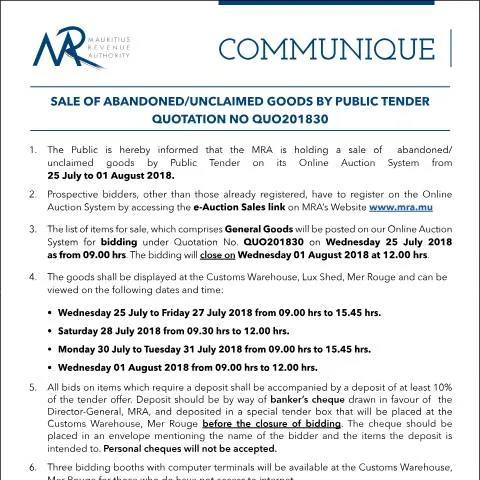
The sale of abandoned or unclaimed goods by public tender represents a significant opportunity for individuals and businesses interested in acquiring various items at potentially lower prices. The Communique No. QUO201830 from the Mauritius Revenue Authority (MRA), dated 26 July 2018, outlines the procedural guidelines and requirements for participating in this public auction. This article delves into the intricacies of the tender process, the responsibilities of bidders, and the critical steps involved in preparing for this unique opportunity.
Who Can Participate in the Tender Process?
The public tender for abandoned and unclaimed goods is open to a wide array of participants, including:
- General public interested in purchasing items
- Businesses looking for inventory or resale opportunities
- Collective organizations or groups wishing to procure items for specific purposes
- Individuals who may not have prior experience in tender processes
While the auction is accessible to all, it is essential to note specific conditions and exceptions. For instance, those already registered on the MRA’s Online Auction System do not need to register again. However, new participants must complete the registration process before they can submit bids.
Registration Process for New Bidders
New participants in the tender process must navigate a straightforward registration pathway on the MRA's Online Auction System. Here’s a simplified step-by-step outline:
- Visit the MRA’s official website.
- Locate the e-Auction Sales link.
- Complete the online registration form, providing all necessary details.
- Confirm your registration via email (if applicable).
Once registered, participants can access the auction catalogue listing the goods available for bidding.
Decoding the Tender Process: Key Dates and Events
The auction process is organized within a specified timeframe, crucial for prospective bidders. Here’s a breakdown of the important dates associated with the tender:
| Date | Event | Details |
|---|---|---|
| 25 July 2018 | Auction Opens | Bidding starts at 09:00 hrs. |
| 27 July 2018 | Viewing Period | Items can be viewed from 09:00 to 15:45 hrs. |
| 30 July 2018 | Final Viewing Days | Same timing as previous; last opportunity to inspect items. |
| 01 August 2018 | Bidding Closes | Bidding ends at 12:00 hrs. |
Understanding these dates is vital for potential bidders to ensure they do not miss opportunities for viewing or bidding on items.
Viewing the Goods: What to Expect
Before placing bids, it is recommended for bidders to view the items being auctioned. The MRA has designated the Customs Warehouse at Lux Shed, Mer Rouge, as the primary location for this viewing. The following schedule outlines the accessible viewing sessions:
- 25 July to 27 July 2018: 09:00 hrs to 15:45 hrs
- 28 July 2018: 09:30 hrs to 12:00 hrs
- 30 July to 31 July 2018: 09:00 hrs to 15:45 hrs
- 01 August 2018: 09:00 hrs to 12:00 hrs
It is important for bidders to bring their Identity Cards, as they are required for entry at the Port Main Gate. This step ensures that participating individuals are authenticated and eligible to partake in the bidding process.
Requirements for Bidding: Deposit and Payment
To enhance the seriousness of bids, the MRA mandates a deposit for specified items. Here’s how the deposit and bidding requirements are structured:
- Deposit Amount: A minimum of 10% of the tender offer must be submitted.
- Accepted Payment Methods: Only banker’s cheques made out to the Director-General, MRA, are accepted for deposits.
- Submission of Deposit: Deposits must be placed in a special tender box at the Customs Warehouse before the bidding closing time.
Participants without internet access have the option to utilize three bidding booths with computer terminals available at the Customs Warehouse. This ensures inclusivity and allows individuals from various backgrounds to participate in the auction.
After the Bid: Understanding the Next Steps
Once the bidding period closes, successful bidders will receive notifications regarding their bids. Here’s what happens next:
- The MRA will announce the winning bids after the deadline.
- Winners must complete the payment for the items won.
- If bids are unsuccessful, deposits will be refunded within a specified timeframe.
It is crucial for bidders to stay abreast of any communications from the MRA, as they will dictate the next actions and responsibilities regarding the purchased items.
Understanding the Legal Framework: Compliance and Regulations
The tender process for the sale of abandoned and unclaimed goods is governed by the provisions laid out in the MRA guidelines and relevant legal frameworks under Mauritian law. Participants are required to comply with all regulations to ensure a smooth auction experience. Non-compliance may result in denial of participation in future auctions and potential legal repercussions.
For instance, it is vital to be aware of:
- The importance of truthful representation during registration.
- The obligation to submit the required deposit on time.
- Adhering to specified bidding protocols and timelines.
Conclusion: Maximizing Opportunities in the Tender Process
Participating in the sale of abandoned and unclaimed goods through the tender process can be a rewarding experience for individuals and businesses alike. By understanding the registration, viewing, bidding, and post-bid processes, potential bidders can maximize their chances of successfully acquiring items that meet their needs.
Always ensure to follow the guidelines laid out by the MRA, and keep abreast of any updates or changes to the procedures to facilitate a seamless experience.