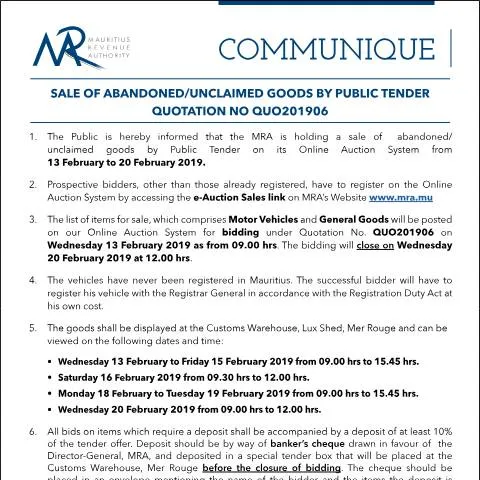
Understanding the Context: Abandoned Goods and Public Tender in Mauritius
In Mauritius, the sale of abandoned or unclaimed goods by public tender is a regulated process primarily managed by the Mauritius Revenue Authority (MRA). This initiative serves not only to clear out unclaimed items but also generates revenue for the government. A significant aspect of this process is the Communique No. QUO201906 issued on February 13, 2019, outlining the parameters for the upcoming auction. Understanding the historical and regulatory framework surrounding such sales aids prospective bidders in navigating the tender process effectively.
Distinctive Features of COMMUNIQUE06of2019
This specific document, Communique06of2019, is distinct from other administrative forms due to its focus on the public tender process for unclaimed goods. Unlike forms associated with personal registrations or tax filings, it specifically caters to individuals interested in acquiring abandoned goods via a bidding system. The public tender format allows for transparency and competition, differentiating it from private sales. It's essential to note that this document solely addresses the sale process, not the conditions surrounding the abandonment of goods.
The Lifecycle of a Successful Bid: Step-by-Step Guide
Bidding on abandoned goods involves a series of organized steps. Familiarizing oneself with this process reduces the risk of errors. Below is a chronological breakdown:
- Registration: Prospective bidders must first register on the MRA's Online Auction System. This registration is essential for accessing the bidding platform.
- View the Goods: Bidders can inspect the items physically from February 13 to February 20, 2019, at the Customs Warehouse in Mer Rouge during specified hours.
- Deposit Preparation: Any bid involving a deposit must be accompanied by at least 10% of the tender offer in the form of a banker’s cheque, specifically drawn in favor of the Director-General of MRA.
- Bidding: Bids can be placed online via the e-Auction Sales link or at designated bidding booths set up at the Customs Warehouse. The online bidding opens on February 13 and closes on February 20, 2019.
- Winning the Bid: Successful bidders are required to pay the final bid amount and register their acquired vehicles or goods with the appropriate authorities.
Implications of Participation: Rights and Responsibilities
Engaging in the public tender process entails specific rights and responsibilities for bidders:
- Rights:
- Access to clear information regarding the auction items.
- The opportunity to participate in a fair bidding process.
- Transparency in how bids are handled and processed.
- Responsibilities:
- Ensuring compliance with the deposit requirement.
- Providing accurate personal information during registration.
- Understanding the obligations related to vehicle registration if applicable.
Administrative Processing and Follow-Up Procedures
After placing a bid, successful bidders should be aware of the administrative process that follows:
| Stage | Details |
|---|---|
| Bid Acceptance | Notification will be sent to successful bidders after the auction closes. |
| Payment Instructions | Details regarding the payment procedure will be provided along with the acceptance notification. |
| Registration of Goods | Successful bidders must follow up with the Registrar General for vehicle registration. |
| Post-Auction Queries | Bidders can contact the MRA for any clarifications or updates regarding their bids. |
Maintaining communication with the MRA is crucial for ensuring that all obligations are met following a successful bid.
Target Audience: Who Can Participate?
The public tender process is open to a wide range of participants. However, there are specific profiles that are particularly suited to engage with this process:
- Individuals: Any adult citizen or resident of Mauritius can participate in the bidding process, provided they have the necessary identification and financial means.
- Businesses: Entities looking to acquire assets for resale or operational use can also engage in the tender process, provided they furnish relevant business registration details.
- Foreign Bidders: While the auction is primarily aimed at local participants, foreigners may also participate, subject to compliance with specific regulations set by the MRA.
Special Considerations: Unique Circumstances and Exceptions
Certain situations may require special attention within the bidding framework:
- Minors: Bidders under the legal age must have an adult co-sign or be represented by a guardian during the registration and bidding process.
- Complex Situations: If an individual is legally incapacitated or has certain legal restrictions, additional documentation may be required for participation.
- Urgent Bids: Should a potential bidder encounter a tight timeline, it’s advisable to register and submit bids as early as possible to mitigate any technical issues that might arise.
Timeline of Events: Auction Schedule and Future Actions
Understanding the timeline involved in the tender process is essential for all bidders:
- Registration Opens: On February 13, 2019.
- Viewing Dates: February 13 to February 20, 2019, allowing ample time for bidders to inspect items.
- Bidding Period: From February 13, 2019, at 09:00 hrs to February 20, 2019, at 12:00 hrs.
- Post-Bidding Notifications: Successful bidders will be notified shortly after the closure of the tender.
Inadequately following this timeline could lead to missed opportunities; thus, prospective bidders should be diligent in adhering to these critical dates.
Understanding the Public Tender Process for Unclaimed Goods
The sale of abandoned or unclaimed goods through public tender in Mauritius is governed by specific regulations and protocols. Understanding these processes can help potential bidders navigate the tender effectively. The initial step is to ascertain the categories of goods available for sale. Generally, these items may range from vehicles and machinery to household appliances, electronics, and other tangible assets that have been left unclaimed for a designated period.
When goods are declared abandoned, they are typically stored by the relevant authorities, such as the Mauritius Revenue Authority (MRA) or local government bodies, until the public tender process begins. The tender notice, mandated to be published in the local newspapers or available on official government websites, will provide essential information, including descriptions of the goods, the tender submission process, and deadlines for bids. It is critical for interested parties to review this information meticulously to ensure compliance with all requirements.
Once the tender notice is published, bidders must prepare their submissions according to the specifications outlined. This often involves completing the appropriate tender forms, which may include specifics such as the LGSC Form 7 or other designated forms for local governance. The submission typically requires documentation confirming the bidder's identity, financial capability, and any previous experience related to similar purchases.
After the deadline for submissions passes, all bids are opened in a public forum to ensure transparency. The evaluation criteria, which may involve both financial and qualitative assessments of the bids, will be applied by the appointed committee. The winning bid will be determined based on the most favorable offer, adhering to the guidelines set forth in the tender notice.
Legal Framework and Compliance in Selling Unclaimed Goods
The legal framework surrounding the sale of abandoned and unclaimed goods in Mauritius is crucial for maintaining fairness and adherence to the rule of law. Governed primarily by the Public Procurement Act and the PSC Act, this process is designed to ensure that all transactions are transparent and compliant with statutory regulations.
Before the sale of unclaimed goods can take place, the relevant agency must establish that the items have definitively been abandoned according to the legal definitions set forth in local statutes. Typically, this means that the goods have remained unclaimed for a certain period, often six months to a year, depending on the type of goods and the specific agency's guidelines.
Fill in your form directly online
No printing: type your details into the boxes of the official form, tick, then download the PDF ready to send.
- 1Type into the form boxes
- 2Tick in one click
- 3Save and download the PDF
Furthermore, it is essential for authorities to document their processes—ranging from the physical inspection of goods to the reasons for declaring them unclaimed. Proper records are not only a legal requirement but also a safeguard against potential disputes that may arise post-sale.
Compliance with the financial regulations is equally important. The Mauritius Revenue Authority mandates that any taxation due on the unclaimed assets must be settled prior to the sale to ensure that the government recoups any potential losses. This aspect underscores the importance of understanding tax implications associated with the purchase of abandoned goods.
Challenges and Considerations for Bidders in the Tender Process
Participating in the tender process for abandoned or unclaimed goods offers numerous opportunities for bidders, but it does not come without challenges. One significant concern is the potential lack of information regarding the condition of the goods. Often, the details provided in the tender notice may be limited, leading to uncertainty about the actual value of the items. Therefore, interested bidders should consider visiting the storage facilities, if permitted, to assess the goods personally before submitting their tender proposals.
Another consideration is the competitive nature of the bidding process. Potential bidders should conduct market research to understand the typical value of similar goods to ensure that their bids are both competitive and financially sound. In some cases, bidders may be competing against established companies or individuals who are more familiar with the tendering process, which can influence the success of less experienced bidders.
Moreover, monetary considerations such as transaction fees, registration costs, and potential hidden costs associated with the maintenance or transportation of purchased goods should be factored into the overall budget. Bidders should prepare a comprehensive financial plan that addresses these elements to prevent unexpected expenditures post-purchase.
Lastly, understanding the post-tender acquisition phase is critical. Once a bid is successful, the buyer is responsible for adhering to any stipulations outlined in the tender notice, including payment timelines and guarantees. Failure to comply could result in forfeiture of the bid, and the authorities may re-issue the tender for the same goods.