The Context of Abandoned Goods and Public Tenders in Mauritius
In Mauritius, the management of abandoned and unclaimed goods is a significant aspect of public administration, designed to facilitate the orderly disposal of items that have not been claimed by their rightful owners. The process involves specific guidelines set forth by the Mauritius Revenue Authority (MRA) and is critical for ensuring transparency and fair competition amongst bidders. The Sale of Abandoned/Unclaimed Goods by Public Tender is one such procedure, which allows the public to acquire these goods through a competitive bidding process.
Key Dates and Timeline for the Tender Sale
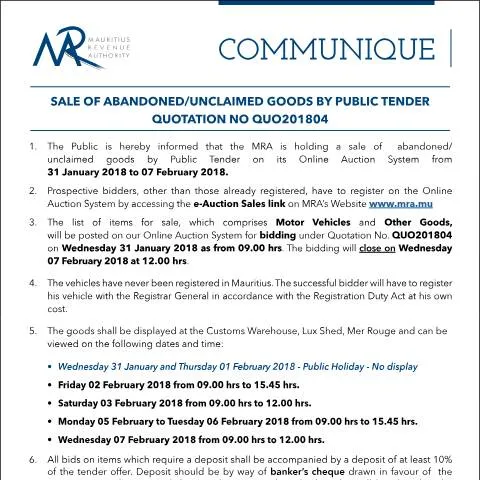
The timeline for participating in the sale of abandoned goods is crucial for potential bidders. The MRA published the CommuniqueQ04of2018 that outlines the timeline for the tender, which is as follows:
- Start Date of Bidding: 31 January 2018 at 09:00 hrs
- End Date of Bidding: 07 February 2018 at 12:00 hrs
- Viewing Days:
- 02 February 2018 from 09:00 hrs to 15:45 hrs
- 03 February 2018 from 09:00 hrs to 12:00 hrs
- 05 February to 06 February 2018 from 09:00 hrs to 15:45 hrs
- 07 February 2018 from 09:00 hrs to 12:00 hrs
This strict timeline ensures that all bidders are aware of key events and can plan their participation accordingly.
The Role of the MRA in the Public Tender Process
The Mauritius Revenue Authority plays a pivotal role in regulating and overseeing the sale of unclaimed goods. As the authoritative body, the MRA ensures that the tender process is conducted in a fair manner. This includes:
- Preparing the list of items available for tender, which will be made accessible to the public online.
- Facilitating the registration of bidders on their e-Auction Sales system.
- Ensuring that all bids are submitted according to specified conditions, including deposit requirements.
By establishing a structured approach to the sale of abandoned goods, the MRA enhances public trust and encourages participation.
Steps to Participate in the Tender: Registration and Bidding
Prospective bidders must adhere to a series of steps to successfully participate in the tender. These steps include:
- Registration: Bidders who are not already registered must sign up on the MRA's Online Auction System by visiting the MRA website.
- Familiarization with the Auction: Bidders should review the list of items available for bidding, which includes motor vehicles and other goods.
- Submitting Bids: Bids must be submitted through the online auction system before the bidding closes. Bidders must ensure they comply with conditions regarding deposits.
- Deposit Requirements: All bids requiring a deposit must include at least 10% of the bid amount, paid via a banker’s cheque made out to the Director-General, MRA.
Failure to follow these steps may result in disqualification from the bidding process, reinforcing the importance of understanding the required procedures.
Understanding Deposit and Payment Procedures
A significant aspect of the bidding process involves the payment of a deposit. Here are the essential points regarding deposits:
- The deposit must be at least 10% of the tender offer.
- Payments should be made via a banker’s cheque; personal cheques are not accepted.
- The cheque must be placed in a sealed envelope indicating the bidder's name and the items related to the deposit, submitted to a special tender box at the Customs Warehouse.
This meticulousness in payment procedures ensures the financial integrity of the bidding process.
Viewing the Goods: Important Considerations
Prior to bidding, potential buyers are encouraged to view the goods. The MRA has arranged specific viewing times at the Customs Warehouse in Mer Rouge:
“Viewings will take place on designated days only, and potential bidders are urged to attend during these hours to inspect the items before placing bids.”
It is essential to note that:
- The public holiday on 31 January and 01 February will result in no display of goods.
- Visitors must present their Identity Cards for access to the viewing area.
This policy aims to maintain security and order during the viewing process.
Technical Support: Bidding Booths for Non-Internet Users
Recognizing that not all participants may have access to the internet, the MRA has set up three bidding booths at the Customs Warehouse. These booths are equipped with computer terminals, allowing bidders to submit their bids electronically.
Here’s what you need to know:
- The booths are available during viewing hours.
- Staff will be present to assist bidders in navigating the online auction system.
This initiative underscores the MRA’s commitment to inclusivity in public tenders.
Post-Bidding: What Happens After the Tender Closes?
Once the tender period closes, several key actions take place:
- The MRA evaluates all bids submitted, along with the respective deposits.
- Successful bidders will be notified, and arrangements for payment of the remaining balance will be communicated.
- Winning bidders must register their vehicles or other items in accordance with the relevant laws, such as the Registration Duty Act.
The clarity of these post-bid procedures helps bidders understand their obligations and prepares them for the successful acquisition of goods.
Special Cases: Unique Situations and Considerations
There are instances where bidders may face unique situations that require special consideration, such as:
- Foreign Nationals: Bidders from outside Mauritius should be aware of potential additional requirements, including proof of identity and possibly a local representative for registration purposes.
- Minors: Bids submitted by minors must be accompanied by consent forms from a parent or guardian, as legal requirements stipulate that contracts can only be entered into by those of legal age.
- Urgent Situations: In cases where a bidder may require expedited processing or assistance, contacting the MRA in advance can facilitate smoother communication and potentially expedite the process.
Understanding these particular scenarios can significantly enhance one's experience in the tendering process.
Understanding the Legal Framework for Abandoned Goods
The sale of abandoned or unclaimed goods in Mauritius is governed by several key pieces of legislation that outline the process and conditions under which such sales can occur. Primarily, the Disposal of Unclaimed Goods Act 1988 provides a framework for the handling and sale of these items. Under this act, abandoned goods are defined as items that have been left unattended and unclaimed by their owners for a specified period, often deemed as 'lost property'. This period typically spans three months, after which the goods may be considered for disposal, subject to specific legal procedures.
Further, the procedures for public tenders are regulated by the Public Procurement Act 2006. This legislation dictates how government entities should manage the sale process, ensuring transparency and fairness. It is crucial for potential bidders to familiarize themselves with these regulations, as failure to comply can lead to disqualification from tendering processes. The act requires that all sales through public tender must be advertised publicly, providing equal opportunities for all interested parties to participate.
Moreover, the framework also emphasizes the importance of declaring the condition of goods being sold, outlining any identifiable defects or damages. This transparency is essential to maintain public trust and ensure a fair bidding process. It is advisable that prospective buyers conduct their due diligence before bidding, as items sold are typically on an 'as-is' basis.
The Tender Process: Step-by-Step Guide
Engaging in the tender process for purchasing abandoned or unclaimed goods involves several key steps, each requiring careful attention to detail. Familiarizing yourself with these stages will enhance your chances of successfully acquiring goods through public tender.
Fill in your form directly online
No printing: type your details into the boxes of the official form, tick, then download the PDF ready to send.
- 1Type into the form boxes
- 2Tick in one click
- 3Save and download the PDF
1. Advertisement of Tender: The initial step in the process involves the public advertisement of the tender. Authorities will publish notices in local newspapers and online platforms such as govmu.org, detailing the items available, the date and time for the tender opening, and instructions on how to submit bids. Bidders are encouraged to frequently check these listings to avoid missing out.
2. Submission of Bids: Once the advertisement is released, interested parties must prepare and submit their bids within the specified timeline. All bids must be submitted using official tender forms, which can usually be obtained from designated government offices or downloaded from official websites. This submission includes not only the proposed price but also any supporting documentation required, such as proof of identity and, if applicable, tax clearance certificates. The adherence to deadlines is paramount, as late submissions are typically deemed invalid.
3. Tender Opening: On the designated date, the tender committee will publicly open the bids. During this session, all submitted bids are read aloud, and participants may witness the process to ensure fairness and transparency. This stage is critical, as it provides insight into the competition and may influence bidding strategies for future tenders.
4. Evaluation of Bids: After the public opening, the evaluation committee assesses all bids based on predefined criteria, including price, compliance with tender requirements, and bidder’s background. This evaluation may take time, depending on the volume of bids received, but bidders can usually expect feedback within a few weeks.
5. Awarding of Contract: Following the evaluation, the successful bidder is officially notified. The awarded party must then fulfill all requirements outlined in the tender, including payment terms and the timeline for collection of the goods. It’s essential to act swiftly to complete these steps to secure ownership.
Common Challenges and Solutions in the Tender Process
Participating in the public tender for abandoned goods can present various challenges, especially for first-time bidders. Understanding these common hurdles and their potential solutions can significantly enhance your bidding experience.
One prevalent challenge is the lack of clarity in the tender documentation. Sometimes, the details regarding the condition of the goods or the bidding process are insufficiently described. To mitigate this risk, prospective bidders are encouraged to attend pre-tender meetings, if available, or contact the relevant authorities for clarifications. Ensuring that all your questions are answered before submission can save time and effort.
Another issue faced by bidders is inaccurate assessment of goods' value. Bidding too low may result in losing the opportunity while bidding too high can lead to financial loss. To tackle this, engaging in thorough research and, if possible, inspecting the goods beforehand is advisable. Some tenders may allow for a viewing of items prior to the bid submission, providing invaluable insight into their actual condition and market value.
Lastly, timeliness in bid submission is critical. Late bids are automatically rejected, and last-minute rushes can lead to mistakes. To avoid this, it is recommended to prepare all necessary documentation well in advance and consider submitting bids days before the deadline. This proactive approach minimizes the risk of unforeseen issues, such as technical glitches in online submissions.
By understanding the legal framework, the step-by-step tender process, and preparing for common challenges, individuals and businesses can navigate the sale of abandoned or unclaimed goods with confidence and clarity.