Navigating the Sale of Abandoned and Unclaimed Goods in Mauritius
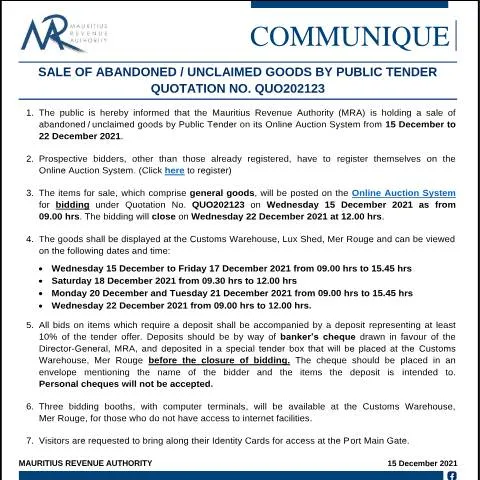
The sale of abandoned and unclaimed goods presents a unique opportunity for individuals and businesses to acquire items at potentially lower prices through public tender processes. The Mauritius Revenue Authority (MRA) facilitates this process through structured regulations, ensuring transparency and fairness for all participants. Understanding the nuances of Form QUO202123 is essential for prospective bidders aiming to navigate this exciting venture effectively.
The Framework Behind Public Tender Sales
Public tenders for the sale of abandoned or unclaimed goods are governed by the policies established by the MRA. These policies aim to manage uncollected goods efficiently while ensuring compliance with existing legal frameworks. In Mauritius, the tender process is driven by a hybrid legal system combining elements of French civil law and English common law, offering a robust foundation for administrative processes.
The Legal Framework is rooted in the Constitution of 1968 and the PSC Act of 1955, which provide the necessary legal backing for such initiatives. The MRA’s role exemplifies the government’s commitment to maintaining a transparent and accountable bidding process for citizens and businesses alike.
The Lifecycle of a Successful Bid
Understanding the lifecycle of participating in the public tender is crucial for prospective bidders. It involves multiple stages from registration to the final awarding of bids. Here’s a chronological breakdown of the steps involved:
- Registration: Interested bidders must first register on the MRA Online Auction System. This step is essential for anyone who hasn’t previously registered. The registration process must be completed prior to the commencement of the auction.
- Viewing of Goods: Between December 15 and December 22, 2021, registered bidders can inspect the items available for tender. Physical viewing enhances understanding of what is being bid on.
- Submission of Bids: Bids are accepted from December 15, 2021, at 09:00 hrs until December 22, 2021, at 12:00 hrs. Each bid must include a deposit of at least 10% of the tender offer.
- Awarding of Successful Bids: After the closing date, bids are evaluated, and successful bidders are notified. The process aims for prompt communication and clarity.
Diving into Form QUO202123: Essential Sections
Form QUO202123 is pivotal for engaging with the public tender process. Let's dissect the various sections of this form to ensure all necessary details are correctly completed.
Section 1: Bidder Information
This section requires detailed information about the bidder, including:
- Full name
- Contact information
- Identification number (National ID or passport)
Ensure accuracy here; any discrepancies may lead to disqualification from the tender process.
Section 2: Details of the Goods
In this section, bidders must specify the goods they wish to bid on. Each item should be detailed, including:
- Item description
- Condition of the goods
- Quantity
Clarity and precision are vital to avoid confusion during the evaluation of bids.
Section 3: Financial Information
Here, bidders will specify their tender offer, which must represent the monetary value they are willing to pay for the items. This section should include:
- Tender amount
- Deposit amount (minimum of 10% of the tender offer)
Double-check the mathematics involved to ensure compliance with tender requirements.
Documentation and Compliance: Preparing Your Submission
Successful submission goes beyond filling out the form. Several documents need to accompany your submission to ensure compliance and smooth processing:
Essential Documents
- Identification Document: A copy of a valid National ID or passport must be included.
- Deposit Cheque: Must be a banker’s cheque made out to the Director-General, MRA. Personal cheques are not permitted.
- Signed Bid Form: Ensure the form is duly signed before submission.
Submitting Your Bid
All bids, accompanied by the required documentation, should be deposited in the special tender box located at the Customs Warehouse, Mer Rouge. The submission must occur before the bidding closure on December 22, 2021, at 12:00 hrs. In-person submissions require bidders to bring their Identity Cards for security clearance at the Port Main Gate.
Monitoring Your Bid: Tracking Progress
After submitting your bid, maintaining proactive engagement is vital. Prospective bidders should keep track of the auction's progress and their position in the bidding process:
- Check your registered email for notifications concerning bid status.
- Contact MRA’s customer service if no communication is received post-bid submission.
- Keep abreast of any changes in the bidding timeline or system notifications via the MRA Online Auction Platform.
Post-Bid Procedures: What Happens After Submission
Once the auction closes, the MRA will evaluate all bids submitted. The evaluation process considers both the bid amounts and compliance with the stipulated requirements. Here’s a detailed breakdown of the post-bid process:
- Bid Evaluation: MRA staff will assess all bids based on predefined criteria. Successful bids will be determined based on the highest compliant offers.
- Notification: Successful bidders will receive formal notification detailing the next steps, including payment instructions and collection procedures for the goods.
- Payment and Collection: Bidders must follow the payment instructions closely to ensure timely acquisition of the goods. Collection times and conditions will be communicated clearly.
Common Challenges and How to Overcome Them
Participating in public tenders, while an exciting opportunity, can present certain challenges. Here are some common barriers and actionable strategies to address them:
Technical Difficulties in Online Registration
If you encounter issues while registering on the Online Auction System, ensure:
- Your internet connection is stable.
- You are using a supported browser. If issues persist, try clearing your browser cache or using a different device.
Incomplete Form Submission
To avoid disqualification, double-check that all required fields are filled out accurately. Consider having someone else review your completed form before submission.
Failing to Meet Deadline
Time management is crucial in the tender process. Set reminders for key dates related to bidding and submission to avoid last-minute rushes.
Broader Context: Understanding the Significance of This Tender
The public tender for abandoned and unclaimed goods serves a larger purpose within the Mauritian economy. By allowing citizens and businesses to purchase these items, it stimulates local commerce while also ensuring that goods do not remain in limbo indefinitely. This initiative encourages a culture of responsible consumerism, where reused and reclaimed items can find new life.
Additionally, the MRA's efforts in facilitating these tenders reflect broader governmental goals surrounding fiscal responsibility and effective resource management. The legal framework that underpins this process enhances citizen trust in public institutions, as it signifies a commitment to transparency and accountability.
Conclusion: Embracing the Opportunity
Engaging in the sale of abandoned and unclaimed goods through public tender enables individuals and businesses to explore unique purchasing opportunities. Armed with a thorough understanding of Form QUO202123 and its requirements, participants can navigate the process with confidence. As you prepare to participate in this public tender, remember that diligence and preparation are your best allies in securing potential treasures.
Understanding the Legal Framework for Abandoned Goods in Mauritius
In Mauritius, the sale of abandoned or unclaimed goods is primarily governed by the Disposal of Unclaimed Goods Act, which outlines the procedures and legal requirements for public tenders. This legislative framework is designed to ensure transparency, fairness, and accountability in the disposal process. Understanding the legal context surrounding these transactions is crucial for both the authorities handling the abandoned goods and potential bidders interested in the sale.
Under the Disposal of Unclaimed Goods Act, goods can be declared abandoned or unclaimed after a specified period, typically 90 days. The responsible government authority must make reasonable efforts to identify and return these goods to their owners. If unsuccessful, the goods are then subject to public tender. The law mandates that public notice be given, allowing interested parties sufficient time to prepare and submit their bids.
Moreover, the legal framework specifies the types of goods that may be subject to sale, which can vary from vehicles to electronic equipment, and even furniture. This diversity means that potential bidders should familiarize themselves with what is available, as the terms of sale may differ based on the item's condition, estimated value, and any previous ownership claims. All transactions are conducted in compliance with public tender regulations to prevent fraud and ensure a fair bidding process.
Steps to Participate in Public Tender for Abandoned Goods
Participating in a public tender for abandoned goods in Mauritius requires adherence to a structured process, ensuring that all bidders are treated equitably. Here’s a step-by-step guide to help you navigate this process effectively:
Monitor Public Notices: The first step is to regularly check official announcements published in local newspapers or on government portals like govmu.org. Public tenders for abandoned goods are often advertised there, detailing the items available and the tender submission dates.
Obtain Tender Documents: Once you identify a tender of interest, you must obtain the relevant tender documents, which usually include specifications about the goods, bidding instructions, and the criteria for evaluation. These documents may be available for download from the government website or can be obtained directly from the office handling the sale.
Fill in your form directly online
No printing: type your details into the boxes of the official form, tick, then download the PDF ready to send.
- 1Type into the form boxes
- 2Tick in one click
- 3Save and download the PDF
Prepare Your Bid: Carefully prepare your bid, ensuring it meets all specified requirements. This typically includes submitting a completed tender form, proof of identification, and any required deposit. The bid should clearly outline the amount you are willing to pay for the goods, along with justifications if necessary.
Submit Your Bid: Bids must be submitted by the stipulated deadline, which is strictly enforced. Ensure that your submission is complete and that you adhere to the guidelines provided in the tender documents. Late submissions are typically disqualified.
Attend the Opening Session: After the closing date for submissions, there is usually a public opening session where bids are read aloud. This adds a layer of transparency to the process. It's advisable to attend if possible, as it allows you to hear the bids directly and understand the competition.
Await Notification: Once the bids are evaluated based on predetermined criteria, the successful bidder is contacted and informed formally. If successful, you will be required to complete the payment process and arrangements for picking up the goods.
By following these steps diligently, you can enhance your chances of successfully acquiring abandoned goods through public tender in Mauritius.
Potential Challenges and Considerations in Acquiring Abandoned Goods
While participating in public tenders for abandoned goods can be an intriguing opportunity, there are several challenges and considerations bidders should be aware of:
Condition of Goods: One of the primary challenges is assessing the condition of unclaimed items. Often, goods sold through public tender are not in pristine condition, which can affect their value and usability. It's vital to thoroughly read the descriptions and inspect items during viewing sessions, if permitted.
Legal Liabilities: Bidders must also consider potential legal liabilities associated with the purchase of abandoned goods. Depending on the item's nature, there may be lingering ownership claims or unresolved legal issues tied to the goods. The Disposal of Unclaimed Goods Act attempts to mitigate this by ensuring that the government makes a good faith effort to return items to their rightful owners before proceeding with a sale. However, buyers should conduct due diligence and understand the implications of their purchases.
Competitive Bidding: Public tenders can attract numerous bidders, making competition fierce. It is essential for bidders to set a clear budget beforehand and to avoid bidding beyond their financial limits. Emotional bidding can lead to regret if prevailing bids exceed expectations.
Understanding Terms and Conditions: Each tender may have specific terms and conditions that govern the sale. Failing to understand these can lead to complications post-purchase, such as issues related to transport, ownership transfer, and compliance with local regulations. Always read the fine print carefully.
Payment and Collection Logistics: Successful bidders must be able to comply with payment deadlines and collection logistics. Some items may require specialised handling or may only be available for pickup at designated government facilities, which could incur additional costs or logistical challenges.
Market Resale Value: Finally, potential bidders should also consider the future resale value of the items being purchased. Understanding market demand and resale opportunities can make the difference between a profitable acquisition or a wasted investment.
By being aware of these challenges, bidders can better prepare themselves to engage with public tenders for abandoned goods, making informed decisions that align with their investment goals.