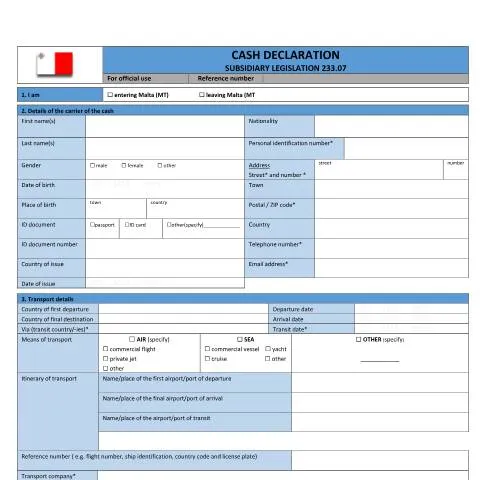
Understanding the Cash Declaration Form in the Maltese Context
When preparing for international travel, one often overlooks the critical aspect of cash declarations. This necessity can become crucial at the borders, particularly for those traveling to and from Malta. The Cash Declaration Form - EU, officially titled Information to Travellers on Cash Declaration, acts as a primary tool for customs and tax compliance while facilitating the legal transfer of cash above a specified threshold.
Key Stakeholders in the Cash Declaration Process
The submission of the cash declaration form involves various parties, including travelers, government authorities, and, in some cases, legal advisors. Understanding who needs to fill out this form can clarify the obligations for different profiles of travelers.
Traveler Profiles
- Individual Travelers: Those traveling with cash exceeding the set limit, which may vary based on their destination.
- Business Travelers: Individuals who manage company funds abroad, needing to declare these amounts to avoid issues with regulatory compliance.
- Frequent Travelers: Regular commuters, who may face different rules based on their travel frequency and cash amounts.
A Step-by-Step Guide to Completing the Cash Declaration Form
Completing the cash declaration form is a straightforward yet essential process. By adhering to a structured approach, travelers can facilitate a smoother experience at customs.
Preparation Before Travel
- Research Cash Limits: Familiarize yourself with the limits for cash declarations in Malta and your destination.
- Gather Documentation: Collect relevant information including your passport details, travel itinerary, and the exact amount of cash you will be carrying.
- Complete the Form: Fill in the form accurately online through the official channels using your e-ID for authentication.
Submission Process at the Airport
Upon arriving at the airport, follow these key steps:
- Approach Customs: Locate the customs desk, often marked clearly for travelers carrying cash.
- Present the Form: Hand over the completed cash declaration form along with your travel documents.
- Await Clearance: Customs officials may conduct routine checks based on the declared amounts.
Consequences of Incomplete or Incorrect Declarations
Neglecting to declare cash or misreporting amounts can lead to serious repercussions.
Potential Outcomes
- Fines and Penalties: Failure to comply with declaration requirements can result in monetary penalties.
- Seizure of Funds: Authorities may confiscate undeclared amounts, making it difficult to recover your money.
- Legal Actions: In severe cases, non-compliance could lead to legal consequences, including criminal charges.
Administrative Processing of Cash Declarations
Once submitted, the cash declaration form undergoes a specific review process by the Maltese Income Tax authorities. Understanding this process can help in managing expectations.
Follow-Up Procedures
Travelers have certain rights and responsibilities while their declaration is being processed:
- Right to Information: You may inquire about the status of your declaration through official channels.
- Documentation Retention: Keep a copy of your declaration for your records, as it may be useful for future reference.
- Timely Communication: Respond promptly to any requests for additional information from authorities.
Understanding Regulatory Framework Surrounding Cash Declarations
The necessity for cash declarations stems from various regulations aimed at preventing money laundering and ensuring tax compliance. This legal framework is crucial for safeguarding both travelers and the economy.
Historical Context
The evolution of cash declaration requirements in Malta is tied to broader European Union regulations, which were established to combat financial crime and enhance transparency within the financial system.
Current Regulatory Guidelines
While the guidelines can evolve, the fundamental principles remain focused on ensuring that all significant cash movements are reported. For the latest information, travelers are encouraged to consult the official Maltese Income Tax Department publications.
Profiling Frequent Travelers: Exceptions and Special Cases
For those who travel frequently, understanding specific exemptions or modified requirements can ease the process of cash declarations.
Special Scenarios
- Regular Commuters: Individuals who frequently travel for work might have simplified reporting options; however, they must remain compliant with thresholds.
- Minors: Special considerations may apply to minors traveling with adults, impacting the declaration process.
- International Students: Students studying abroad might have different financial reporting obligations based on their residency status.
Implications for Non-Compliance and the Importance of Awareness
Travelers often underestimate the implications of failing to adhere to cash declaration requirements. This oversight can affect one’s travel experience and legal standing.
Awareness and Education
Understanding the importance of these regulations is crucial. Travelers should actively seek information about cash regulations before embarking on their journeys to avoid complications.
Final Thoughts for Travelers
Traveling with cash can be straightforward with the right preparation and understanding of the Maltese cash declaration form. By following the outlined steps, maintaining awareness of legal requirements, and knowing the potential consequences, travelers can ensure a seamless journey. Always consult the official Maltese Income Tax Department for the most current guidelines and personalized information.
Understanding Cash Declaration Requirements for Travellers
When travelling to and from Malta, it is crucial for travellers to understand the cash declaration requirements established by the Maltese government. According to the regulations set forth by the Customs Department, individuals carrying €10,000 or more in cash (or equivalent in other currencies) must declare this amount upon entry or exit from Malta. This regulation is in alignment with EU legislation aimed at combating money laundering and other illicit financial activities.
Failure to declare amounts exceeding this threshold can result in fines or the confiscation of the undeclared cash. To ensure a smooth transit and compliance with local laws, individuals must be aware of the declaration process, the necessary documentation, and potential exemptions that might apply.
How to Fill Out the Cash Declaration Form
To comply with the cash declaration requirement, travellers need to complete the designated cash declaration form, commonly referred to as the Cash Declaration Form (cash-declaration-form---eu.pdf). This form can be obtained at Malta’s airports, seaports, or online through the official Customs Department website.
The form requires detailed information including, but not limited to:
- Your full name and personal identification details.
- Details of your travel itinerary including dates, flight numbers, and destination.
- Specification of the amount of cash being carried, including the currency and denomination.
- Purpose of carrying such a large sum of cash.
It is advisable to fill out the form in advance to expedite processing at customs. Additionally, ensure that all details provided are accurate and truthful to avoid potential legal repercussions.
Upon submission, customs officers may ask follow-up questions regarding the source of funds and their intended use. Being well-prepared with relevant documentation, such as bank statements or evidence of earnings, can facilitate this process.
Exemptions and Special Cases in Cash Declarations
While the €10,000 threshold is standard, certain exemptions and special circumstances may apply. For instance, if you are a minor travelling with a guardian or if you are carrying cash on behalf of a third party, you may need to provide additional documentation to clarify your position.
Furthermore, travellers might not be required to declare cash if they are carrying it as part of a commercial transaction, provided they can substantiate this claim with appropriate documentation, such as invoices or contracts. However, clarity and transparency are essential in these cases to avoid any legal issues.
In addition, those who are carrying cash that originates from within Malta and is merely being transported for personal use might not need to declare it, but this is subject to verification by customs officials at the point of entry or exit. It is advisable to consult with the Customs Department or seek professional advice if you believe your situation falls under an exemption.
Lastly, special provisions may apply to diplomats and certain government officials; thus, it is crucial for individuals in these categories to verify their obligations ahead of their travel.