Navigating Cash Declaration: Understanding the Additional Sheet for EU Travelers
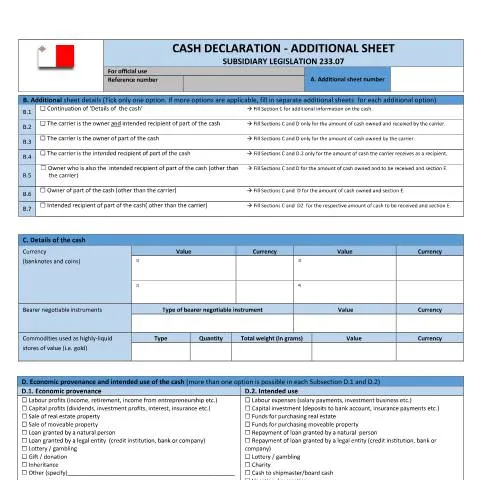
Traveling to Malta with large amounts of cash? You may find yourself needing to deal with the Information to Travellers on Cash Declaration — cash-declaration-form-additional-sheet-for-eu.pdf. This document is particularly crucial for EU citizens wishing to ensure compliance with local regulations regarding cash declarations. When handling significant sums, the implications of this form become vital not just for legal compliance, but for a smooth travel experience.
Detailed Breakdown of the Cash Declaration Form
The cash-declaration-form-additional-sheet-for-eu serves as an extension to the primary cash declaration requirements. It is essential for EU travelers who arrive in Malta and are carrying sums above a certain threshold. Regardless of your travel purposes—be it tourism, business, or personal matters—filling this form out accurately ensures you avoid complications at customs.
Sections of the Form and Their Importance
- Personal Information: This includes your name, nationality, and identification number. Accuracy here is crucial; discrepancies can delay processing.
- Travel Details: Information about your arrival, including flight number and point of origin. This helps authorities trace your movement and establish the source of the funds.
- Cash Amounts: A detailed account of the cash you are bringing into Malta. Be meticulous and ensure this matches what you are carrying.
- Purpose of Cash: You must clearly state why you are bringing cash. This can include personal expenses, travel, investments, etc.
Common Pitfalls in Completion
Completing this form is straightforward, but several common mistakes can lead to issues:
- Inaccurate personal or travel information.
- Failing to declare the exact amount of cash carried.
- Not providing a clear reason for carrying large sums.
Placement of the Form in the Larger Administrative Context
Understanding where the cash declaration form fits into the broader administrative framework is crucial. This document is not only relevant at entry points but also connects with local tax regulations governed by the Income Tax Department. Compliance with this form can influence your financial standing and responsibilities when residing or conducting business in Malta.
The Legal Framework Behind Cash Declarations
The need for cash declarations stems from anti-money laundering regulations and efforts to combat illicit financial activities. This form aligns with the directives set forth in the Public Administration Act (Cap. 595 of the Laws of Malta). Travelers deterred by bureaucracy should recognize that these regulations exist to protect both the state and legitimate travelers.
What Happens After Submission?
Post-submission, your journey does not end. Here’s what to anticipate:
- Review Process: Customs officials will review your declaration. They may ask for additional documentation or clarification.
- Potential Inspection: Be prepared for your cash to be inspected, especially if the amount declared raises any suspicions.
- Documentation Retention: Keep a copy of your form and any receipts for cash handled until you complete your travel and return from Malta.
Aftermath and Next Steps
If the officials require further information, they will contact you via the details provided in the declaration. Additionally, comply with any additional requests promptly to avoid complications and potential penalties.
Dealing with Errors, Refusals, or Missing Documents
Encountering an error or refusal during the declaration process can be daunting. Understanding your recourse is essential:
In Case of Refusal
If your declaration is refused, it is advisable to:
- Request an explanation from the customs officer on duty.
- Provide any additional information as requested.
Addressing Missing Documents
Should you discover that you have not included required documents:
- Gather the missing information as soon as possible.
- Contact the relevant customs authority to inform them of your situation.
Special Circumstances: Traveling with Minors or Unique Situations
Some travelers may find themselves in unique situations, such as traveling with minors or in emergencies. If you are a guardian traveling with a child, it is crucial to declare the funds in both your name and the child’s. Similarly, if you are in an emergency requiring immediate travel with cash, document the circumstances to aid in the declaration process.
Traveling with Minors
- Declaration Requirement: Ensure both you and the minor fill out the required sections, indicating their relationship to you.
- Proof of Guardianship: Be prepared to show proof of guardianship if necessary.
Timelines and Expectations: When to Submit Your Declaration
Timing is critical in ensuring your cash declaration process runs smoothly:
When to Submit
- Submit your additional sheet at the point of entry into Malta.
- It’s advisable to have your declaration ready before you approach customs to avoid delays.
Post-Submission Timeline
Once submitted, expect a review period that can vary based on the complexity of your declaration. Keeping your contact details updated ensures you receive timely updates from customs.
Understanding the Demographics of Travelers Affected
Different profiles of travelers may find the cash declaration form more relevant based on their needs and circumstances:
EU Citizens and Residents
- Regular travelers with business dealings may carry larger sums.
- Short-term visitors may need to declare funds brought for immediate expenses.
Specific Considerations for Non-EU Travelers
Non-EU travelers are subject to different regulations and should be aware of additional documentation that may be necessary. Always check with local authorities for tailored advice based on your nationality.
Conclusion: Preparing for a Smooth Cash Declaration Process
Traveling with cash requires careful planning and understanding of the regulatory requirements in Malta. The Information to Travellers on Cash Declaration form is an essential document in this process. If you ensure accuracy in completion, stay informed about the legal framework, and prepare for any potential scrutiny, your cash declaration experience can be seamless.
Understanding the Cash Declaration Requirement in Malta
When travelling to Malta, it's crucial to be aware of the cash declaration requirements set by the Maltese authorities. According to the regulations established under the Prevention of Money Laundering and Funding of Terrorism Regulations, any individual entering or leaving Malta with cash or cash equivalents exceeding €10,000 (or its equivalent in other currencies) must declare this amount to the customs authorities. This includes not just banknotes, but also travelers' cheques, money orders, and negotiable instruments.
Failure to declare amounts exceeding this threshold can lead to penalties, including the seizure of the undeclared cash. Therefore, it's advisable for travelers to keep specific records and supporting documentation regarding the source of their funds, as this can facilitate a smoother declaration process upon arrival or departure.
In essence, understanding the cash declaration requirement is essential for anyone traveling to Malta. It not only helps in compliance with legal obligations but also ensures that travelers can avoid unnecessary inconveniences during their journey.
How to Complete the Cash Declaration Form
Upon entering or leaving Malta with cash exceeding the stipulated threshold, travelers are required to fill out the Cash Declaration Form. The form is designed to collect essential information regarding the amount of cash being carried and its origin. Below is a breakdown of how to effectively complete the Cash Declaration Form:
- Personal Information: This section requires your full name, nationality, and identification details, including your Maltese ID number if applicable. Ensure that the information is accurately filled out as discrepancies may lead to complications.
- Details of Cash: Here, you will specify the total amount of cash being carried, breaking it down by currency type if you are carrying multiple currencies. This includes providing the denominations if required.
- Source of Funds: It’s mandatory to disclose the origin of the cash. This could include details such as bank statements, inheritance documents, or evidence of earnings. This section is crucial, as authorities may conduct additional checks to verify the legitimacy of the funds.
- Declaration: Finally, you will need to sign the form to certify that the information provided is true and correct. Keep in mind that providing false information can lead to serious legal consequences.
It's crucial to submit the Cash Declaration Form at the point of entry or exit. If you are unsure about any aspect of the form, do not hesitate to ask customs officials for assistance. They are generally willing to help ensure compliance with regulations.
Exemptions and Special Considerations
While the general rule stipulates a cash declaration for amounts over €10,000, there are specific exemptions and special considerations that may apply to certain travelers. Understanding these nuances can save you time and potential complications during your travels.
Firstly, travelers who are part of a diplomatic mission or are representing an international organization may be exempt from declaring cash amounts, provided they can demonstrate their official status. It's advisable for such individuals to carry relevant documentation that confirms their diplomatic status.
Additionally, while most travelers are required to declare cash, those carrying less than €10,000 are encouraged, although not legally obligated, to report their cash for transparency. In instances where a traveler is accompanied by minors, the cash limits may also apply collectively to the family, meaning the total cash carried by all family members must be considered.
Other special considerations may arise in situations related to international trade or customs-related activities. Businesses involved in legitimate trade may have specific provisions that allow for more flexibility in cash handling, and it's recommended to consult with legal experts or Malta’s customs office for detailed guidance on these matters.
Understanding these exemptions and special circumstances can help travelers navigate the cash declaration process more smoothly and avoid missteps that could lead to penalties or complications.