Navigating the Cash Declaration: A Detailed Guide to Non-EU Transactions
As a traveler entering Malta from a non-EU country, you may find yourself needing to complete the Cash Declaration Form Additional Sheet for Non-EU. This form plays a crucial role in complying with local income tax regulations while ensuring that your cash transactions are traceable and lawful. Understanding the nuances of this form can save you time and potential complications during your travel.
Who Needs to Submit the Cash Declaration Form?
Individuals entering Malta with cash amounts that exceed the set threshold must submit this form. This requirement is particularly pertinent for:
- Tourists carrying significant amounts of cash.
- Business travelers coming with large sums for transactions.
- Individuals transferring funds for investment or personal purposes.
Moreover, local residents engaging in cross-border cash transactions may also need to fill out this form to ensure compliance with the regulations governing cash transfers. The form’s specifics are designed to collect relevant information about the cash amount being declared, allowing for transparency and adherence to income tax laws.
Understanding the Cash Declaration Form: Key Sections Explained
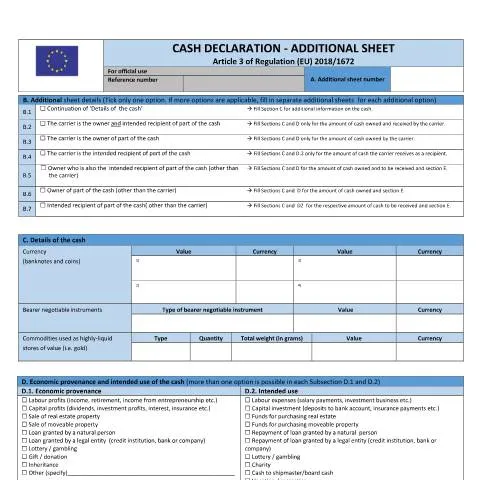
The Cash Declaration Form Additional Sheet for Non-EU is structured to gather essential details about the cash you are bringing into Malta. Let’s break down the sections of this form to illuminate what is expected.
The Personal Information Section
This section requires you to provide your personal details, including:
- Name: Full name as per your passport.
- Nationality: Your country of citizenship.
- Passport Number: Ensure that the number is copied correctly to avoid discrepancies.
Be mindful of spelling and ensure that all information matches your official identification.
Details of Cash Amounts
You will need to declare the total cash amount you are carrying. This includes:
- Cash in hand
- Currencies being brought into Malta
Discrepancies in the declared amount versus physical cash can lead to questioning by customs officials. It is advisable to keep your cash organized and accessible when crossing borders.
Sources of Cash
This section prompts you to explain the origin of the cash you are carrying. Be prepared to disclose:
- Income from work
- Gifts
- Loan amounts
- Inheritance or sale of assets
Providing clear and truthful information about the source of your cash will facilitate a smoother processing of your declaration.
Submission Channels: Online vs. Paper
While many forms in Malta can be submitted online through the servizz.gov.mt platform, the cash declaration form necessitates a slightly different approach. Here’s how you can submit it:
Online Submission
For those with a central e-ID, online submission is a streamlined option. The steps include:
- Log in to the servizz.gov.mt portal using your e-ID.
- Locate the Cash Declaration Form segment.
- Fill in the required details as prompted.
- Review, save, and submit your application.
Paper Submission
Alternatively, you can complete a physical copy of the form. The steps are as follows:
- Download the form from the official income tax website.
- Complete all sections meticulously.
- Submit the form at the designated customs office upon your arrival in Malta.
Choosing the right method of submission can save time and streamline your entry into Malta.
Consequences of Non-Compliance
Failing to declare amounts exceeding the threshold could lead to severe consequences, which may include:
- Fines and penalties imposed by the authorities.
- Seizure of undeclared cash.
- Legal consequences that may affect your travel status.
It is crucial to adhere strictly to the regulations set forth by the income_tax authority to avoid complications during your travels.
Special Scenarios: Navigating Complex Cases
There are particular scenarios that require additional consideration regarding the cash declaration process:
Traveling with Minors
When traveling with minors, the responsibility of declaring cash amounts falls on the accompanying adult. Ensure that:
- All cash carried on behalf of the minor is declared.
- The adult’s personal information and declaration must clearly state that they are declaring cash on behalf of the minor.
Emergency Situations
If you are in an emergency situation, such as needing to carry an unexpected sum of cash, it is advisable to:
- Document the nature of the emergency.
- Prepare to explain your situation to customs officials upon arrival.
Understanding the policies can mitigate potential penalties in unusual circumstances.
Final Thoughts: The Importance of Transparency
Completing the Cash Declaration Form Additional Sheet for Non-EU is not merely a bureaucratic step; it is an opportunity to demonstrate transparency regarding your finances. Following the regulations set forth not only ensures compliance but also contributes to the integrity of Malta’s economy.
As you prepare for your travels, keep this guide in mind to make the cash declaration process as seamless as possible. Remember that the income tax authority remains available for further clarification if needed, ensuring that you are never left in the dark about your obligations.
Understanding Cash Declaration Requirements for Non-EU Travelers
Traveling to Malta, especially from non-EU countries, comes with specific regulatory requirements that travelers must be aware of, particularly regarding the declaration of cash. The cash declaration requirements are in place to combat money laundering and ensure the legitimacy of funds entering the country.
If you are carrying €10,000 or more (or its equivalent in other currencies), it's mandatory to declare this amount upon arrival. This includes not only cash but also other negotiable instruments such as traveler's cheques and bank drafts. Failure to declare amounts that meet or exceed this threshold can result in penalties, including the confiscation of undeclared cash.
The declaration can be made using the Cash Declaration Form, which is available at customs upon arrival or online through the official government portal. Additionally, travelers may need to complete an additional sheet specifically designed for non-EU travelers. This additional form captures pertinent details about the cash being brought into the country, including the source of funds, purpose of the travel, and specifics regarding the currency.
For non-EU citizens, it's crucial to familiarize yourself with the specific guidelines set forth by the Customs Department of Malta, as they can provide comprehensive advice and support to ensure compliance with local legislation.
Common Scenarios and Exceptions to Cash Declaration
Understanding cash declaration is not just about meeting basic requirements; various scenarios may affect whether a declaration is needed, what constitutes reportable cash, and the potential exceptions that might apply.
For instance, travelers who are minors may be subject to different thresholds, and travelers representing a business could have distinct obligations based on their roles. If you are carrying cash on behalf of someone else, or if the funds belong to a third party, declaration requirements can also apply differently. In such cases, the source of the cash and documentation regarding its purpose will be scrutinized heavily by customs officials.
There are exemptions for certain types of transactions as well. For instance, if you are bringing cash in for specific business-related purposes, such as legitimate purchases, you might be required to present additional documentation as proof. Moreover, if you're a diplomat or part of an international organization, different rules can apply, allowing for exemptions under specific treaties.
Each situation can significantly differ based on the traveler’s profile, so it’s advised to contact the Customs Department directly or consult with a legal expert specializing in Maltese customs and tax law for clarity based on your unique circumstances.
Consequences of Non-Compliance and Legal Framework
Travelers must be aware that non-compliance with cash declaration laws can lead to severe repercussions. Failing to declare amounts of €10,000 or more can result in confiscation of funds and may lead to legal actions, including fines or prosecution based on the severity of the infraction.
The legal framework governing cash declarations in Malta is encapsulated within the Public Administration Act (Cap. 595 of the Laws of Malta), alongside regulations set by the Customs Department. These laws are aimed at promoting transparency and integrating Malta into the European Union's broader anti-money laundering framework.
Upon confiscation, travelers have the right to appeal. The process involves submission of a formal request for review, and the case may be referred to the Administrative Review Tribunal. Legal representation is advisable in such cases due to the complexity of administrative laws involved. Moreover, the laws governing the return of confiscated funds can vary significantly based on the circumstances. For example, if funds are deemed to be illegitimate or linked to criminal activity, reclaiming them becomes considerably more challenging.
For a deeper understanding of the legal implications, it is prudent to consult a legal expert or refer to the guidance published by the Customs Department of Malta. They provide updates on current laws and potential changes that might affect travelers.