Understanding the Cash Declaration Process for Non-EU Travellers
As a non-European Union traveller visiting Malta, you may be aware of the stringent regulations surrounding the declaration of cash amounts carried across borders. This is particularly crucial as the Cash Declaration Form (non-eu) serves as a formal notification to the Maltese tax authority regarding large sums of money brought into the country. Filling out this document accurately not only ensures compliance with local laws but also protects you from potential fines or legal issues upon your arrival.
Who Needs to Submit the Cash Declaration Form?
The requirement to submit the Cash Declaration Form in Malta predominantly applies to non-EU citizens who are entering the country with significant amounts of cash. Below are key profiles that mandate the submission of this form:
- Tourists: Non-EU tourists arriving with €10,000 or more in cash.
- Business Visitors: Individuals bringing cash for business transactions or investments.
- Residents: Non-EU residents returning with cash exceeding the threshold after travel.
It is vital to understand that the cash declaration requirement is not limited to physical currency alone. Any combination of cash, travellers' cheques, and negotiable instruments that together exceed the stipulated amount must be declared.
Preparation of Documentation: Essential Steps
Prior to your journey, ensuring that you have all necessary documents can streamline the declaration process. Here’s a checklist of what to prepare:
- Cash Amount: Determine the total cash value you are carrying. Be diligent in counting and verifying the amount before traveling.
- Form Completion: Download and fill out the Cash Declaration Form (non-eu) accurately. Include personal details, cash amount, and purpose of bringing the money into Malta.
- Supporting Documents: Gather any relevant supporting documentation that may justify the amount you are carrying, such as bank statements or business invoices.
Having these documents in order will not only facilitate the declaration but also provide clarity to the authorities should they have questions regarding your cash.
Timeline: When and Where to Declare Your Cash
The timing of the cash declaration is critical. You are obligated to declare your cash:
- Upon Arrival: Present the completed Cash Declaration Form to customs upon entering Malta.
- Exiting Malta: If you plan to leave Malta with an amount exceeding the threshold, you must declare it again when exiting.
Should you fail to declare cash that exceeds the limit, you may face fines or the confiscation of your money. It's prudent to plan your declaration around your travel itinerary to avoid any last-minute issues.
Submission Channels: Navigating the Process
The Cash Declaration Form can be submitted through different channels, depending on your preference and circumstances:
| Submission Method | Details | Pros and Cons |
|---|---|---|
| In-Person at Customs | Submit the form directly to customs officers at the airport. | Pros: Immediate feedback; Cons: Waiting time may vary. |
| Online Submission | Use the online portal via the official Maltese tax authority website. | Pros: Convenience; Cons: Requires e-ID authentication. |
| By Mail | Send the completed form to the income tax department via post. | Pros: Can be done from anywhere; Cons: Delays in processing. |
Deciding on which channel to use will depend on your situation, but in-person submissions allow for immediate clarification of any doubts you may have.
What Happens After Submission?
Once you have submitted your Cash Declaration Form, the process carries specific follow-up steps:
- Verification: Customs will review your declaration and supporting documents.
- Approval or Queries: If everything is in order, approval will be granted. In case of discrepancies, customs officers may request additional information.
- Record Keeping: Keep a copy of your submitted form for personal records; it may be needed for future reference.
Maintaining transparency during this process is vital. Being cooperative with customs authorities can facilitate a smoother experience.
Regulatory Framework: The Legal Backbone
The Cash Declaration Form is rooted in the broader context of Malta’s commitment to preventing money laundering and other financial crimes. The relevant laws and regulations that govern this process stem from the Public Administration Act (Cap. 595 of the Laws of Malta). This act mandates that individuals carrying large sums of money must declare their holdings to relevant authorities, ensuring that Malta remains compliant with international regulations.
Understanding this legal context highlights the significance of the cash declaration process. Non-compliance can lead to serious legal repercussions, including fines or criminal charges, emphasizing the importance of adhering to these regulations.
Practical Tips for Non-EU Travellers
To better navigate the cash declaration process, here are some practical tips:
- Double-Check Regulations: Before travelling, consult the Maltese income tax authority's website to stay updated on any changes regarding cash declaration limits.
- Be Honest: Always declare the exact amount you are carrying. Misrepresentation can result in severe penalties.
- Keep Receipts: Retain any receipts or documentation related to the cash you are bringing into Malta. This documentation may aid in case of queries from customs.
By following these guidelines, you can significantly ease your entry into Malta and avoid potential complications arising from cash declaration discrepancies.
Final Considerations for Travelling with Cash
Being aware of the Cash Declaration Form's importance and adhering to the necessary procedures will enhance your travel experience in Malta. Always remember that transparency and compliance not only protect you but also support the integrity of the financial system as a whole. For the most current guidelines and detailed information, you are encouraged to consult the income tax department of Malta.
Understanding the Cash Declaration Requirement for Travelers to Malta
Traveling to Malta, like many other countries, includes various regulations and requirements that visitors must adhere to. One of the essential regulations involves declaring cash upon entry into the country. The cash declaration requirement is designed to combat money laundering and the financing of terrorism, as stipulated by EU regulations. Travelers bringing €10,000 or more must complete a cash declaration form. This applies not only to cash but also to travelers’ cheques, money orders, and other negotiable instruments. Failure to declare amounts over this limit may result in seizure of the cash and potential legal repercussions.
The Process of Filling Out the Cash Declaration Form
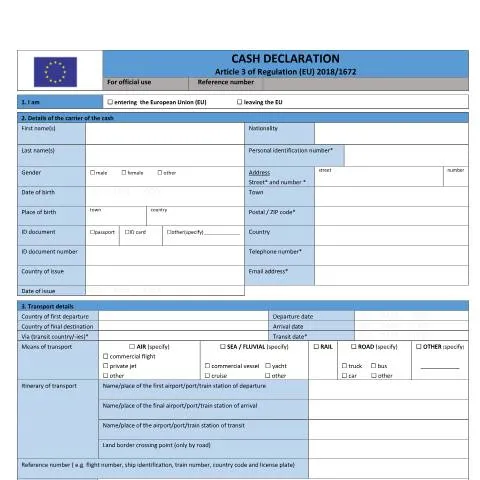
When you arrive in Malta and find that you need to declare cash, the first step is to complete the cash declaration form (cash-declaration-form-non-eu.pdf). The form can be obtained at the airport or border crossing, and it is advisable to fill it out as soon as possible to avoid delays. The following sections are included in the form and require careful attention:
- Identity Information: You'll need to provide your personal details including your name, nationality, passport number, and contact information.
- Details of Cash: Clearly state the amount of cash you are carrying and the currency. Be specific about any other instruments that are part of the declaration.
- Purpose of Funds: Indicate the purpose for which you are bringing the cash into Malta, as this can help authorities understand your intentions and ensure compliance with regulations.
Once the form is completed, present it to customs officials, who may conduct further checks. It's important to retain a copy of the submitted declaration for your records. This can serve as proof that you have declared your cash legally, should any issues arise during your stay or upon departure.
Consequences of Non-Compliance and the Importance of Transparency
Understanding the consequences of not declaring your cash is crucial. If you’re caught with amounts over the €10,000 threshold without a declaration, the cash may be confiscated, and you could face legal action. This situation can lead to significant delays and complications, especially if you are a tourist unfamiliar with local laws and procedures. Furthermore, non-compliance could result in fines, which may vary in severity depending on the circumstances of the violation.
Transparency is vital when entering a foreign country, particularly concerning financial matters. Maltese authorities have strict regulations in place to ensure that all travelers comply with laws aimed at preserving the integrity of the financial system. By fully declaring your cash and understanding the necessary processes, you can avoid potential hassles and ensure a smooth entry into Malta.