Navigating the Withholding Tax Quarterly Statement Submission Process
For businesses operating in Sri Lanka, the Withholding Tax (WHT) system plays a pivotal role in the taxation framework. One critical aspect of this system is the submission of the Quarterly Statement and Verified Schedule for Advance Income Tax (AIT). Understanding the procedures, implications, and intricacies involved is essential for compliance and effective financial management.
The Importance of Timely Submission
In Sri Lanka, failure to comply with WHT obligations can lead to various consequences, such as penalties and interest on overdue taxes. Timely submission of the Quarterly Statement ensures that businesses uphold their tax responsibilities and maintain good standing with the tax authorities. Here’s what is at stake:
- Penalties: Late submissions may incur penalties as specified by the Inland Revenue Department (IRD).
- Interest Charges: Outstanding amounts can accrue interest, making the financial burden heavier over time.
- Compliance Ratings: Businesses may face scrutiny from the IRD, affecting their compliance ratings and future dealings.
Who Needs to Submit the Quarterly Statement?
The responsibility to submit this document primarily falls on entities engaged in withholding tax activities. This includes:
- Corporations: All registered companies engaged in business that involve withholdings.
- Partnerships: Partnerships that withhold income tax from salaries or other payments must also comply.
- Individuals: Sole proprietors and individuals who engage in tax withholding as part of their business operations.
Additionally, understanding specific circumstances such as tax holidays, exemptions, or special statuses is crucial. For instance, newly registered companies may have different reporting requirements during their initial years of operation.
Decoding the Quarterly Statement and Verified Schedule
The Quarterly Statement and Verified Schedule are not just forms; they encapsulate detailed financial data that reflects the withholding amounts for employees and various services rendered. Each section of the statement serves a specific purpose:
- Tax Reference Number: This is a unique identifier that must be entered accurately. Mistakes here can lead to misallocation of payments.
- Period Code: Properly entering the Year of Assessment is critical. The year code typically follows a set format, such as 2526 for the financial year.
- Quarterly Submission: Understanding which quarter applies is essential for accurate representation of reported figures. Quarterly periods are typically defined as follows:
- Document Selection: Correctly identifying the type of document being uploaded (i.e., Quarterly Statement of Advance Income Tax) from the dropdown list is vital. Each category has specific implications for tax calculations.
| Quarter | Period |
|---|---|
| Q1 | 01 January - 31 March |
| Q2 | 01 April - 30 June |
| Q3 | 01 July - 30 September |
| Q4 | 01 October - 31 December |
Step-by-Step Submission Process
The submission process for the Quarterly Statement is facilitated through the Revenue Administration Management Information System (RAMIS). Below is a detailed guide to ensure smooth submission:
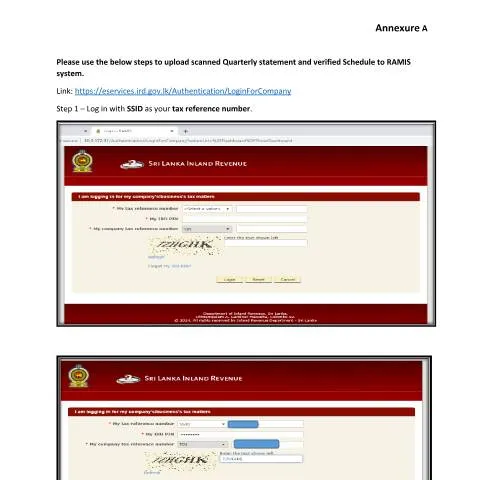
- Log In: Access the RAMIS platform by logging in with your SSID, which serves as your tax reference number.
- Select Document Upload: Navigate to ‘Upload Schedules / Documents’ from the Return Schedule / Management dropdown menu.
- Input Period Code: Enter the relevant period code for the Year of Assessment (e.g., 2526) to ensure the correct financial year is referenced.
- Select Document Type: From the dropdown menu, choose ‘Quarterly Statement of Advance Income Tax’ to upload the corresponding document.
- Upload Statement: Select the appropriate quarter and upload the scanned quarterly statement of AIT.
- Confirmation: After uploading, click “Yes” to confirm the action.
- Acknowledgment Print: It’s crucial to print the acknowledgment of submission as proof of compliance.
- Transfer Verified Schedule: Utilize the Secure File Transfer Protocol (SFTP) method to transfer the Verified Schedule 1.
Common Pitfalls to Avoid
While the steps may seem straightforward, several common pitfalls can hinder the submission process:
- Incorrect Tax Reference: Double-check to ensure the SSID is accurate; an error here can lead to submission failures.
- Wrong Period Code: Ensure the period code aligns with the assessment year to avoid issues with IRD records.
- Document Format: Adhere to any specified format for scanned documents; failure to comply might result in rejection of your submission.
- Timing: Submit documents well in advance of deadlines to account for any unexpected challenges or technical issues.
Regulatory Framework and Historical Context
The requirements for submitting the Quarterly Statement are grounded in the regulatory framework established by the Sri Lankan tax authorities. The principles of English common law influence the provisions of the Withholding Tax Act, ensuring that businesses adhere to structured fiscal responsibilities. This is further reinforced by the Electronic Transaction Act, which legitimizes the use of digital forms and submissions.
The evolution of these regulations has been influenced by global best practices in taxation and aims to streamline revenue collection while ensuring taxpayer compliance. Understanding the historical context not only highlights the importance of compliance but also serves as a reminder of the ongoing commitment by the Sri Lankan government to modernize and digitize tax administration.
Implications of Non-Compliance
While the process may seem tedious, the implications of non-compliance are significant. Here are some potential repercussions:
- Legal Action: Continued failure to submit can result in legal ramifications, including litigation.
- Loss of Business Opportunities: Companies with a poor tax compliance history may struggle to secure contracts or financing.
- Deterioration of Reputation: Businesses may face reputational damage, which can impact client trust and stakeholder relationships.
In summary, understanding the nuances of the Withholding Tax Quarterly Statement submission process is critical for businesses in Sri Lanka. The stakes are high, and proactive measures can ensure compliance and facilitate smoother operations.
Staying Updated: Resources and Support
To navigate the complexities of withholding tax submissions, businesses are encouraged to regularly consult the resources provided by the IRD and ICTA. Access to up-to-date information, guidance on best practices, and access to electronic filing tools is essential for effective compliance. Additionally, businesses may consider engaging tax professionals for tailored advice, especially when dealing with intricate financial matters.
This approach not only fosters compliance but also enhances the overall financial health of the organization. The evolving landscape of taxation in Sri Lanka demands that companies remain vigilant, informed, and proactive in their tax-related responsibilities.
Understanding the Importance of Quarterly Statements
Quarterly statements serve as critical documentation for businesses operating in Sri Lanka, as they encapsulate financial performance over a three-month period. These statements not only provide insights into a company’s profitability but also assist in tax compliance by consolidating necessary financial data. The Sri Lankan tax authorities, including the Inland Revenue Department (IRD), require these documents for various assessments, particularly relating to Withholding Tax (WHT) and Value Added Tax (VAT).
Moreover, the regular submission of quarterly statements plays a crucial role in maintaining good standing with regulatory bodies. Companies can avoid penalties and ensure a smoother auditing process by adhering to specified deadlines and guidelines. This section will cover what elements are typically included in a quarterly statement, the significance of verified schedules, and how they may differ based on the nature of the business activities undertaken.
Eligibility and Prerequisites for Uploading Documents
Before embarking on the process of uploading your quarterly statement and verified schedule, it is essential to ascertain your eligibility and fulfill specific prerequisites. First and foremost, companies must ensure that they are registered with the relevant authorities, such as the DRC, to legally operate in Sri Lanka. Registration should include acquiring a valid National Identity Card (NIC) for identification purposes, which plays a crucial role in the submission of digital forms.
Additionally, businesses must ensure that their financial records are accurate and up-to-date in accordance with Sri Lankan accounting standards. This includes having a thorough understanding of what constitutes a verified schedule, which typically includes detailed breakdowns of income, expenses, and other financial obligations. Ensuring the document is properly verified by authorized personnel—such as a chartered accountant—can prevent future complications. Failure to meet these criteria may result in rejections during the upload process, leading to delays and potential penalties.
Navigating the Digital Submission Process: A Step-by-Step Guide
Uploading your quarterly statement and verified schedule through the digital platform provided by ICTA can significantly streamline the administrative process. Here’s a comprehensive step-by-step guide to navigating this submission:
- Accessing the Portal: Begin by visiting the official portal at forms.gov.lk. Ensure that you have stable internet connectivity to avoid disruptions during the upload.
- Creating an Account: If you are a first-time user, you will need to create an account. This involves providing necessary personal details, including your NIC, contact information, and business registration details.
- Logging In: Once your account is created, log in using your credentials. Familiarize yourself with the user interface to facilitate a smooth submission process.
- Finding the Right Form: Locate the section dedicated to tax submissions and select the appropriate form for uploading your quarterly statement and verified schedule. This may be labeled as ‘Quarterly Statement Upload’ or similar.
- Uploading Documents: Follow the prompts for attaching your scanned quarterly statement and verified schedule. Ensure that each document adheres to the required format and size limits. The platform typically accepts formats such as PDF, JPEG, or TIFF.
- Reviewing Your Submission: Before finalizing the upload, carefully review all entered information and attached documents for accuracy. This is a critical step to prevent any errors that could lead to rejection or delays.
- Submitting the Application: Once satisfied, click the ‘Submit’ button. You should receive an acknowledgment receipt via email confirming your successful submission. Keep this receipt for future reference and compliance verification.
- Tracking Your Submission: Utilize the tracking feature available on the platform to monitor the status of your upload. This can help you stay informed regarding any potential issues or further actions required.
By following these steps, you can ensure a seamless upload process for your quarterly statement and verified schedule, ultimately contributing to better compliance and regulatory standing.