Navigating the Quarterly Statement of Advance Income Tax in Sri Lanka
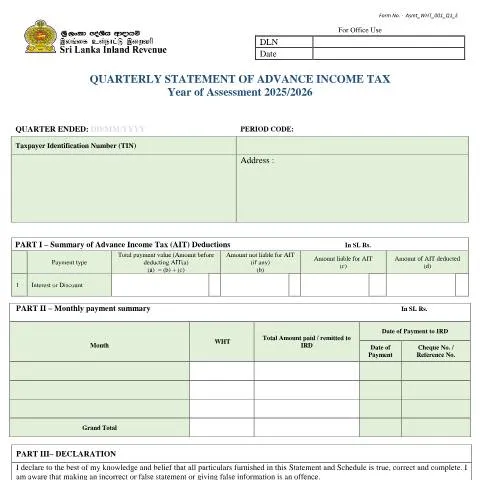
In the intricate world of Sri Lankan taxation, the Quarterly Statement of Advance Income Tax, identified by the code Asmt_WHT_001_Q1, stands as a critical document for taxpayers, particularly those subject to Withholding Tax (WHT). Understanding the nuances of this form is essential for compliance and the avoidance of penalties. The implications of this statement go beyond mere paperwork, impacting financial planning and obligations for individuals and businesses alike.
The Stakeholders: Who Must Submit This Statement?
Taxpayers obligated to file this statement typically include businesses and individuals who make payments subject to Withholding Tax. This includes, but is not limited to:
- Companies making interest or discount payments.
- Contractors receiving payments for services rendered.
- Individuals or entities paying dividends.
Particularly, non-resident entities receiving payments from Sri Lankan sources are equally bound by these regulations. The Taxpayer Identification Number (TIN) is a crucial element of this process. Without it, submission is not only impossible but also leads to penalties.
Understanding the Form’s Layout: Line by Line Analysis
Familiarity with the form's structure can significantly ease the submission process. Let’s delve into its sections:
- Part I – Summary of Advance Income Tax (AIT) Deductions
- Payment Type: Identify the nature of the payment (e.g., interest, dividends).
- Total Payment Value: This should reflect the gross amount before AIT deductions.
- Amount Not Liable for AIT: Clearly state any amounts exempt from tax—this often includes certain types of payments under specific thresholds.
- Amount Liable for AIT: This is the portion of the payment that is subject to withholding tax.
- Amount of AIT Deducted: Report the calculated tax that has been withheld, which should align with the statutory WHT rates.
- Part II – Monthly Payment Summary
In this section, you will itemize payments made throughout the quarter:
Month Total WHT Paid/Remitted Date of Payment to IRD Payment Method (Cheque No./Reference No.) January SL Rs. 100,000 15/01/2025 123456 February SL Rs. 150,000 15/02/2025 654321 March SL Rs. 120,000 15/03/2025 789456 - Part III – Declaration
In this crucial section, the declarant must affirm the accuracy of the provided information. This is a mandatory step:
- Full Name of Declarant: Include the name of the individual responsible for signing the form.
- Designation: Specify the role (e.g., Managing Director, Secretary).
- Contact Details: Include a telephone number and email address for any follow-up.
- Signature and Date: The form is not valid without a signature affirming the information's truthfulness.
Submission Channels: Online vs. Offline
The Sri Lankan government encourages electronic submissions through the Inland Revenue Department's online portal. However, taxpayers may also opt for traditional paper submissions. Here’s a breakdown of both avenues:
| Submission Method | Benefits | Drawbacks |
|---|---|---|
| Online Submission |
|
Requires internet access and familiarity with digital forms. |
| Paper Submission |
|
Longer processing times; risk of loss in transit. |
Consequences of Non-Compliance: A Serious Matter
Fulfilling obligations related to the Quarterly Statement of Advance Income Tax is not merely a bureaucratic requirement; it holds significant consequences for taxpayers. Failure to submit this statement on time can lead to:
- Penalties: Monetary penalties are enforced for late submissions or incorrect statements, reflecting the seriousness of compliance.
- Interest on Unpaid Taxes: In addition to penalties, the government imposes interest on any taxes that remain unpaid by the due date.
- Legal Repercussions: Persistent non-compliance can escalate to legal actions against the entity involved, causing further reputational harm.
Unique Cases: Foreign Entities and Special Circumstances
The tax framework in Sri Lanka can be particularly complex for foreign entities engaging in transactions within the country. Special considerations include:
- Non-Resident Withholding Taxes: Non-resident entities must often navigate different tax rates and regulations, which necessitate careful consultation with tax professionals.
- Minors and Guardians: In instances where a minor earns income subject to withholding tax, a guardian must file the statement on their behalf, ensuring compliance while maintaining the minor's financial interests.
- Emergency Situations: During national emergencies, deadlines may shift, requiring taxpayers to stay updated on governmental communications and possible extensions.
Final Considerations: Preparing for the Next Submission
As the next quarter approaches, being proactive in your tax reporting can alleviate future pressures. Here are some strategic tips:
- Maintain Accurate Records: Ensuring all payments and deductions are recorded promptly will ease the completion of the form.
- Stay Informed: Regularly check updates from the Inland Revenue Department regarding any changes in tax rates or submission procedures.
- Consult Professionals: Engaging with tax consultants can provide invaluable insights, particularly for complex cases or foreign entities.
By understanding the intricacies of the Quarterly Statement of Advance Income Tax, taxpayers can navigate their obligations with confidence and clarity, transforming a potentially daunting process into a manageable task.
Understanding the Quarterly Statement of Advance Income Tax (QSAIT)
The Quarterly Statement of Advance Income Tax (QSAIT) is a critical component of tax compliance for individuals and corporate entities in Sri Lanka. Governed by the provisions outlined in the Income Tax Act, it mandates taxpayers to remit advance income tax payments based on an estimated annual income. Understanding the intricacies of this statement is essential for ensuring compliance and avoiding penalties.
Advance income tax is typically calculated using the estimated taxable income for the year, and the QSAIT must be filed quarterly. This means that every taxpayer must make payments at four intervals throughout the fiscal year. Each installment is due at the end of the first, second, third, and fourth quarters, specifically on the last day of each quarter, which aligns with the fiscal calendar in Sri Lanka.
To accurately estimate the advance tax, taxpayers should consider their previous year’s income tax liability, taking into account any changes in income or circumstances that may affect their taxable income. It's important to note that the advance tax should not be confused with the final income tax liability; rather, it is an estimation intended to spread the tax liability throughout the year. Proper estimation and timely remittance of the QSAIT help avoid the imposition of surcharges or interest on unpaid taxes.
Common Misconceptions About QSAIT Filing
There are several misconceptions surrounding the filing of the Quarterly Statement of Advance Income Tax that can lead to significant issues for taxpayers. One common myth is that small business owners or self-employed individuals are exempt from filing QSAIT. In reality, anyone with taxable income above the prescribed threshold is obligated to file the QSAIT irrespective of the size of the business.
Another misconception is that payments made after the due date will simply accrue interest without any penalties. However, the Sri Lankan tax authorities impose strict penalties for late payments, which can significantly increase the tax liability of an individual or business. Taxpayers should be diligent in ensuring they meet their filing and payment deadlines to mitigate the risk of penalties.
Moreover, many individuals believe that filing the QSAIT is only necessary for the first quarter, as they assume that any adjustments can be made at the end of the fiscal year. While adjustments can indeed be made when calculating the final income tax payment, it's essential to remain compliant with quarterly submissions to maintain good standing with the Sri Lanka Revenue Authority (SRA).
Steps to Rectify Errors in QSAIT Submissions
Errors in the Quarterly Statement of Advance Income Tax submission can occur for various reasons, including clerical mistakes or miscalculations. Recognizing and rectifying these errors promptly is vital to avoid potential penalties or interest charges. If a taxpayer discovers an error in their QSAIT filing, the following steps should be undertaken:
1. Review the Submission: Carefully examine the submitted QSAIT for any discrepancies or mistakes. This includes verifying the estimated income, tax calculations, and ensuring that all required fields are completed correctly.
2. Gather Supporting Documentation: Collect any documentation that supports the corrections you plan to make. This might include income statements, expense receipts, or other relevant financial records that justify the adjustments.
3. Contact the SRA: It is advisable to reach out to the Sri Lanka Revenue Authority directly for guidance on the rectification process. They can provide specific instructions on how to amend your submission and what documentation may be required.
4. File an Amended QSAIT: Depending on the SRA's guidance, you may need to submit an amended version of your QSAIT. This can often be done through their online portal or by using the prescribed forms available on their website.
5. Monitor Your Account: After filing the amended statement, closely monitor your tax account with the SRA to ensure that they have processed the changes and that no further issues arise.
Addressing errors in a timely manner is important, as prolonged discrepancies can lead to audits or additional scrutiny from tax authorities.