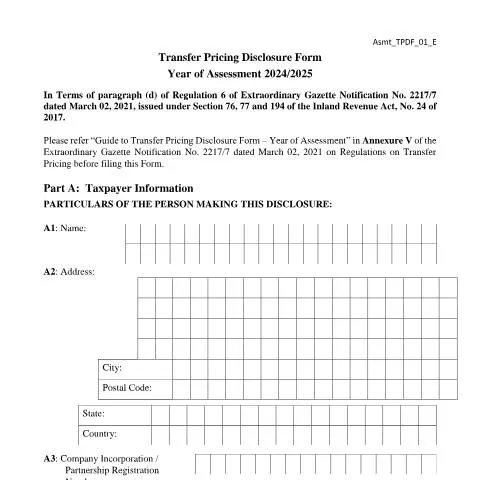
Navigating the Intricacies of the Transfer Pricing Disclosure Form
In the complex landscape of corporate taxation in Sri Lanka, the Transfer Pricing Disclosure Form (Asmt_TPDF_01_E) emerges as a pivotal document for both resident and non-resident companies. This form is designed to ensure that the pricing of inter-company transactions complies with the arm's length principle, a fundamental guideline set forth in the Inland Revenue Act, No. 24 of 2017. Its importance cannot be overstated, as proper adherence to transfer pricing regulations can mitigate risks associated with tax compliance and avoid potential disputes with the tax authorities.
Understanding the Core Purpose of the Form
The Transfer Pricing Disclosure Form serves as a comprehensive declaration of transactions conducted between associated enterprises. It is essential for companies engaging in cross-border and domestic transactions involving related entities. By filing this form, businesses disclose the methodologies and pricing structures adopted in their inter-company dealings.
The Legal Framework Behind the Disclosure Requirement
The requirement to file the Transfer Pricing Disclosure Form is established under paragraph (d) of Regulation 6 of Extraordinary Gazette Notification No. 2217/7, issued on March 02, 2021. This regulation falls under the broader scope of sections 76, 77, and 194 of the Inland Revenue Act. The act outlines the legal obligations for companies to maintain records substantiating the arm's length nature of their transactions. Such transparency is crucial in protecting the integrity of the tax system and ensuring fair competition among businesses.
Who is Required to Submit the Transfer Pricing Disclosure Form?
While all resident and non-resident companies engaging in associated enterprise transactions may need to file this form, specific criteria determine the necessity of disclosure:
- Resident Companies: Companies incorporated in Sri Lanka must file if they conduct transactions with associated enterprises.
- Non-Resident Companies: Entities operating in Sri Lanka or having a taxable presence may be required to complete the form if they engage in related party transactions.
- Thresholds: Certain minimum transaction values may apply, which could exempt smaller transactions from disclosure requirements.
Identifying Associated Enterprises
Associated enterprises refer to entities that have a significant degree of control over one another or are controlled by the same third party. This definition extends to parent companies, subsidiaries, affiliates, and other entities within a corporate group. Understanding who qualifies as an associated enterprise is crucial for accurate reporting.
Key Components of the Transfer Pricing Disclosure Form
Completing the Transfer Pricing Disclosure Form involves several critical sections, each demanding specific information that outlines the nature of the transactions:
Part A: Taxpayer Information
In this section, the taxpayer must provide detailed identification information, including:
- Name: Legal name of the company or individual filing the form.
- Address: Complete address including city, postal code, and country.
- Company Registration Number: Unique identification number issued upon incorporation.
- Taxpayer Identification Number (TIN): Essential for tax identification and compliance.
- Contact Information: Telephone, email, and website address.
Part B: Transactions with Associated Enterprises
This section requires detailed reporting of transactions conducted with each associated enterprise. Key elements to include:
| Transaction Item | Associated Enterprise (AE) | TP Methodology | Arm’s Length Price | Amount of Transaction (in LKR) |
|---|---|---|---|---|
| Loan | XYZ Limited | Comparable Uncontrolled Price | LKR 1,000,000 | LKR 1,000,000 |
| Service Fees | ABC Corporation | Cost Plus Method | LKR 500,000 | LKR 500,000 |
This detailed breakdown is vital to demonstrate compliance with the arm’s length principle by comparing transaction prices with market benchmarks.
Filing Process and Submission Guidelines
Completing the Transfer Pricing Disclosure Form involves several steps:
- Gather Required Information: Collect all necessary data related to transactions with associated enterprises, including pricing methodologies and amounts involved.
- Complete the Form Accurately: Ensure all fields are filled with precise and complete information to avoid complications later in the process.
- Submission: The completed form must be filed electronically via the tax authority's prescribed method, ensuring the latest version of the form is used.
Due Dates and Compliance Deadlines
The filing deadline for the Transfer Pricing Disclosure Form aligns with the annual tax return submission date. It is crucial to monitor the tax authority's announcements for any changes to these deadlines. Failure to comply with filing deadlines may result in penalties or increased scrutiny from tax authorities.
Addressing Common Issues and Challenges
Despite thorough preparation, taxpayers may face various issues when submitting the Transfer Pricing Disclosure Form. Understanding how to tackle these challenges is essential:
Handling Missing Information
If certain information is unavailable at the time of filing, it is advisable to:
- Document the reason for the missing information.
- Provide estimates based on previous transactions and market research.
- Submit the form with a clear indication of the pending information and a commitment to follow up with a supplementary submission.
What to Do in Case of Refusal or Discrepancies
In the event that the tax authority raises concerns regarding the submitted form, taxpayers should:
- Request clarification on specific areas of concern to understand the basis of the dispute.
- Prepare additional documentation or evidence that supports the arm’s length nature of the transactions.
- Engage in discussions with tax representatives to resolve discrepancies amicably.
The Importance of Accurate Record-Keeping
Beyond the submission of the Transfer Pricing Disclosure Form, maintaining comprehensive records of all related party transactions is paramount. Proper documentation serves as a defense against potential audits or inquiries from the tax authorities. Companies should adhere to the following best practices:
- Documentation of Methodology: Keep records that detail the rationale behind chosen transfer pricing methods.
- Market Analysis: Document market comparisons and benchmarks that establish the appropriateness of pricing.
- Transaction Records: Maintain thorough transaction records, including contracts, invoices, and correspondence related to the transactions.
Exploring the Impact of Non-Compliance
The ramifications of failing to comply with the requirements associated with the Transfer Pricing Disclosure Form can be significant. Companies may face:
- Financial Penalties: Non-compliance can lead to hefty fines imposed by tax authorities.
- Increased Audit Risk: Companies with incomplete or inaccurate disclosures may attract greater scrutiny and subsequent audits.
- Reputational Damage: Non-compliance can undermine trust with stakeholders, including investors, customers, and regulatory bodies.
The Evolving Landscape of Transfer Pricing Regulations
As the global economy increasingly moves towards digitalization and international trade, the transfer pricing landscape continues to evolve. Companies operating in Sri Lanka must remain vigilant regarding changes in regulations, both locally and internationally. Staying informed on updates via communications from the Inland Revenue Department is essential for maintaining compliance and adopting best practices.
In summary, the Transfer Pricing Disclosure Form represents a critical component of a company's tax compliance strategy in Sri Lanka. By understanding its requirements, accurately completing the form, and maintaining diligent records, companies can navigate the complexities of transfer pricing effectively and minimize risks associated with non-compliance.
For further guidance, companies should consult the “Guide to Transfer Pricing Disclosure Form – Year of Assessment” available in Annexure V of the Extraordinary Gazette Notification No. 2217/7 dated March 02, 2021, prior to filing the form.
Understanding the Importance of Transfer Pricing in Sri Lanka
Transfer pricing refers to the rules and methods for pricing transactions between enterprises under common ownership or control. The relevance of transfer pricing is particularly profound in a globalized economy where international trade and investment are more prevalent. In Sri Lanka, the framework surrounding transfer pricing is governed by the Inland Revenue Act, which outlines the requirements for disclosure through the Transfer Pricing Disclosure Form, specifically the Asmt_TPDF_01_E.
The importance of transfer pricing in Sri Lanka cannot be overstated, especially for resident companies involved in cross-border transactions. Accurate transfer pricing can help mitigate the risk of tax audits and disputes with the tax authorities. The Sri Lankan tax regime encourages compliance with international principles, specifically the OECD Guidelines, which necessitate a robust documentation process to substantiate intercompany pricing arrangements.
Companies must be aware that failure to comply with transfer pricing regulations can lead to significant penalties, including adjustments to taxable income and interest. Therefore, understanding the nuances of transfer pricing disclosure is essential for businesses operating in Sri Lanka.
Steps to Complete the Transfer Pricing Disclosure Form
Completing the Transfer Pricing Disclosure Form (Asmt_TPDF_01_E) requires meticulous attention to detail and a thorough understanding of the company's operations. Here are the essential steps to ensure proper completion:
- Gather Relevant Documentation: Collect all necessary documentation related to intercompany transactions, including agreements, invoices, and transfer pricing studies. This documentation should clearly outline the nature of the transactions and the pricing methods used.
- Identify Related Parties: Clearly define and list all related parties involved in the transactions, including their relationship to the company and the percentage of ownership, where applicable. This step is crucial for establishing the context of the transactions.
- Choose the Appropriate Transfer Pricing Method: Select a transfer pricing method that aligns with the OECD Guidelines. Common methods include the Comparable Uncontrolled Price Method, Resale Price Method, and Cost Plus Method. Justify your choice based on the nature of the goods or services provided.
- Complete the Form: Input the gathered data into the Transfer Pricing Disclosure Form. Ensure all sections are accurately filled, including financial figures, transaction descriptions, and the rationale behind chosen pricing methods.
- Review and Verify: Conduct a thorough review of the completed form to ensure all information is accurate and complete. It is advisable to have a second party verify the data to identify any discrepancies or errors.
- Submit the Form: Submit the finalized Transfer Pricing Disclosure Form through the designated e-filing portal before the deadline established by the Sri Lankan tax authorities. Ensure you retain a copy for your records.
By following these steps diligently, companies can not only ensure compliance with local regulations but also prepare themselves for any potential audits or inquiries from the Inland Revenue Department.
Common Challenges in Transfer Pricing Disclosure and How to Overcome Them
Transfer pricing disclosure can pose significant challenges for companies, particularly those new to the requirements in Sri Lanka. Here are some common issues companies face and practical strategies to navigate them:
- Complexity of Related Party Transactions: Companies often deal with numerous related parties and various transactions, complicating the transfer pricing documentation process. To mitigate this, businesses should adopt a systematic approach to categorizing transactions based on nature and financial impact. Utilizing software solutions can streamline the documentation process and maintain compliance.
- Insufficient Documentation: A common pitfall is inadequate documentation supporting the pricing methodologies applied. Companies should invest time in preparing comprehensive transfer pricing studies that outline their rationale and align with international best practices. Engaging with transfer pricing specialists can also provide valuable insights into maintaining robust documentation.
- Changes in Tax Regulations: The dynamic nature of tax regulations can lead to confusion and compliance challenges. Companies should stay informed about legislative changes by regularly consulting the Inland Revenue Department's official communications and attending industry seminars or workshops focused on tax compliance.
- Resource Limitations: Smaller companies may lack the resources to allocate a dedicated team for transfer pricing compliance. In such cases, businesses can consider outsourcing their transfer pricing documentation to qualified consultants who can assist in meeting regulatory requirements effectively.
- Misunderstanding Pricing Methods: With various transfer pricing methods available, companies may struggle with selecting the appropriate one for their transactions. To overcome this, companies should consult the OECD Transfer Pricing Guidelines and seek professional guidance to ensure they choose a method that reflects market conditions and the economic realities of their transactions.
By proactively addressing these challenges, companies can enhance their transfer pricing compliance, reduce risks associated with audits, and align their practices with global standards.