Unveiling the Tax on Voluntary Disclosure Form - Entity
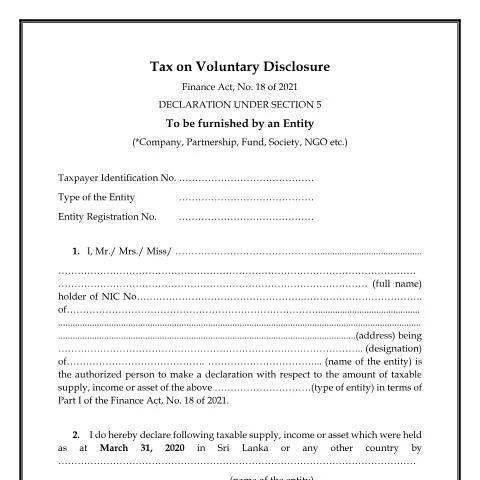
Addressing tax compliance is a pressing concern for various entities operating within Sri Lanka. The Tax on Voluntary Disclosure (TVD) Form - Entity is an essential document that empowers entities such as companies, partnerships, funds, societies, and NGOs to declare previously undisclosed taxable supplies, income, or assets. This form plays a critical role in the country’s efforts to enhance tax compliance while offering a pathway for entities to align themselves with the fiscal regulations outlined in the Finance Act, No. 18 of 2021.
The Lifecycle of the Tax on Voluntary Disclosure Form
Completing the Tax on Voluntary Disclosure Form is part of a broader spectrum of financial compliance measures that entities engage in. The process begins when an entity identifies undisclosed taxable income or assets. This can stem from various triggers such as internal audits, regulatory changes, or voluntary assessments during tax planning. Understanding the procedural flow can greatly aid entities in navigating this complex landscape.
Initiation of the Disclosure Process
The process is initiated upon recognizing undisclosed taxable income or assets as of March 31, 2020. Entities must take prompt action to declare these assets to avoid potential legal repercussions. It is critical for the authorized signatory, typically the Chairperson or Managing Director, to undertake this task. The form must be diligently completed to reflect accurate and truthful declarations.
Filling Out the Form
The form comprises several sections that require detailed information. Key areas to focus on include:
- Taxpayer Identification Number: Essential for identification purposes.
- Entity Type and Registration Number: Specify what category the entity falls under.
- Declaration Details: This is the core of the form where the entity must list the undisclosed supplies or assets.
Documentation and Justifications
Entities must prepare supporting documentation to substantiate their declarations. This may include:
- Bank statements reflecting asset holdings.
- Share certificates for declared equity.
- Property deeds for real estate disclosures.
Proper documentation not only strengthens the declaration but also ensures compliance with the relevant legal requirements.
Submitting the Form: A Step-by-Step Guide
Once the form is completed, entities must submit it to the Commissioner-General of Inland Revenue by the stipulated deadline of March 31, 2022. This submission is crucial, as it marks the official acceptance of the entity's voluntary disclosure.
Methods of Submission
Entities can choose to submit the form either physically or electronically. Given the Sri Lankan government's push towards digitalization, using forms.gov.lk is encouraged for efficiency and tracking purposes.
Consequences of Non-Compliance: Understanding Risks
Ignoring the obligation to submit the Tax on Voluntary Disclosure Form can have serious ramifications. Failing to disclose taxable income or assets could lead to:
- Pecuniary penalties: Financial penalties can be imposed for non-disclosure or late submissions.
- Legal Issues: Entities may face investigations or legal actions under the Prevention of Money Laundering Act, No. 5 of 2006, among other laws.
Entities should act swiftly to mitigate these risks and maintain compliance with local tax laws.
Addressing Refusals or Incompleteness
In the event of a refusal or if the form is deemed incomplete, the taxpayer will be notified by the Inland Revenue Department. Entities should be prepared to respond within the time frame set forth by the authorities. This may involve:
- Providing additional documentation.
- Correcting errors in the initial submission.
It is advisable to maintain open communication with the tax authorities to resolve any issues promptly.
Deciphering the Form: A Detailed Breakdown
Each section of the Tax on Voluntary Disclosure Form presents specific fields that must be filled out meticulously. Below is a detailed overview:
| Section | Description | Common Pitfalls |
|---|---|---|
| 1. Taxpayer Identification | Essential for the identification of the entity. | Incorrect or missing Taxpayer ID can lead to processing delays. |
| 2. Entity Type and Registration | Specify the type of legal entity. | Failure to categorize correctly can complicate assessments. |
| 3. Declaration of Assets | List of taxable supplies or income. | Understating or omitting assets could lead to penalties. |
| 4. Tax Payment Confirmation | Details of tax payment made. | Not providing payment details can result in rejections. |
| 5. Legal Compliance Statements | Affirmation of compliance with applicable laws. | False declarations can lead to severe legal consequences. |
Who Should Fill Out This Form? Profiles and Special Cases
This form is relevant for a diverse array of entities. Here’s a closer look at who should be completing it:
- Companies: Corporations that have not declared all taxable incomes.
- Partnerships: Partnerships with undisclosed assets or income.
- NGOs and Societies: Non-profit organizations with previously unreported taxable income.
Each of these entities may have unique circumstances influencing their disclosure obligations. It is vital to take these factors into account to ensure comprehensive compliance.
Understanding Exceptions
Some entities may qualify for exemptions or special considerations. For instance, newly established companies may have provisions that allow for more lenient disclosure timelines. Consulting with a tax professional familiar with local regulations can be invaluable in navigating these exceptions.
Next Steps After Submission: What to Expect
After submitting the Tax on Voluntary Disclosure Form, entities should prepare for the subsequent steps:
- Receipt Confirmation: Upon submission, ensure you receive a confirmation of receipt from the Inland Revenue Department.
- Tax Assessment: The authorities will conduct an assessment based on the declared information. Be prepared for potential follow-up queries.
- Compliance Monitoring: Entities must remain vigilant, as the tax department may conduct audits or require updates on future disclosures.
Understanding the Tax on Voluntary Disclosure (TVD) in Sri Lanka
The Tax on Voluntary Disclosure (TVD) reflects Sri Lanka's commitment to enhancing tax compliance and encouraging voluntary declaration of income and assets. This tax mechanism is particularly relevant for entities that have previously underreported their earnings or have undisclosed foreign assets. The objective of the TVD is to promote transparency while providing entities an opportunity to rectify past tax discrepancies without facing severe penalties.
Entities opting for voluntary disclosure must align with specific criteria established by the Department of Inland Revenue (DIR). These include full disclosure of previously undisclosed income or assets, accurate computation of the tax liability, and compliance with the deadlines stipulated in the relevant circulars issued by the DIR. The current framework allows entities to come forward during designated periods, commonly referred to as “Voluntary Disclosure Periods”. During these windows, the DIR may offer reduced tax rates or penalties to facilitate the process.
The calculation of the TVD is generally based on the total amount of undisclosed income or assets, adjusted for the applicable tax rate. The entity must substantiate its claims through supporting documents. It is paramount to maintain thorough records of any disclosures made, as failure to comply with the requirements can lead to audits or reassessments in the future. Hence, consulting with a tax professional or legal advisor familiar with Sri Lankan tax law can be advantageous in navigating this complex process effectively.
Step-by-Step Guide to Filing the TVD Form as an Entity
Filing the Tax on Voluntary Disclosure Form as an entity in Sri Lanka involves a structured process, crucial for ensuring compliance while availing the benefits associated with voluntary disclosure. Below are the essential steps entities should follow:
- Eligibility Assessment: Determine if your entity qualifies for the voluntary disclosure program. Review any recent circulars from the DIR to understand the criteria and the specific periods during which disclosures can be made.
- Gather Documentation: Collect all necessary documentation related to the undisclosed income or assets. This may include financial statements, bank statements, property deeds, or any other relevant records that can substantiate the claim.
- Complete the TVD Form: Access the Tax on Voluntary Disclosure Form from the official DIR website. Ensure that all sections of the form are accurately completed. Double-check numerical entries for accuracy to avoid discrepancies that might arise during processing.
- Submission via Digital Platforms: Given the push for digitalization in administrative processes in Sri Lanka, entities are encouraged to file the TVD Form through the online portal available at forms.gov.lk. Ensure that a National Identity Card (NIC) or any other form of identification is linked to the entity’s profile for verification purposes.
- Pay Any Due Tax: Upon successful submission of the form, calculate and remit any outstanding tax liabilities as indicated in the disclosure. Ensure payment is made within the specified time frame to benefit from any potential concessions offered by the DIR.
- Keep a Record: Maintain copies of the submitted form and any correspondence with the DIR. These records will be essential for future reference and to safeguard against any queries or audits.
It is essential to adhere to the timelines and guidelines set forth by the DIR throughout this process. Entities should also stay abreast of any changes in tax legislation that may affect their disclosure or compliance obligations.
Common Challenges and Solutions When Filing the TVD Form
Entities, particularly those with complex financial situations, may face various challenges when filing the Tax on Voluntary Disclosure Form. It is crucial to recognize these challenges and implement strategic solutions to overcome them. Some common issues include:
- Difficulty in Valuation: Accurately determining the value of undisclosed assets can be challenging, particularly for properties or investments whose market values fluctuate. Solution: Engage a qualified valuer or financial advisor to conduct a thorough assessment and provide documented evidence to support the reported figures.
- Understanding Legal Requirements: The legal terminology and requirements surrounding the TVD process may be daunting for some entities. Solution: Consulting with a tax professional or legal expert who specializes in Sri Lankan tax law can demystify the legal context and ensure compliance with all statutory obligations.
- Timely Submission: The deadlines for voluntary disclosures can be tight, particularly for entities with extensive documentation to compile. Solution: Begin the disclosure process as early as possible and consider employing a dedicated team to handle the documentation and submission process efficiently.
- Potential for Audits: Entities may fear the possibility of audits after disclosure. Solution: Be transparent and thorough in all submissions. Document all communication with the DIR and keep records of the disclosure process to address any future inquiries seamlessly.
By anticipating these challenges and implementing effective strategies to mitigate them, entities can navigate the TVD filing process with greater confidence and assurance. Additionally, proactive engagement with the DIR and timely communication can foster a cooperative relationship that minimizes the likelihood of disputes.