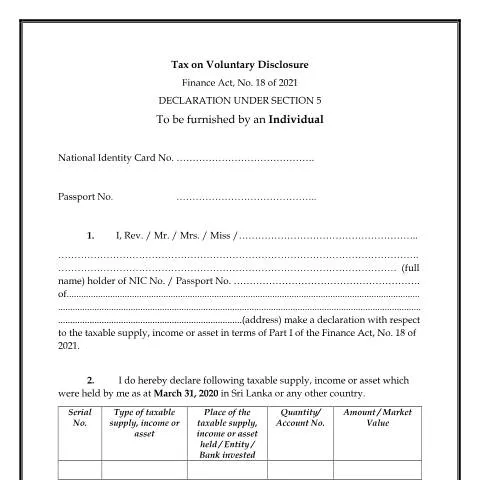
Navigating the Tax on Voluntary Disclosure Form for Individuals
The Tax on Voluntary Disclosure (TVD) Form, specifically designed for individuals, serves as a critical instrument for taxpayers who wish to declare previously unreported income or assets, thereby regularizing their tax obligations under the Sri Lankan tax regime. This form embodies a unique opportunity for individuals to come forth, disclose their taxable supplies, income, or assets, and benefit from a structured framework aimed at fostering compliance while minimizing penalties.
Who Should Take the Initiative? Understanding the Profile of Potential Declarants
Individuals who may find themselves in need of submitting the Tax on Voluntary Disclosure Form often include various profiles:
- New Residents: Those who have recently moved to Sri Lanka and possess foreign assets.
- Returning Expatriates: Sri Lankans returning from abroad who may have undisclosed foreign income or assets.
- Business Owners: Self-employed individuals or entrepreneurs who have not declared all income.
- Individuals with Undisclosed Wealth: Those who have inherited assets or received gifts that were not reported.
It is essential for these individuals to recognize that voluntary disclosure allows them to mitigate the potential repercussions of unreported income, including hefty fines and legal action.
Special Considerations for Different Profiles
While the principal requirements apply broadly, certain conditions need to be addressed depending on the individual's situation:
- Foreign Income: For those with foreign assets, it's crucial to understand the tax implications both in Sri Lanka and the country of origin.
- Pending Investigations: Individuals under investigation for tax evasion or other offenses may need to seek legal counsel before submitting the form.
Submission Channels: Where and How to File
The submission process of the Tax on Voluntary Disclosure Form can occur through multiple channels, each presenting its own nuances:
- Online Submission: Utilizing the e-services portal provided by the Inland Revenue Department, individuals can file their forms electronically. This method is often the most efficient, allowing for quick processing.
- Hard Copy Submission: For those who prefer traditional means, completed forms can be submitted in person at designated Inland Revenue offices. It's crucial to keep in mind operational hours and potential queues.
- Postal Submission: Alternatively, individuals have the option to mail their forms, ensuring that postal timings are considered to meet deadlines.
Regardless of the channel chosen, individuals should retain copies of all submissions for their records.
Comparative Analysis of Submission Channels
| Channel | Pros | Cons |
|---|---|---|
| Online Submission | Fast, fewer errors, immediate confirmation. | Requires internet access and technical knowledge. |
| Hard Copy Submission | Personal interaction, physical proof of submission. | Time-consuming, potential for long wait times. |
| Postal Submission | Convenience of home mailing. | Possible delays in postal services, risk of loss. |
Decoding the Details: Completing the TVD Form
Completing the Tax on Voluntary Disclosure Form necessitates meticulous attention to detail. Each section demands specific information regarding the taxpayer's circumstances:
- Identification: Include your National Identity Card (NIC) number or Passport number, along with your full name and address.
- Declaration of Assets: Clearly detail all taxable supplies, income, or assets held as of March 31, 2020, indicating their locations and monetary values.
- Tax Payment: Specify the tax amount paid, ensuring compliance with the stipulated 1% rate.
- Legal Standing: Confirm your status concerning any investigations or pending cases to avoid complications.
Additionally, for any information that does not fit into the provided space, supplementary sheets can be utilized, provided they are duly signed.
Common Pitfalls to Avoid During Completion
- Omitting essential identification details, which can lead to delays.
- Inaccurate declaration of asset values, leading to potential auditing or penalties.
- Neglecting to follow the legal standing section correctly, which may trigger further scrutiny.
Implications of Compliance: What Happens After Submission?
Upon submission of the Tax on Voluntary Disclosure Form, several outcomes may arise. Successfully filing the form can lead to significant advantages:
- Reduced Penalties: Individuals benefit from reduced penalties compared to those who do not come forward voluntarily.
- Legal Protection: There is protection against prosecution for previous undisclosed income, under specified conditions.
However, there are also obligations. The Inland Revenue Department may follow up for confirmation or further documentation regarding the declared assets, and failure to comply with subsequent requests can lead to complications.
What to Do in Case of Errors or Insufficient Documentation
In the event that an error is identified post-submission, or if additional documentation is requested:
- Contact the Inland Revenue Department immediately to report the error.
- Prepare the required documentation to support your claim or correct misinformation.
- Submit any additional information through the appropriate channel as directed by the authorities.
The Tax on Voluntary Disclosure Form Within the Broader Tax Landscape
This form is not an isolated document but rather part of a larger framework intended to promote tax compliance across Sri Lanka. It reflects the government's initiative to encourage individuals to disclose their assets, thereby contributing to the national revenue without the burden of excessive penalties.
Understanding where the TVD Form fits within the broader tax obligations is crucial. Individuals must also comply with standard income tax filings, and any discrepancies can prompt a more thorough audit.
Key Related Forms and How They Differ
| Form | Purpose | Similarity to TVD Form |
|---|---|---|
| Income Tax Return Form | Standard annual reporting of income. | Both forms require an accurate declaration of income and assets. |
| Wealth Tax Declaration | Specific to wealth accumulation. | Focuses on asset declaration but in a different context. |
| Tax Clearance Certificate Application | Required for various financial transactions. | May require information provided in the TVD Form as part of the overall tax profile. |
Conclusion: The Importance of Proactive Compliance
In essence, the Tax on Voluntary Disclosure Form serves as a crucial tool for individuals to regularize their tax status, re-engage with the tax system, and avoid severe penalties tied to non-disclosure. Understanding the submission process, accurately filling out the form, and recognizing the implications of compliance are vital steps toward responsible citizenship and financial management in Sri Lanka.
As the fiscal landscape evolves, staying informed and proactive in addressing tax obligations becomes increasingly important for all individuals. Engaging with the Inland Revenue Department and seeking guidance when needed can promote transparency and ensure that one’s financial affairs are in order.
Understanding the Tax on Voluntary Disclosure (TVD) in Sri Lanka
The Tax on Voluntary Disclosure (TVD) is a crucial aspect for individuals who wish to regularize their tax affairs in Sri Lanka. This tax is applicable for those who come forward to declare their previously undisclosed income, assets, or other taxable matters to the Department of Inland Revenue (DIR). It is essential to recognize that the TVD is not merely a leniency measure; it is part of a broader initiative by the Sri Lankan government to enhance tax compliance and increase revenue.
The TVD is governed by the provisions set out in the relevant Income Tax Ordinance and guidelines provided by the DIR. This process allows individuals to avoid punitive measures associated with tax evasion. By availing of this opportunity, individuals can disclose their information without facing legal repercussions that could arise from non-disclosure or late disclosure of their income.
It is important to note that the TVD applies to a specific time frame set forth by the DIR. This means that individuals must act within the designated period to benefit from the reduced penalties and favorable treatment. Late filers or those who miss this window may face more stringent consequences under the law, including heavy fines and interest charges on the outstanding tax liabilities.
Moreover, individuals who decide to utilize the TVD should be prepared to furnish existing documentation that supports their claims of undisclosed income or assets. This includes records such as bank statements, property deeds, and any other relevant financial documents. A thorough compilation of these documents will facilitate a smoother application process, thereby reducing the risk of disputes with the DIR.
Eligibility Criteria for the Tax on Voluntary Disclosure
To qualify for the Tax on Voluntary Disclosure in Sri Lanka, individuals must meet certain criteria outlined by the DIR. Understanding these eligibility requirements is critical for ensuring a successful application process.
Firstly, the voluntary disclosure must pertain to income or assets that have not been reported for previous assessment years. This disclosure can include various forms of income, such as business profits, rental income, foreign income, or any other form of revenue that falls under the jurisdiction of Sri Lankan tax laws.
Additionally, individuals must possess a valid National Identity Card (NIC) or other official identification to facilitate the identification process. The NIC serves as a primary identifier in Sri Lanka and is essential for all formal transactions, including tax declarations.
Furthermore, individuals are encouraged to seek professional advice or assistance if they are uncertain about their eligibility status. Engaging a tax consultant or an accountant may provide clarity on the specifics of their situation and ensure that they meet the necessary criteria before proceeding with the application in compliance with the guidelines set forth by the DIR.
It is also pertinent to mention that certain categories of individuals, such as minors or those declared legally incompetent, may have different regulations governing their ability to make disclosures. It is advisable to consult the DIR directly or seek professional advice when dealing with such unique cases, as they may require additional documentation or follow specific protocols.
Penalties for Non-Compliance with the Tax on Voluntary Disclosure
Understanding the penalties associated with non-compliance under the Tax on Voluntary Disclosure framework is essential for potential applicants. The Sri Lankan government has implemented strict penalties to deter tax evasion and promote compliance.
Individuals who fail to declare their taxable income or assets are subject to severe repercussions, including hefty fines that may be calculated as a percentage of the undeclared amount. Additionally, interest will accrue on any unpaid taxes, further compounding the financial burden. These penalties can create a significant financial liability for individuals who do not take advantage of the TVD provisions.
Moreover, failure to comply with the disclosure requirements may lead to criminal charges, including prosecution for tax evasion. The DIR has the authority to initiate legal proceedings against individuals suspected of willfully concealing income or assets. This can result in not only financial penalties but also potential imprisonment in severe cases.
It is clear that the risks associated with non-compliance far outweigh the benefits. Therefore, individuals are strongly encouraged to take proactive steps to regularize their tax affairs by utilizing the Tax on Voluntary Disclosure process. This not only helps to fulfill legal obligations but also contributes to the overall betterment of the Sri Lankan economy by improving tax revenue streams.
In summary, understanding the implications of the Tax on Voluntary Disclosure and the associated penalties is crucial for individuals in Sri Lanka. By familiarizing themselves with the regulations, eligibility criteria, and potential consequences, individuals can make informed decisions regarding their tax affairs while ensuring compliance with the law.