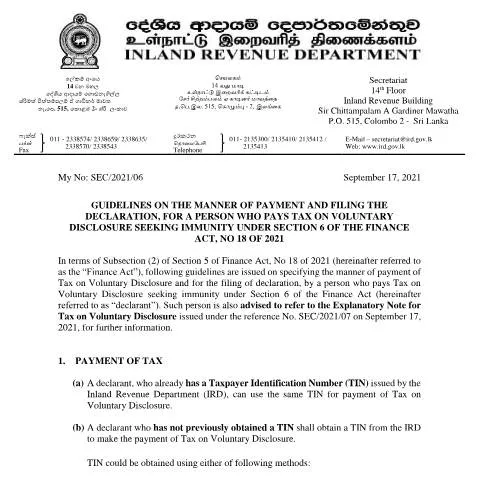
Navigating the Tax on Voluntary Disclosure: A Comprehensive Overview
The Tax on Voluntary Disclosure (TVD) in Sri Lanka serves as a critical avenue for individuals and entities to voluntarily declare previously undisclosed income or assets. This initiative, encapsulated by the Finance Act, No 18 of 2021, aims to enhance tax compliance while offering certain immunities to declarants. Understanding the procedural nuances outlined in the Guidelines on the Manner of Payment and Filing the Declaration is essential for potential declarants seeking to take advantage of this policy.
Understanding the Stakes: Who Should Consider Voluntary Disclosure?
The TVD framework is not merely a bureaucratic obligation; it represents a unique opportunity for various stakeholders. Individuals or businesses that have undisclosed income, whether due to oversight, lack of awareness, or deliberate evasion, can benefit greatly from this scheme. Eligibility extends to:
- Individuals with undeclared personal income or assets.
- Small to medium-sized enterprises seeking to regularize their financial status.
- High net worth individuals with offshore investments not previously reported.
Engaging with the TVD process is especially important for those who may face potential tax audits or scrutiny from the Inland Revenue Department (IRD) in the future. By voluntarily disclosing assets, these individuals can mitigate penalties and secure legal protection under Section 6 of the Finance Act.
Breaking Down the Guidelines: Payment Procedure for Tax on Voluntary Disclosure
The payment process is clearly delineated in the guidelines, emphasizing the importance of adherence for a successful declaration. Here’s how it operates:
- Taxpayer Identification Number (TIN): A TIN is mandatory for all declarants. Those without a TIN can obtain one via the IRD’s e-Service platform or by submitting a physical application to designated IRD offices.
- Payment Methodology: Declarants can utilize a formal tax paying-in slip available at any Bank of Ceylon branch or at the IRD’s Customer Supporting Unit. It is essential that the slip is accurately filled, noting relevant tax type and payment codes as specified.
- Currency Considerations: If the declaration includes amounts in foreign currencies, the tax is calculated at a rate of 1% based on the Sri Lankan Rupee equivalent as per the current exchange rate on the payment date.
Filing the Declaration: Critical Steps and Documentation
Filing the declaration is as crucial as making the payment. Declarants must ensure that all submissions are accurately completed and properly supported by relevant documentation:
- Declaration Form: The official declaration form must be downloaded from the IRD website and filled out thoroughly. The TIN serves as a payment reference.
- Supporting Documents: Required attachments include a copy of the payment slip, identification documents (NIC or passport), and authenticated proof of asset ownership, which may vary based on the nature of the asset declared.
All documents must be forwarded to the Commissioner General of Inland Revenue by registered post or hand delivery, in a sealed envelope, before the stipulated deadline, which is traditionally set within a specific fiscal year.
Key Terminology and Concepts for Declarants
Understanding the specific terms used in the guidelines can significantly impact a declarant’s ability to navigate the process effectively:
| Term | Definition |
|---|---|
| Declarant | A person or entity declaring previously undisclosed income or assets under the TVD. |
| Immunity | Protection from penalties and legal consequences as provided under Section 6 of the Finance Act. |
| Market Value | The estimated worth of an asset in the marketplace at the time of declaration. |
Prevalent Misinterpretations and Common Pitfalls
While the guidelines are designed to facilitate the declaration process, misinterpretations can lead to unnecessary complications. Here are several common misconceptions:
- Assuming All Assets Are Automatically Covered: Not all assets may qualify for disclosure under the TVD. Declarants must ensure that they are aware of what qualifies and what does not.
- Neglecting Proper Documentation: Failing to attach required supporting documents often leads to rejection of the declaration.
- Miscalculating Tax Liability: It is critical to accurately assess the value of declared assets to ensure the correct tax amount is calculated.
Linkages and Interactions with Other Procedural Elements
The TVD process does not exist in isolation. It’s essential to recognize how it interconnects with other tax obligations and regulations. Declarants should be aware of:
- Income Tax Registration: If liable, one must ensure compliance with the Income Tax Act, as outlined in the Inland Revenue Act, No. 24 of 2017.
- Value Added Tax (VAT) Considerations: Entities liable for VAT must also consider their obligations under the Value Added Tax Act, No. 14 of 2002.
- Future Compliance Requirements: Once declared, the individual or entity must remain compliant with ongoing tax obligations to avoid future liabilities.
Conclusion: Practical Insights for Successful Declarants
Engaging with the Tax on Voluntary Disclosure process is not merely about compliance; it's an opportunity to rectify past oversights and secure a more stable financial future. By thoroughly understanding the payment and filing procedures, recognizing the implications of the guidelines, and avoiding common pitfalls, declarants can navigate this process effectively. Ensuring timely and accurate submission will pave the way for a smoother resolution, offering peace of mind and financial clarity in the long run.
Understanding the Tax on Voluntary Disclosure (TVD) Scheme
The Tax on Voluntary Disclosure (TVD) scheme in Sri Lanka provides an opportunity for individuals and entities to declare previously undisclosed income or assets to the Department of Inland Revenue (DIR). This initiative aims to encourage taxpayers to come forward voluntarily and regularize their tax obligations. Under this scheme, the taxpayer is obliged to pay a specified percentage of the declared amount as tax, which is markedly lower than regular tax rates, thus serving as an incentive to disclose. It is paramount to comprehend the scope and legal framework governing the TVD to navigate the process efficiently.
The TVD is regulated under specific provisions of the Inland Revenue Act, and it is essential for taxpayers to be aware of the timeline for disclosures, applicable tax rates, and eligibility criteria. The declaration must encompass all types of income, including but not limited to, business income, capital gains, and income from overseas sources if applicable. Taxpayers are recommended to consult the official guidelines laid out by the DIR to ensure compliance and to avoid any misinterpretations that could lead to penalties.
Detailed Steps for Payment and Filing of TVD Declaration
The process for filing a Tax on Voluntary Disclosure (TVD) declaration and making payments can be divided into several clear steps. Ensuring every phase is meticulously followed will facilitate a smooth compliance experience.
- Preparation of Documents: Before initiating the declaration, gather all necessary documents that substantiate the amount you intend to disclose. This may include financial statements, bank statements, and any other relevant documentation that can support your declaration.
- Filing the Declaration: The declaration should be filed through the designated online portal available at forms.gov.lk or can be submitted in hard copy to the local DIR office. Ensure that the Form for TVD is accurately completed, providing all required information without omissions.
- Calculating the Tax Payable: Upon submission, the DIR will review the declaration and calculate the tax amount due. It is important to be aware of the current rate applicable under the TVD scheme. Refer to the official DIR publications for the most recent percentages.
- Payment Process: Payments can be made online via the DIR's electronic services or at designated banks. The payment slip generated post-submission of the declaration must be retained for your records. It is advisable to ensure that the payment is made within the stipulated time frame to avoid any late fees.
- Confirmation of Payment and Acknowledgment: Once payment is completed, obtain a confirmation from the DIR. This acknowledgment serves as proof of compliance with the TVD scheme and should be kept for future reference.
Common Challenges and How to Address Them
Engaging with the Tax on Voluntary Disclosure (TVD) process could pose several challenges, particularly for individuals unfamiliar with the administrative nuances of the Sri Lankan tax system. Below are common issues and practical solutions to navigate them:
- Inaccurate Information: One prevalent issue is the provision of inaccurate or incomplete information in the declaration. This could lead to delays or, worse, penalties. It is advisable to double-check all entries and consult a tax advisor if necessary before submission.
- Understanding Tax Rates: Confusion regarding applicable tax rates can hinder the filing process. To mitigate this, taxpayers should frequently check the updates circulated by the DIR, which detail current rates and regulations.
- Technical Issues with Online Filing: Some taxpayers may encounter technical difficulties while attempting to file their declarations online. Keep in mind that support channels are available within the DIR’s framework. It is prudent to reach out to their helpline or visit the local office if online obstacles are encountered.
- Payment Deadline Awareness: Missing deadlines can result in extra charges. Mark important dates on your calendar and set reminders to ensure timely actions are taken. The DIR typically publishes a fiscal calendar that can be referenced for these crucial deadlines.
- Documentation Challenges: Obtaining necessary documentation to support your declaration can sometimes be cumbersome. To alleviate this, initiate the collection process early, and maintain organized records of all financial statements and proof of assets.