Navigating the Tourist VAT Refund Scheme in Sri Lanka
For those traversing the beautiful landscapes of Sri Lanka, shopping for local crafts or luxury goods can be an enriching experience. However, many travelers are unaware that they can reclaim a portion of the value-added tax (VAT) paid on these purchases. The Tourist VAT Refund Scheme (TVRS) aims to support international tourists in this endeavor, allowing eligible visitors to reclaim up to 80% of the VAT paid on goods purchased from approved retailers. This guide, based on the official brochure and application details, provides essential insights for effectively utilizing the TVRS.
Understanding the Core Components of the TVRS
The TVRS brochure contains several crucial elements that every traveler should familiarize themselves with. Here, we break down the key components of the brochure that assists in the process of claiming VAT refunds:
Eligibility Criteria
To qualify for a VAT refund, travelers must meet specific criteria. Notably:
- The total purchase value must exceed fifty thousand Sri Lankan Rupees (LKR), excluding VAT.
- The goods must be acquired from retailers authorized by the Inland Revenue Department (IRD).
- Products purchased must be eligible for VAT reclaim; however, certain exceptions apply.
It is essential to note that goods consumed within Sri Lanka—such as food and beverages—do not qualify for refunds. Additionally, items prohibited on aircraft for safety reasons or items that are VAT exempted will also be ineligible.
Step-by-Step Process for VAT Refund
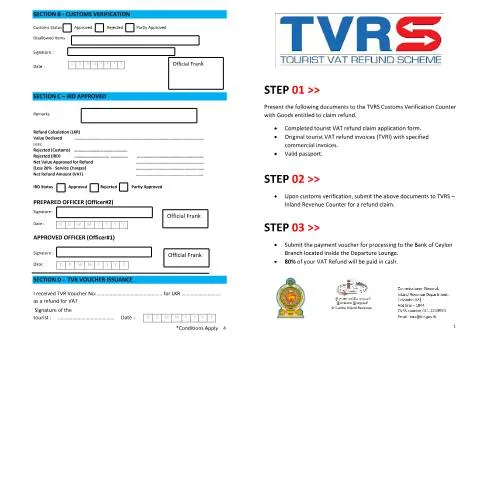
The TVRS brochure outlines a structured three-step process for tourists to claim their refunds. Understanding these steps can significantly streamline the experience:
Step 1: Customs Verification
- Present the completed VAT refund claim application form along with the original VAT refund invoices and your valid passport at the Customs Verification Counter.
- The goods you wish to claim a refund on must be available for inspection at this point.
Step 2: Inland Revenue Submission
- After customs verification, submit your documents to the TVRS counter for processing your refund claim.
Step 3: Claiming Your Refund
- Visit the Bank of Ceylon branch located in the Departure Lounge to process your payment voucher.
- 80% of your VAT Refund will be disbursed in cash on the spot, making the final step straightforward and efficient.
Common Misunderstandings and Pitfalls
While the TVRS offers a valuable opportunity for tourists, several common misunderstandings can hinder travelers:
Documentation Confusion
One frequent pitfall is the misunderstanding related to required documentation. Tourists must provide specific documents, including:
- A completed application form for VAT refund.
- Original VAT refund invoices.
- Your valid passport for identification.
Failure to present the necessary documents can lead to a rejected claim, so ensuring all paperwork is in order is critical.
Qualifying Goods Clarification
Understanding which goods are eligible for VAT refunds is vital. The brochure clearly states that:
- Goods that have been partially or wholly consumed in Sri Lanka do not qualify.
- Items purchased online and taken out of the country are also excluded from the refund scheme.
Who Benefits Most from the TVRS?
The Tourist VAT Refund Scheme specifically targets international tourists who tend to make significant purchases during their stay. However, certain groups are likely to benefit more than others:
High-Spending Tourists
Individuals spending over fifty thousand LKR on goods are more likely to utilize this refund scheme effectively. Luxury shoppers or those acquiring gifts and souvenirs from Sri Lanka’s diverse market are prime candidates.
Long-Term Visitors
Tourists on extended visits or expatriates residing temporarily in Sri Lanka may also find the TVRS advantageous, as they often incur higher expenditures on goods while staying in the country.
Key Terms and Conditions to Grasp
To avoid confusion, it’s essential to understand the terminology and conditions associated with the TVRS:
VAT (Value-Added Tax)
VAT is a consumption tax levied on a product whenever value is added at each stage of production and at the point of sale. Tourists can reclaim a portion of this tax when they leave Sri Lanka.
TVR Voucher
Once the claim is approved and processed, travelers receive a TVR voucher, reflecting the net refund amount after the deductions have been applied. This voucher is essential for receiving the cash refund.
Complementary Documents and Their Relevance
In conjunction with the TVRS brochure, several other documents may provide additional context or support during the refund process:
| Document | Purpose |
|---|---|
| Commercial Invoices | To substantiate the VAT amount paid on purchased goods. |
| Customs Documentation | To verify the goods for which the refund is being claimed. |
| Passport | To confirm the identity of the claimant as a tourist. |
Limitations of the VAT Refund Scheme
While the TVRS is advantageous for many, it has specific limitations that travelers should be aware of:
Exclusions
As previously mentioned, not all purchases qualify for the VAT refund. The scheme excludes:
- Goods that are inherently prohibited or restricted by law.
- Services consumed within the country, such as accommodation and dining.
- Items not presented for customs verification.
Service Charges
It is important to note that the refund amount is subject to a deduction of 20% service charges. Therefore, while 80% of the VAT can be reclaimed, the actual cash refund will be less than the total VAT paid.
Practical Tips for Efficient Refund Claims
To maximize the benefits of the Tourist VAT Refund Scheme, travelers should consider the following practical tips:
- Keep all receipts and invoices organized and in hand before heading to the customs counter.
- Visit the customs verification counter well ahead of your flight departure to ensure ample time for processing.
- Confirm the validity of the retailer’s authorization to ensure that your purchases are eligible.
By understanding the finer details of the TVRS and following the outlined procedures diligently, tourists can enjoy the financial benefits of reclaiming a portion of the VAT spent during their stay in Sri Lanka.
Understanding the Tourist VAT Refund Process
The Tourist VAT Refund Scheme (TVRS) in Sri Lanka provides an opportunity for foreign visitors to reclaim the Value Added Tax (VAT) paid on certain goods purchased during their stay. This scheme is aimed at enhancing the tourist experience, promoting local goods, and encouraging higher spending in the local economy. To successfully navigate this refund process, it is crucial to understand the types of purchases eligible for VAT refunds, the necessary documentation, and the procedural steps involved.
First and foremost, only goods purchased from registered VAT vendors qualify for the refund. These vendors are required to display a 'VAT Registered' sign in their establishments. Common items eligible for a refund include souvenirs, textiles, jewelry, and electronics. However, services such as accommodation and food do not qualify. Visitors should ensure that their purchases are accompanied by the necessary tax invoices, which serve as proof of VAT payment.
Upon departure from Sri Lanka, tourists can claim their VAT refunds at designated refund counters located at Bandaranaike International Airport and other identified locations. To initiate the refund process, visitors need to present their passport, the original invoices, and the completed application form provided by the VAT refund counter. It is recommended to allocate sufficient time before their flight to complete the refund process, as there may be queues at peak times.
Common Challenges Faced by Tourists in the VAT Refund Process
While the Tourist VAT Refund Scheme is designed to be straightforward, various challenges may arise that can complicate the process for tourists. Understanding these potential pitfalls will equip travelers with the knowledge necessary to avoid delays and ensure a smooth refund experience.
One common issue is the failure to keep track of all eligible purchases. Tourists often overlook small items that may qualify for VAT refunds, leading to a loss of potential funds. Keeping a comprehensive list of purchases along with the invoices will help in claiming the maximum allowable refund.
Moreover, the timing of the refund application is crucial. Tourists need to be aware that the refund must be claimed within a specific period after the purchase, typically before leaving the country. Missing this deadline can result in a total forfeiture of the refund. Hence, it is advisable to organize all documentation and apply for refunds as soon as possible during their trip.
Another challenge is the language barrier, as some tourists may face difficulties communicating with local staff at refund counters. It is beneficial to familiarize oneself with basic Sinhala or Tamil phrases related to the VAT refund process or alternatively, to seek assistance from fellow travelers or tour guides who may be fluent.
Lastly, tourists should remain vigilant regarding potential scams or misinformation. It is advisable to only rely on official sources and publications when seeking information about VAT refunds, ensuring that they are well-informed about their rights and the refund process.
Impact of the VAT Refund on Sri Lanka's Tourism Economy
The implementation of the Tourist VAT Refund Scheme has far-reaching implications not only for individual tourists but also for the broader tourism economy of Sri Lanka. By facilitating the recovery of VAT on retail purchases, the scheme encourages higher spending among visitors, which in turn stimulates local businesses and contributes to overall economic growth.
One notable impact is the enhancement of competition among local vendors. With the incentive of VAT refunds, retailers can attract more foreign customers, compelling them to improve product quality and customer service. This competitive environment fosters innovation and drives improvements across various sectors within the tourism industry.
Moreover, the VAT refund scheme serves as a marketing tool, effectively promoting Sri Lanka as a tourist-friendly destination. The existence of such a refund system enhances the perceived value of goods purchased while visiting the island, encouraging travelers to spend more on local products. In the long run, this can lead to a more vibrant retail landscape and increased job opportunities in sectors related to tourism and hospitality.
Furthermore, the revenue generated from tourism plays a crucial role in funding infrastructure development and public services in Sri Lanka. By boosting the tourism sector through initiatives like the VAT refund scheme, the government can reinvest in essential services that benefit both tourists and locals alike. These enhancements may include improved transportation networks, upgraded attractions, and better public amenities, creating a more welcoming environment for all.
Ultimately, the success of the Tourist VAT Refund Scheme not only enhances individual tourist experiences but also acts as a catalyst for sustainable economic growth in Sri Lanka's tourism sector, benefiting the nation as a whole.